Buy.com Monthly Coupon

Tuesday, November 24, 2020

The depths of debt


SALEEM SAMAD

Developing countries such as Bangladesh are struggling to balance fighting Covid-19 and keep up with their growing public debt

The global leaders have realized that the coronavirus crisis has jolted the world from a slumber, to understand that the crisis has unveiled the spectre of a larger global crisis.

The health care crisis and its cascading economic consequences are predicted to further plunge many countries in the developing world into an unprecedented crisis, further pushing millions of people into poverty and starvation.

These conditions shine a strong light on the continuing debt problem that stands in the way of people’s survival -- the fight against inequality, the realization of their human rights, sovereignty and the self-determination of people, economic, gender, and ecological justice, and the pursuit of a dignified life.

Hundreds of international, regional, and civil society organizations (CSOs) including Action Aid, CADTM International, Oxfam, Third World Network, joined by 120 Bangladesh NGOs led by Coast Trust, are demanding to suspend the realization of debt instalments for all public debts of developing countries combating the Covid-19 pandemic so that the ongoing coronavirus crisis is not aggravated.

They call upon world leaders, national governments, and financial institutions both public and private, to take urgent action in compliance with their obligations and responsibilities, and commit to unconditional cancellation of public external debt payments.

The CSOs demanded the suspension of all instalments of public debt for at least the financial year 2020-2021 so that countries can develop the capacity to combat the pandemic and overcome the impact of this disaster on its citizens’ health, food, and economic vulnerabilities.

An international statement issued during Global Week (October 10-17) of action for debt cancellation sought the decisive and full solution to the debt problem as part of the profound transformation of economic and financial systems that the present crises so urgently demand.

Meanwhile, the CSO network appealed to the World Bank, International Monetary Fund (IMF), Asian Development Bank (ADB), Asian Infrastructure Investment Bank (AIIB), and other bilateral, regional, and multilateral development financiers of Bangladesh.

Bangladesh’s economy is severely under stress due to the additional burden of pandemic management, while the country has a budget deficit of $17.65 billion in the current financial year.

The CSOs in Bangladesh are trying to urgently bring to global attention that the government of Bangladesh for the current financial year is being forced to allocate $6.20bn for servicing external debts to international financial institutions.

They are urging the multilateral, regional, and bilateral financial institutions to strictly follow the suggestions made by the World Bank and IMF and suspend the servicing of the public debts for 2020, so that the government can use its resources to fund initiatives to help the people in overcoming the Covid-19 challenge.

On the other hand, the G-20 governments announced the Debt Service Suspension Initiative (DSSI) -- not a cancelation but merely an eight-month delay of up to $12bn worth of payments for public debts.

Much of this debt is illegitimate, the CSO network argues. The international creditors lend irresponsibly and unfairly, driven by predatory lending. The money is used to finance harmful projects and policies, failing to comply with legal and democratic requirements, is saddled with onerous and unjust terms, and incurred by private corporations but assumed by governments or incurred through public guarantees of private profits.

The conditional loans, including cuts in public services and social protection, and severe austerity programs, have also caused as great if not greater harm than debt servicing, especially on women and girls, indigenous people, and the most impoverished and vulnerable people and communities.

CSOs argue that the demand is much more than “debt relief,” but also for “debt justice.”

First published in the Dhaka Tribune on 24 November 2020

Saleem Samad is an independent journalist, media rights defender, and recipient of Ashoka Fellowship and Hellman-Hammett Award. He can be reached at saleemsamad@hotmail.com; Twitter @saleemsamad


Tuesday, November 17, 2020

Feeding the children in coronavirus pandemic

Children School Meal Policy/Photo: Latif Hossain


SALEEM SAMAD

The coronavirus pandemic severely dents free meal programme to help mitigate hunger and malnutrition amongst the most vulnerable school children

In 240 government and BRAC-run educational institutions for children in Trishal, Mymensingh, thousands of school students enjoyed attending classes as the authorities provided a free midday meal.

The cooked food ingredients include rice, lentils, and mixed vegetables -- in total 178 grams which costs Tk10.50. The school students’ nutritional intake of calories was 545 kcal and protein 11.46 gm. The hot cooked meal is culture-specific and nutrition-rich. Dietary diversity is ensured through a change in the recipe to maintain appetite.

The midday meal in rural and urban schools mitigates short-term hunger -- for most students, it was the only full meal.

A study by key civil servants in Bangladesh known as MATT (Managing at Top Team) showed that almost 60% of children go to school hungry. 

In the third year, the school attendance in urban areas in BRAC-operated midday meal projects increased from 55% (2011) to 81% (2013), and in rural areas, attendance increased from 64% (2011) to 92% (2013).

Basanta Kumar, Kar chief of Global Alliance for Improved Nutrition (GAIN) in Bangladesh pushed the idea of a midday meal in schools with the Bangladesh government in 2011 after Prime Minister Sheikh Hasina’s political pledge in Vision 2021 articulated a strong priority on primary school education and nutrition to ensure food security.

However, the Covid-19 crisis has contributed to a child rights crisis. For children, the costs of the pandemic were immediate.

In Bangladesh, like most developing countries, accessibility and affordability of food and nutrition become challenging, while keeping staple food distribution and local food markets is an uphill task for the governments amidst a lack of accountability and weak transparency.

The brunt of the suffering when it comes to access to adequate nutrition with depleting income sources falls on the children, adolescents, and women.

According to the Primary Education Census (2011), there are 20 million primary school-age children, of which 18.4 million children are enrolled in primary schools.

Various studies show that quality education in primary school is hindered by a high dropout rate caused by hunger and malnutrition and widespread micronutrient deficiencies.

The provision of nutritious food improves the cognitive and physical development of children, remarks Basanta. An estimated 20.9% have sub-clinical Vitamin-A deficiency, 19.1% are anaemic, and 40% are iodine deficient.

To ensure the sustainability of the free-midday meal in schools in Trishal, local government representatives, school committees, and participation of mothers of the students have ensured accountability of free mid-day meals in schools.

Unfortunately, after the departure of Basanta, the fruitful negotiations with development partners and international multilateral donors have become weak.

The pioneering program initiated by GAIN with development partners BRAC and Banchte Shekha emerged as a “game-changer.” Recently the government renewed commitment to replicate and scale up the school feeding model nation-wide in primary schools.

“It is critical to ensure food diversity and adequate nutrition, including key micronutrients and fortified staples,” Basanta said.

On Universal Children’s Day which is on November 20, the United Nations claims a definite impact has been found in investing in children. In response to the global nutrition crisis, school feeding programs can be adapted and scaled up to reach the most vulnerable children.

First published in the Dhaka Tribune on 17 November 2020

Saleem Samad is an independent journalist, media rights defender, recipient of Ashoka Fellowship and Hellman-Hammett Award. He can be reached at saleemsamad@hotmail.com. Twitter @saleemsamad

Tuesday, November 10, 2020

Myanmar polls a step closer to China

Will a Suu Kyi win help Myanmar stay in China’s good graces?

SALEEM SAMAD

When the world was extremely preoccupied with the tense Trump-Biden American elections, Myanmar held its parliamentary polls on Sunday (November 8), which are expected to deliver a government with a strong popular mandate in Southeast Asia.

Suu Kyi’s National League for Democracy party (NLD) won a landslide in 2015 and established the first civilian government after 50 years of global isolation and ruthless military regime. Five years later, Suu Kyi remains popular, but 2020 has widened the image from 2015.

Suu Kyi has fallen from the grace of world leaders and is no longer a democracy icon, primarily because she mishandled the rogue military crackdown against the ethnic Rohingya Muslim population, which the United Nations said had “the hallmarks of genocide.”

More than a million Rohingya fled from Rakhine State into neighbouring Bangladesh in 2016 and 2017 after the military waged a campaign of persecution, which the United Nations dubbed as “textbook ethnic cleansing.”

The Rohingya’s citizenship rights were deliberately and permanently erased, restricting them to vote under the discriminatory 1982 Citizenship Law. Even the Rohingya political parties were banned from contesting the elections.

In the face of global criticism, last year Suu Kyi defended her country’s military crackdown and denied genocide at the International Court of Justice in The Hague, explaining that the claims were “incomplete and misleading.”

Many international observers fear that the November elections will not be free, fair, and credible, citing disenfranchisement and campaign restrictions imposed by the Union Election Commission (UEC).

Military chief Gen Min Aung Hlaing’s warnings to the UEC on electioneering directives soured relationships with the government. President U Win Myint stated that the military’s “remarks over the election were inciting instability and causing public concern.”

Bertil Lintner, a Swedish journalist who has written extensively about Myanmar’s armed conflicts, politics, and ethnic crises for nearly 40 years, says it is unfortunate that elections have been suspended in several constituencies, primarily in ethnic areas where armed conflict rages against the Myanmar regime.

China wants Suu Kyi to win Myanmar’s polls. China’s interests will be better served by the Suu Kyi-led status quo than a return to military-dominated rule. Much has changed since the leaders in Beijing favoured Myanmar’s authoritarian military regime and were deeply suspicious of then opposition leader Suu Kyi.

The Chinese Communist Party has made no secret that they would prefer to see Suu Kyi and her National League for Democracy (NLD) win and are wary of the military top brass, whom they find increasingly difficult to influence and control.

Lintner also agrees that the Myanmar foreign policy will likely take its course after the poll -- towards a stronger and closer relationship with China. While the Tatmadaw sees it as their pledge to defend the nation’s sovereignty and seeks to lessen dependence on China, Suu Kyi turned to Beijing for the economic and controversial Belt and Road Initiative (BRI) after her allies and admirers in the West distanced themselves from her over the Rohingya refugee crisis.

First published in the Dhaka Tribune on 10 November 2020

Saleem Samad, is an independent journalist, media rights defender, recipient of Ashoka Fellowship and Hellman-Hammett Award. He could be reached at saleemsamad@hotmail.com. Twitter @saleemsamad

Tuesday, November 03, 2020

Saudi Arabia, Pakistan face-off over Kashmir

A world map minted in Saudi Arabia's banknote shows Jammu and Kashmir, Gilgit-Baltistan not in Pakistan - Photo: Public Domain

SALEEM SAMAD

The Islamic Republic of Pakistan has now fallen out of grace from Saudi Arabia. The diplomatic relations have gone cold after Islamabad attempted to ally with Turkey.

In recent times, the relations with the Kingdom of Saudi Arabia (KSA) and Turkey have dived further after the murder of Saudi journalist Jamal Khashoggi in the Saudi consulate in Istanbul in October 2018.

The Kingdom’s crown prince, Mohammed bin Salman bin Abdulaziz Al Saud (popularly known as MBS), squeezed Pakistan’s Prime Minister Imran Khan to repay a $1 billion loan.

To further humiliate Pakistan, the Kingdom announced that the $1 billion, repaid by Pakistan, would be invested in Reliance Jio Fibre in India.

Embarrassed, Pakistan saved its face by repaying the debt with the help of China, and Khan’s electoral vision for “Naya Pakistan” is in shambles. 

After Indian Prime Minister Narendra Modi struck Article 370 from Jammu & Kashmir on August 5, 2019, which revoked its special status, Islamabad did not hesitate to criticize Riyadh over the contentious issue.

The worst is yet to come.

On October 24, Saudi Arabia released a 20 Riyal banknote to commemorate its presidency of organizing a G-20 summit on November 21-22. The world map displayed at the rear of this commemorative banknote deliberately scraped Gilgit-Baltistan and Kashmir from the map of Pakistan.

Riyadh was angered over Islamabad’s official publication of a new political map in August 2020, which has shown Kashmir annexed with Pakistan, leading Delhi to term it as “political absurdity.”

Riyadh believes Pakistan has no legitimacy over Gilgit-Baltistan and Jammu & Kashmir. The depiction of the map of Pakistan devoid of Kashmir and Gilgit-Baltistan has adequately disgraced Pakistan in the international arena, particularly in the Muslim world. 

Well, the disputed Jammu & Kashmir have been taken out from the map of India too. The map depicts Kashmir Valley as an independent nation.

South Block in New Delhi immediately protested for the exclusion of Kashmir from India and demanded an explanation. Riyadh is yet to issue a statement. 

China, an all-weather friend of Pakistan, had been irked in the process and along with Pakistan has thrice dragged the Kashmir issue to the UN Security Council in the past year.

Pakistan miserably failed to draw the attention of the 57 members of Muslim nations -- the Organization of Islamic Conference (OIC) -- for a call for condemnation on scraping Kashmir autonomy.

During the China and India face-off over Ladakh and Arunachal Pradesh, Pakistan became desperate to form a new bloc with Turkey, Iran, Malaysia, China, and Russia, outside the traditional dictates of the United States. Malaysia silently backed out.

The Kingdom has given a clear signal to Islamabad that the KSA-India economic ties strengthened with a rejection of any financial aid to Pakistan is a new marker in international relations.

Observers understand that Saudi Arabia’s attitude towards Pakistan may also be “read” as “no confidence” against China.

Further pouring salt in the wounds, the governments of Saudi Arabia and Iran refused to allow Pakistan diplomatic missions to hold public events to observe the October 27 anniversary of Jammu & Kashmir’s accession to India as a 'Black Day'.

Plans to hold a public event inside Pakistan’s consulate in Riyadh were also blocked by the Kingdom.

Similarly, the Pakistan embassy in Tehran’s proposal to hold an event at Tehran University to observe Black Day was refused.

The change in stance adopted by two influential Islamic countries is a reflection of Pakistan’s equations in the Middle East as a fallout of its growing partnership with Recep Tayyip Erdogan, who is seen to aspire for a leadership role in the Islamic world.

Analysts believe Imran Khan had bitten off more than he could chew. It’s a clear sign of Khan’s growing desperation for his failure to garner support over India’s abrogation of Article 370 in Kashmir.

First published in the Dhaka Tribune on 3 November 2020

Saleem Samad is an independent journalist, media rights defender, and recipient of Ashoka Fellowship and Hellman-Hammett Award. He can be reached at saleemsamad@hotmail.com. Twitter @saleemsamad

Monday, October 19, 2020

America’s political motives further complicated Bangladesh’s Liberation War

Photo: BIGSTOCK
SALEEM SAMAD

Pakistan’s acceptance of Bangladesh’s independence during the height of the Liberation War in 1971 would have shed more bloodletting in the restive region.

The supposedly brokered ceasefire by China and America would have surely collapsed, as the Mukti Bahini, the East Bengal guerrillas, would not have obeyed the call.

By October, the Pakistani junta had deliberately transferred back to Pakistan the amphibian battle tanks, the newly-installed radar at Dhaka was dismantled, as were the squadron of fighter aircraft, which were brought from China.

For many in Karachi, where the military hardware was unloaded in the port, they understood that it was a matter of weeks. The eastern province was to become an independent country, but it was worried about thousands of soldiers and officers, civil administration, business entrepreneurs, and Pakistan civilians in the eastern province.

Henry Kissinger, the double-edge former US secretary of state, in an interview by Jeffrey Goldberg published in The Atlantic, said talks between America and China would have collapsed if the US had publicly condemned human rights violations and atrocities by the Pakistan army against the people of then East Pakistan.

Months before the violent crackdown Operation Searchlight by the Pakistan military, Pakistan emerged as the interlocutor most acceptable to Beijing and Washington, and exchanges were conducted from Islamabad.

Goldberg’s question was whether the opening to China was worth the sacrifices and deaths experienced in the India-Pakistan Bangladesh crisis, to which Kissinger retorted that Bangladesh demonstrates how this issue has been confused in our public debate. There was never a choice between suffering in Bangladesh and the opening to China.

He did not hesitate to state that Pakistan deployed extreme violence and gross human rights violations when Bangladesh was battling to achieve independence.

“The US diplomats witnessing the Bangladesh tragedy were ignorant of the opening to China. Their descriptions were heartfelt and valid, but we could not respond publicly,” he said.

By the time of the Bangladesh crisis in 1971 -- when Pakistan imposed martial law to crush the territory’s bid for independence -- Nixon felt he owed Pakistan’s military dictator, General Yahya Khan, a debt of gratitude for his government’s role in facilitating Kissinger’s secret trip to China, ignoring reports of Pakistan’s military atrocities against Bangladeshi civilians. 

The US actively supported Pakistan, to the extent of violating congressional restrictions on supplying arms to Pakistani troops.

“In November, the Pakistani president agreed with Nixon to grant independence the following March,” Kissinger said.

But the following December, “India, after having made a treaty including military provisions with the Soviet Union, and in order to relieve the strain of refugees, invaded East Pakistan,” he said, adding that the US had to navigate between Soviet pressures, Indian objectives, Chinese suspicions, and Pakistani nationalism.

“By March 1972 -- within less than a year of the commencement of the crisis  -- Bangladesh was independent; the India-Pakistan War ended, and the opening to China completed at a summit in Beijing in February 1972,” said Kissinger.

In his book World Order, Kissinger describes India as “a fulcrum of twenty first century order: An indispensable element, based on its geography, resources, and tradition of sophisticated leadership, in the strategic and ideological evolution of the regions and the concepts of order at whose intersection it stands.”

But in 1971, when Pakistan’s erstwhile eastern wing fought to become Bangladesh, Kissinger made a U-Turn and scorned India as “a Soviet stooge, supported with Soviet arms” over its support for Bangladesh independence.

First published in the Dhaka Tribune on 19 October 2020

Saleem Samad is an independent journalist, media rights defender, and recipient of Ashoka Fellowship and Hellman-Hammett Award. He can be reached at saleemsamad@hotmail.com. Twitter @saleemsamad

Monday, October 05, 2020

Pakistan needs new enemies

Pakistan army-soldiers. Photo: Reuters


SALEEM SAMAD

Pakistan Prime Minister Imran Khan’s government-backed Rawalpindi military hawks recently published an official country map that showed Kashmir Valley as part of Pakistan.

In fact, Pakistan has repeatedly given India the opportunity to present the restive Kashmir to the world as nothing more and nothing less than a Pakistan-backed insurgency. 

Pakistan’s policies have effectively undermined the struggle of the Kashmiris, even those living under Pakistan’s occupation.

When Islamic militias and terrorists engaged in an armed insurrection in Kashmir, it was dubbed as jihad -- holy war. 

When the Baloch people demonstrated through peaceful struggle for their basic rights, they were labelled as terrorists. What a contradictory interpretation of the regime in Islamabad!

All of Pakistan’s actions are an attempt to counter India’s move in August last year, which changed the status of Kashmir by bringing it under Delhi’s direct control under Article 370, scrapping Kashmir’s autonomy. Then they imposed a blackout of the internet and enforced a curfew.

Since then, India has been accused of using excessive force to maintain peace in the valley. 

Delhi obviously has a reason to be cautious, on account of Pakistan’s interference in Kashmir for the last seven decades. Since the Indo-Pakistan partition in 1947, the Pakistan army has unsuccessfully attempted to infiltrate Kashmir innumerable times.

After the birth of Pakistan, it violated the status quo agreement and invaded a part of the valley, with recruits of ferocious Pashtun tribes in the absence of sufficient infantry soldiers to push into Jammu and Kashmir.

This invasion started the current 70-year conflict between India and Pakistan, as India deployed troops to defend Kashmir against the marauding Pakistan military.

In September 1965, Pakistan soldiers crossed into Kashmir to foment a rebellion -- but failed. 

In the 1990s, Pakistan-backed jihadists, trained by the Rawalpindi General Headquarters (GHQ) to fight against the Soviet occupation in the 80s, were later mobilized as Lashkar-e-Taiba and Jaish-e-Mohammed against the Indian-administered Kashmir.

In 1999, Pakistan made another failed attempt to capture the Kashmir territory through infiltration but ended up abandoning its own soldiers once the international media exposed Pakistan’s actions and Delhi countered the move with its military.

Since then, Pakistan has relied increasingly on backing militant networks that have terrorized not just the Kashmir Valley but also mainstream India. 

This includes Delhi’s parliament assault and the Mumbai terror attack in 2001 to recent terror attacks in Pulwama and Pathankot, carried out by Pakistan’s militants recruited from Kashmiris.

These aggressive tactics by Pakistan army GHQ have sealed India’s perception of the Kashmiris through the lens of its historic confrontation with Pakistan.

Meanwhile, a growing schism between Saudi Arabia and Pakistan has unfolded recently as tensions threaten their strategic partnership.

Pakistan has pushed for action since August last year when India revoked Kashmir Valley’s special status, but had limited success. 

The Organization of Islamic Cooperation -- OIC -- has only held low-level meetings on the Kashmir crisis despite Islamabad’s crying calls.

Nevertheless, Imran Khan has denied rumours that Pakistan’s relationship with Saudi Arabia “soured” over its lack of support for Kashmir during the crisis.

There was also a recent statement by Pakistan Foreign Minister Shah Mahmood Qureshi concerning the establishment of an alternative Muslim platform to deal with the Kashmir issue -- in the face of Saudi opposition to raising it within the OIC.

Acting as another nail in the coffin, Maldives, after plugging Pakistan’s attempt to target India on “Islamophobia” at an OIC meet, has recently echoed New Delhi’s wishes in blocking a bid to conduct the failed 19th SAARC Summit in Pakistan, on the excuse that South Asia, like the rest of the world, is preoccupied with the Covid-19 pandemic.

The rapidly shifting geopolitical realities, especially the current circumstances in South Asia, behoove Pakistan to treat the Kashmir issue as its top priority. 

Thankfully, Islamabad is doing that.

First published in the Dhaka Tribune on 5 October 2020

Saleem Samad is an independent journalist, media rights defender, and recipient of the Ashoka Fellowship and Hellman-Hammett Award. He can be reached at saleemsamad@hotmail.com; Twitter @saleemsamad

Monday, September 28, 2020

Imran Khan's tantrum, much ado about nothing

Pakistan PM Imran Khan at UNGA in 2019 - Photo AFP

Imran Khan did not impress many with his speech at the UN General Assembly

SALEEM SAMAD

Anybody would have mistaken Pakistan Prime Minister Imran Khan’s speech at the UN General Assembly as the one he delivered in 2019. Retrofitted with pandemic era phrases, Khan spelled out what was effectively an abridged version of last year’s rant on India.

The video broadcast beamed from Islamabad was framed against a flag festooned backdrop and a painting of Muhammad Ali Jinnah on the wall behind him. Khan sat at a desk amidst a haze of green coloured props and rattled off a bucket list of macro-level grievances.

Khan’s tantrum speech last Friday was no dif.ferent from last year’s wide swipe at the world, talking about “corrupt elites,” tree planting schemes, Islamophobia, RSS, Modi, Jammu and Kashmir, and then Kashmir again.

Ranting that India “sponsors Islamophobia,” he called India’s Hindu-nationalist government a sponsor of hatred and prejudice against Islam while denouncing its moves to cement control of Muslim-majority Kashmir.

Reiterating the threats of climate change posed by global warming, Khan lamented that his country is severely affected by the climate crisis. As part of its efforts to mitigate the impact of climate change, Pakistan will plant 10 billion trees over the next three years.

Hours later, an Indian diplomat turned the mirror on Pakistan after Khan concluded his speech at the UN -- dripping with vitriol -- and recalled its record of genocide committed during the brutal birth of Bangladesh in 1971.

Indian UN Mission’s First Secretary Mijito Vinito, a Nagaland-born diplomat, articulated his statement in response to the acclaimed cricketer and said: “The only crowning glory that this country [Pakistan] has had to show to the world for the last 70 years is terrorism, ethnic cleansing, majoritarian fundamentalism, and clandestine nuclear trade.”

The young diplomat, in a strongly-worded reply to Pakistan’s call to outlaw those who incite hate and violence, said that it left others wondering whether Khan was referring to himself. There was a ripple of mild laughter among the diplomats in the hall, as well as embarrassment for the friends of Pakistan.

In July, Imran Khan referred to the dreaded Al-Qaeda terrorist leader Osama Bin Laden as a “martyr” in Pakistan’s parliament. A leaked intelligence document surfaced in the media, which detailed that UN-listed terrorists had received pensions from state coffers.

Recently, Khan in a telephonic tête-à-tête with Sheikh Hasina urged her opinion about Article 370 revoking the autonomous status of Jammu and Kashmir. She quickly responded that the Kashmir issue is an “internal affair” of India. To stop Khan from dragging her into the discussion of the J&K issue again, she asked that Pakistan seek public apology for the war crimes committed in the Bangladesh Liberation War.

Well, most South Asian leaders are not in a mood to listen to Khan’s sugar-coated sermons for a peaceful solution to the J&K crisis.

Except few Muslim countries, no one seemed to lend their ears when he made frantic appeals that India must rescind Article 370 which granted special status to the state of J&K and end its military siege and other human rights violations in Jammu and Kashmir.

First published in the Dhaka Tribune 28 September 2020

Saleem Samad is an independent journalist, media rights defender, recipient of Ashoka Fellowship and Hellman-Hammett Award. He can be reached at saleemsamad@hotmail.com. Twitter @saleemsamad

Monday, September 21, 2020

ULFA: A tale of militancy and impunity

Elusive ULFA-I leader Paresh Baruah rejects peace talks and hiding near Myanmar-China border

A timeline of the United Liberation Front of Assam’s activities in Bangladesh during the Khaleda Zia regime

SALEEM SAMAD

There was uproar among the political and diplomatic circles in Bangladesh, India, as well as Britain after declassified documents said that a British diplomat in Dhaka had met with North East Indian secessionist leaders of the outlawed United Liberation Front of Assam (ULFA) 30 years ago.

The secret parley with British High Commissioner David Austin took place on October 2, 1990, with three top ULFA functionaries -- Anup Chetia (real name Golap Barua), Siddhartha Phukan (Sunil Nath), and Iqbal (Munin Nabis).

Shortly after receiving the secret memo, the British foreign office in London cautioned its envoy in Dhaka to snap contacts with the banned outfit, which would jeopardize their historical relationship with India.

The ULFA decided to meet the envoy because the British have century-old investments in the Assam tea gardens. So they thought it would be easier to twist the arm of the UK government to help pursue their radical policy.

The declassified documents said the British diplomat was shown photographs of the outfit’s training camp in Assam, among other images and leaflets, and finally promised a tour of its militant camps. One of the photos was of the ULFA military Commander-in-Chief Paresh Baruah at the China border with a Chinese army liaison officer. Baruah is still believed to be in China.

The diplomat found the China link of the ULFA “new and interesting.” Claims of Chinese help to northeast insurgency are not new.

The meeting was presumably arranged with the British High Commission by unnamed officials of the Directorate General of Forces Intelligence (DGFI), just two months before the demise of General HM Ershad’s dictatorial regime.

The rogue intelligence officials were able to convince the democratically elected government of Khaleda Zia to lend political support to separatist groups in the seven-sisters in North-East India.

Her party advocated anti-Indian policy, which attracted several rightist parties, and most importantly, Islamist parties.

In mid-1991, with tacit blessings of the Pakistan spy agency ISI, the separatist leaders of Assam, Tripura, Nagaland, Mizoram, and Manipur opened their headquarters in Dhaka, while their foot soldiers set up camps in Bangladesh-India no-man’s-land, dotted in the northern and eastern frontiers.

In the border regions, for months and years, militants in uniform were seen buying groceries and essential commodities from village markets inside Bangladesh.

The covert operation, aided and abetted by ISI, functioned with impunity under the shadow of the Pakistan embassy in Gulshan. Prime Minister Khaleda Zia, who was also the defense minister, had full knowledge of the clandestine operation.

The ULFA and other militant groups had accounts in several private banks in Dhaka, Sylhet, and Chittagong. However, those bank accounts were frozen after Sheikh Hasina returned to power in January 2009.

The militant leaders lived in spacious apartments in Uttara, Shyamoli, Mohammadpur, and Shantinagar with their families. The unmarked shelters were guarded 24/7 by armed security with walkie-talkies provided by intelligence agencies.

The elusive ULFA military chief Paresh Baruah invested millions of US dollars in real estate, shipping, textile, power, and medical care in Bangladesh, according to a classified document of National Security Intelligence (NSI).

Not surprisingly, Paresh Baruah had direct contacts with Hawa Bhaban run by Tarique Rahman, former State Minister for Home Affairs Lutfozzaman Babar, and of course rogue intel officers, as well as ISI operatives in Dhaka.

India’s special operations unit, separately based in Guwahati, Assam and Agartala, Tripura, had made several attempts to capture the fugitive Paresh Baruah so that he could face justice in India.

ULFA’s founding member and general secretary Anup Chetia was detained by Bangladesh police on December 21, 1997, from his Shyamoli residence in Dhaka under the Foreigners Act and the Passports Act for illegally possessing foreign currencies and a satellite phone.

From his prison cell, Chetia thrice applied for political asylum in 2005, 2008, and 2011. His plea was rejected by authorities, possibly due to diplomatic pressure from New Delhi.

Sheikh Hasina, after becoming prime minister for the second time, decided not to allow foreign militants and terrorists to use Bangladesh territory against any neighbours.

Anup Chetia was released along with two other ULFA compatriots from Kashimpur High-Security Central Jail to be deported to India after 18 years.

Unfortunately, the two neighbours did not sign an extradition treaty. The North-East separatist leaders were handed over to India, including ULFA chairperson Arabinda Rajkhowa.

Presently, the deported ULFA leaders are smoking peace pipes in Delhi to end the four-decade-old militancy for a “sovereign” Assam in India.

First published on  Published in the Dhaka Tribune, 21 September 2020

Saleem Samad is an independent journalist, media rights defender, recipient of Ashoka Fellowship and Hellman-Hammett Award. He can be reached at saleemsamad@hotmail.com; Twitter @saleemsamad

Wednesday, September 16, 2020

Jammu & Kashmir continues to face violations of human rights and free speech

Kashmiri journalists protest against alleged harassment by Jammu and Kashmir police - Outlook/Umer Asif

SALEEM SAMAD

On the morning of August 5, 2019, the few that had access to dish TV watched in shock the proceedings of the Indian Parliament, which abrogated the special status of Jammu and Kashmir (J&K) and stripped it of its limited autonomy.

The restive Kashmir Valley is already one of the most militarized zones in the world, where suspicion, distrust, and rumour galore brew among the 13 million residents.

“Working has been hell for journalists in Kashmir for the past year,” said Daniel Bastard, the head of the Asia-Pacific desk of Paris-based media rights watchdog Reporters Without Borders (RSF).

For J&K’s residents, the state became the centre of the world’s biggest news and information blackout, with all forms of communication -- internet, mobile data, TV, and fixed-line telephone -- suddenly suspended. This unprecedented internet shutdown began on the night of August 4, 2019, on the eve of the abrogation of Article 370 of the constitution of India, which granted special status to the state of J&K.

The South Asia Media Solidarity Network (SAMSN) and the International Federation of Journalists (IFJ) deplored Kashmir Valley’s one year under shutdown.

On August 11, a special committee set up by India’s Supreme Court recommended the restoration of 4G internet services in J&K, and access to high-speed internet on a “trial basis in a calibrated manner in specified limited areas to assess the impact on the security situation” after August 15.

However, the government in New Delhi and the J&K Union Territory administration (Delhi-appointed governor in Srinagar) told the court that while security concerns and threats from the region continued to remain high, 4G internet services would not be made available.

Further fuel to the fire is the J&K government’s new media policy for journalists. The policy announced in June has come under strong criticism, with political parties stating that it will give the government an upper hand to militate against journalists and muzzle free speech. “It’s an assault on press freedom,” writes Naseer Ganai in Outlook magazine.

The policy says that background checks of newspaper editors, publishers, and reporters will be carried out before the empanelment of newspapers, media organizations, and outlets. The policy gives power to the Department of Information and Public Relations (DIPR) to examine the content of print, electronic, and other media for “fake news, plagiarism, and unethical or anti-national activities.”

On the other hand, Tapan Kumar Bose, an independent filmmaker and a human rights activist based in Delhi, expressed his deep concern over those detained during the crackdowns and search operations, and those picked up from highways, with promises to relatives of their safe return -- the releases rarely happen.

Since 1990, thousands of habeas corpus petitions have been filed before the J&K High Court. “There is a total breakdown of the law and order machinery. I shall not feel shy to say that this court has been made helpless by so-called law enforcement agencies. Nobody bothers to obey the order of the court,” grieves Tapan Bose.

Besides Kashmir valley, Punjab, Nagaland, Manipur, and Assam are the worst places in India where enforced disappearances are rampant and appalling. Usually, security forces are in denial about those in custody and do not even register complaints about missing persons.

The relatives of the detainees move from pillar to post in J&K after being refused help for year after year. The relatives are frustrated and tired, but angry; they eventually abandon the search for their loved ones, and one day their cries go silent.

Tapan Bose, who made a documentary with Zahir Raihan during the 1971 Liberation War, stated that India’s domestic law allows impunity for enforced disappearances in states such as Manipur, J&K, and Punjab.

He says there is denial of justice and the right to know the truth, but de jure immunity minimizes victims’ access to the right to justice. The perpetrators are rarely held accountable for their acts.

First published in the Dhaka Tribune on 14 September 2020

Saleem Samad is an independent journalist, media rights defender, and recipient of Ashoka Fellowship and Hellman-Hammett Award. He can be reached at saleemsamad@hotmail.com; Twitter @saleemsamad

Monday, September 07, 2020

After Bangladesh, next Balochistan

The Baloch population has become a minority in its own homeland

SALEEM SAMAD

Akbar Shahbaz Khan Bugti or Nawab Bugti, a defiant Baloch nationalist, was murdered by the Pakistan Army on orders of Pakistan’s President General Pervez Musharraf. Nawab Bugti, born in 1927, chieftain of the rebellious Bugti tribe, was the tallest Baloch leader who was the federal minister, governor, and chief minister of Balochistan.

Armed militants of the Marri and Bugti tribes, the fiercest tribes, waged armed struggles and politically challenged the forcible inclusion of the resource-rich province into Pakistan in March 1948.

Nawab Bugti was assassinated in a military raid ordered by General Musharraf. In a fierce battle with militants, Bugti’s fortified cave in Bhamboor hills fell after the helicopter gunship fired missiles into the cave. Bugti and 35 of his compatriots were martyred on August 26, 2006.

Musharraf was charged by an anti-terrorism court and then acquitted by a Pakistan court in Bugti’s assassination. His death sparked a countrywide anti-Pakistan protest by Baloch students and youths. Police had to quell ethnic riots in different cities and towns.

Balochistan is a region mostly populated by ethnic Balochs, as well as Pakhtuns or Pashtuns. It is the least populated region, and also the largest province of Pakistan. For decades, disgruntled Balochis have been protesting the forcible conversion of the Baloch population into a minority in their own homeland.

Since the death of Bugti, the restive Balochistan has experienced appalling human rights abuse. Anytime someone speaks up, protests, or writes on the rights abuses in Balochistan, the next day a dead body is dumped to warn of the consequences of challenging the state. Journalists who have published about Balochistan’s issues faced violent backlash from the state security apparatus.

The United Nations, International Court of Justice, and human rights organizations may not be able to fathom the plight of the families of the missing persons. Baloch mothers, sisters, widows, and their children are suffering from severe spiritual and mental distress.

Military regimes in Pakistan envisaged eradicating ethnic identities by changing provincial demographics and pursuing Islamization, or the substitution of a common Muslim identity for ethnic ones.

At the end of the 1970s, Balochistan became one of the two focal points of the dictator’s Islamization strategy (the other being the North-West Frontier Province, now Khyber-Pakhtunkhwa).

The period between the end of the Bhutto regime and the military coup of Pervez Musharraf witnessed major developments in the Balochistan policy. Zia-ul-Haq used Islamization as a weapon against the insurgency in Balochistan, said Frederic Grare in his research publication Balochistan: The State Versus the Nation.

In 1970, when Bangabandhu Sheikh Mujibur Rahman was on a whirlwind tour for the election campaign in Karachi, Lahore, Peshawar, and Quetta -- he was given a tumultuous welcome, said Zahirul Islam Khan Panna.

Z I Khan Panna, a leading human rights lawyer, was a law student at Karachi University and was hand-picked by Bangabandhu to be his fixer for the election campaign in Pakistan.

Panna met Nawab Bugti in Karachi in June 1970, and handed over an English copy of the Six-Point program, as desired by Sheikh Mujib. Bugti was indeed a great admirer of Mujib and told his Baloch nationalist leaders that the Six-Point was a Bible to resolve the longstanding deprivation and political neglect of Balochistan.

Sher Mohammad Bugti, spokesperson of the Baloch Republican Party (BRP) spoke from Geneva, where he and BRP’s key leaders are living in exile. He lamented that the “Balochistan atrocity is worse than Bangladesh” in 1971, which was perpetrated by marauding Pakistan military.

Baloch nationalists are fighting two fronts, he said. One is Pakistan and the second is China. The Chinese Communist Party is singing the same tune as Pakistan on the Baloch issue on the mega Belt and Road Initiative (BRI) and Gwadar Port, which is located in Balochistan.

Bugti’s party senior leaders urged Indian Prime Minister Narendra Modi to support their cause and help bifurcate Balochistan from the deep state hawks of Pakistan -- like Indira Gandhi helped Bangladesh in 1971.

Brahamdagh Bugti, the grandson of the slain Baloch leader Nawab Akbar Khan Bugti is presently the president of BRP. He rejected the possibility of holding any negotiations with Pakistan authorities, suggesting an internationally supervised referendum in Balochistan to bury the crisis once and for all.

First published in the Dhaka Tribune on 7 September 2020

Saleem Samad is an independent journalist, media rights defender, and recipient of the Ashoka Fellowship and Hellman-Hammett Award. He can be reached at saleemsamad@hotmail.com; Twitter @saleemsamad

Monday, August 31, 2020

Getting away with enforced disappearances


When will this stop in Bangladesh?

SALEEM SAMAD

On August 30 - the International Day of the Victims of Enforced Disappearances - hundreds of families in Bangladesh must have been heart-broken for their loved ones. 

A son cries for his father, a mother cries for her son. The wife grieves for her husband and the heart of a sister aches for her abducted brother.

“Enforced disappearances are grave violations of international law and are crimes against humanity,” explains constitutional lawyer Dr Shahdeen Malik. He laments that the state lacks the initiative to rescue abducted persons as police stations refuse to register complaints of their families.

The New York-based Human Rights Watch (HRW), quoting the rights groups in Bangladesh, said that in the last 18 months from January 1, 2019, to July 31, 2020, at least 572 people have been reported to have been forcibly disappeared by security forces and law enforcement agencies.

While some were eventually released, shown arrested, or discovered killed by law enforcement agencies in so-called “crossfires,” the whereabouts of many of them remain unknown.

We all know that enforced disappearance has frequently been exercised as a tool to spread terror among critics. In a political void, both the state and non-state actors regularly fish in murky waters to settle their scores. Most of the acts of disappearances could be clustered into three groups. First in the line of fire are the political opponents and antagonists of the state. Second, are security threats to the state and non-state actors, and third is obviously for extortion. The latter two are never freed. Mostly they are executed.

The sensational abduction in recent times is the case of journalist Shafiqul Islam Kajol. The journalist was “found” blindfolded, with his legs and arms bound at the no-man’s-land of the Bangladesh-India international border 53 days after he disappeared.

Also, rights defenders have not forgotten the mysterious abduction of indigenous rights activist Kalpana Chakma 22 years ago from a village in Rangamati in the Chittagong Hill Tracts. 

She was taken away hours after midnight, on the eve of the 1996 general election. No one has been tried for her disappearance. She is presumed to have been killed after her abduction to cover up the incident.

The day before Kajol’s suspicious disappearance on March 10, the journalist was one of 32 individuals booked for criminal defamation complaints by a member of parliament of the ruling Awami League.

Kajol was accused under the controversial Digital Security Act, 2018 of publishing defamatory posts on the lawmaker on Facebook. His disappearance, and suspected torture, appear to be heavily connected to the trumped-up charges. 

After 203 days since Kajol had disappeared, he had been “found” and then taken into custody. The ailing journalist is now languishing in prison and is refused proper health care despite a court order.

On the other hand, the families in grief squarely blame the authorities for not responding to the repeated appeals from the victims’ families for investigations into the enforced disappearance of their loved ones.

The UN Working Group on Enforced or Involuntary Disappearances, the UN Committee against Torture, and the UN Human Rights Committee have all expressed their concern over the Bangladesh government’s failure to disclose information regarding arbitrary arrests, unacknowledged detention, and enforced disappearances.

However, the government persistently denies that enforced disappearances occur in Bangladesh and refuse to credibly investigate the fates and whereabouts of disappeared persons, according to HRW.

The government has yet to sign or ratify the International Convention for the Protection of All Persons from Enforced Disappearance. The end of impunity of state actors will not cease unless accountability and transparency of a democratic government are assured. Safety and security are enshrined in the constitution.

First published in the Dhaka Tribune on 31 August 2020

Saleem Samad is an independent journalist, media rights defender, and recipient of Ashoka Fellowship and Hellman-Hammett Award. He can be reached at saleemsamad@hotmail.com. Twitter @saleemsamad


Monday, August 24, 2020

Pakistan’s desperate attempt to come closer to Bangladesh

WEB_ Prime-Minister-Sheikh-Hasina-Imran-Khan
File photo: Bangladeshi Prime Minister Sheikh Hasina (left), and her counterpart Pakistan's Prime Minister Imran Khan

SALEEM SAMAD

"Bilateral synergy between Bangladesh and Pakistan remains a work in progress"

For most journalists, columnists, and academicians in Pakistan, when they write or speak on Bangladesh affairs, it could be understood that they are bashing India and trying to appease Bangladesh by stating or using the term “brotherly Muslim” country.

The Bangladesh Ministry of Foreign Affairs has stated about the delinquent Indian press in undermining the relations of the two neighbours. The government could have warned equally about the Pakistan media writing provocative articles and commentaries that Bangladesh has realized after almost 50 years that India is no friend of Bangladesh, and is instead tilting towards China.

A Pakistani columnist Inam Ul Haque in The Express Tribune has written: “Taking a leaf from post-war European history would do well for both brotherly Muslim countries.”

Bangladesh, even after almost half-a-century, has not forgotten the marauding Pakistan Army launched a “jihad war” against the people. 

Thus, the broadcast of Radio Pakistan aptly said that the people of Bangladesh are “kafirs” and “gaddhars” (traitors) and have joined hands with their arch enemy, the Hindu-India.

Pakistan must backtrack their statement of officially declaring the people of Bangladesh as “kafirs” and traitors which gave them the moral legitimacy to commit genocide and rape as a weapon of war.

An estimated 10 million refugees fled Bangladesh and trekked into neighbouring states of India. They fled when their villages and towns were raided. Their relatives and neighbours were slaughtered by the Pakistan Army and their Islamic henchmen.

The plunders and arson of villages and bazaars and desecrating places of worship, and the genocide by Islamist militia -- these narratives are documented in the history of the Liberation War.

The Pakistan media put up stories on the first page regarding Pakistan Prime Minister Imran Khan’s telephone tete-a-tete with his Bangladesh counterpart Sheikh Hasina.

Both Bangladesh and Pakistan’s official statements did not mention that Imran Khan wanted to convince Bangladesh to support Pakistan on the Kashmir issue. PM Hasina in three words silenced Khan when she stated that Kashmir is “India’s internal affair.” Full stop.

What Pakistan media will not publish was that Bangladesh reiterated that Pakistan should provide a public apology to the war crimes committed during the Liberation War.

Barrister Tania Amir says that Bangladesh should muster support from friendly countries to hold Islamabad responsible for flouting the historic 1974 Tripartite Agreement signed in New Delhi which released 93,000 prisoners of war (POW).

In Clause 13 of the agreement jointly signed by the foreign ministers of Bangladesh, India, and Pakistan regarding the governments for reconciliation, peace, and friendship in the sub-continent, “the 195 Pakistani prisoners of war should be held to account and subjected to the due process of law.”

However, the Pakistan minister of defense and foreign affairs in the agreement said that “his government condemned and deeply regretted any crimes that may have been committed.”

Former Foreign Minister Dr Kamal Hossain, a signatory of the agreement in Clause 13, stated that the manifold crimes committed by POWs constituted, according to the relevant provisions of the UN General Assembly Resolutions and International Law, war crimes, crimes against humanity, and genocide, and that there was universal consensus that persons charged with such crimes as the 195 Pakistani POWs should be held to account and subject to the due process of law.

The Tripartite Agreement stated that the 195 listed as war criminals will face court-martial under the Manual of Pakistan Military Laws (MPML), 1957.

In the home front, during a live discussion over a TV channel on the relationship between India and Bangladesh and the recent developments in regards to Pakistan, Foreign Minister Abdul Momen said the recent tensions between India and China were impacting ties with Bangladesh of both the nations, and he asserted that both India and China were its “neighbours” and that both the nations always had a big heart for Bangladesh.

Pakistan and Bangladesh need to realize that bilateral synergy can bring tremendous good to their people, wrote columnist Inam Ul Haque in The Express Tribune. Political observers merely scoffed at such wild ideas. 

First published in the Dhaka Tribune on 24 August 2020

Saleem Samad is an independent journalist, media rights defender, and recipient of Ashoka Fellowship and Hellman-Hammett Award. He can be reached at saleemsamad@hotmail.com.  Twitter @saleemsamad

Thursday, August 20, 2020

Remembering the August bloodbath

SALEEM SAMAD

On this day in 2004, Sheikh Hasina survived a brutal attack on the Awami League leadership

As dusk fell on August 21, 2004, I received a desperate phone call from a diplomat (his identity cannot be disclosed). His voice was very urgent and he said his head of mission demanded to know whether Sheikh Hasina was safe.

Hasina was an opposition leader of the Awami League and was intermittently boycotting the parliament sessions to protest against the stubbornness of the ruling alliance of Bangladesh Nationalist Party (BNP) and Islamist party Jamaat-e-Islami in refusing the opposition adequate participation in the parliamentary debate.

Why, what’s the news of Sheikh Hasina, I asked the diplomat? He disclosed that several hand bombs were lobbed at the rally, dozens of senior AL leaders were wounded, and many more were dead and nearly 200 rally participants were grievously injured at Bangabandhu Avenue. Please call back to confirm her status, whether she is injured and where she is now.

The call came 20 minutes after the brutal attack, which is believed to have had an objective to eliminate Sheikh Hasina, neutralize the Awami League party by killing senior leaders, and thus, the opposition would be paralyzed.

It was an evil dream of Hawa Bhaban, the de facto power out of Prime Minister’s Office. He manned a separate office in the posh Banani area by Prime Minister Khaleda Zia’s eldest son -- an obtrusive politician Tarique Rahman (a fugitive in exile in London); I could not digest the breaking news.

I began to call the press photographers, including Pavel Rahman of Associated Press, Rafiqur Rahman of Reuters, Shambunath Nandi of Bangladesh Observer, and few others. Unfortunately, none of them responded to my phone calls.

Out of the blue, my colleague in the Bangladesh Observer, Khandaker Mohitul Islam Ranju, called me. He was listening to the rally near Dhaka Stadium, a stone’s throw distance from the scene of the occurrence, and a stark witness of the carnage.

Quickly, I asked him about Hasina, whether he has had any knowledge of her status. He said he couldn’t confirm her status.

Still not getting information about Hasina, I called a field officer of National Security Intelligence (NSI). After several anxious calls on his mobile phone, finally he responded in a stress-free mood as if nothing had happened.

I asked whether he had any information about Hasina. Promptly he said that the rally had ended more than an hour ago and Hasina must have left the place.

My second quick question was, where was he? He replied that he was at a music store at Topkhana Road (not far from the venue) and was listening to Rabindra Sangeet with a headphone. The third question was, did you not listen from other field officers of what happened at Bangabandhu Avenue over walkie-talkie? He said his walkie-talkie was switched off.

I repeated what I heard from the diplomat and my journalist friend. He laughed at the information I shared with him. I earnestly requested him to switch on his walkie-talkie.

Once he switched on the two-way radio, I could hear clattering noises from his radio. Before I could request him to call back on any news of Hasina, he hung up and did not respond to my calls throughout the night.

Three hours after the incident, still no news of the fate of Hasina. Ranju called back and confirmed that Hasina’s private security had dashed her to Dhanmondi. I asked him which hospital in Dhanmondi. He said no, she has reached her Shuda Shadan residence. The following day, while walking to the place of occurrence from Press Club, I met the NSI officer (his name has been suppressed for security reasons) walking towards the Secretariat Building.

While walking and talking, I asked him why he had abandoned his position in the rally and was listening to music. He replied that his superior officer had asked all the Field Officers to leave the venue after Hasina arrived at Bangabandhu Avenue. So, he moved away, ad as nothing else was expected otherwise, he switched off the radio.

By the way, who was his superior? He did not hesitate to indicate that it was none other than the director-general of NSI, Major General Rezaqul Haider Chowdhury (a notorious officer presently languishing in prison pending appeal verdict of the infamous 10-truck arms haul in Chittagong).

To my surprise, he voluntarily gave me additional information that the NSI chief was at Holy Family Hospital at Eskaton instead of Combined Military Hospital on the fateful evening. “Now you understand who is responsible for the incident,” the NSI officer said and walked away, requesting me not to quote him ever.

Describing the incident, lawmaker Saber Hossain Chowdhury and former junior minister in previous Awami League cabinet said the driver of the vehicle intelligently outwitted the assassins and bombers and saved Hasina from the attack.

The customized bullet-proof vehicle Range Rover, a gift of Chowdhury, was shot several times. The snipers continued to target the grieving Hasina seated on the front passenger side to accomplish their killing mission. The windshield, window, and door bore marks of bullets.

The assassin team had deployed sharp-shooters in strategic points on rooftops. On an ominous day, armed police were deliberately not positioned on the rooftops on duty.

As soon as the vehicle managed to manoeuvre out of the massacre site, the nervous Special Branch officer onboard the escape vehicle sought clearance over his walkie-talkie for a secured route. An unnamed officer in the control room barked at him to wait for the police escort vehicle, but the driver refused to listen.

The vehicle zigzagged through the Dhaka University campus and reached home safely in 15 minutes and, thus, Sheikh Hasina cheated death.

First published in The Dhaka Tribune, 20 August 2020

Saleem Samad is an independent journalist, media rights defender, and recipient of Ashoka Fellowship and Hellman-Hammett Award. He can be reached at saleemsamad@hotmail.com. Twitter @saleemsamad


Saturday, August 15, 2020

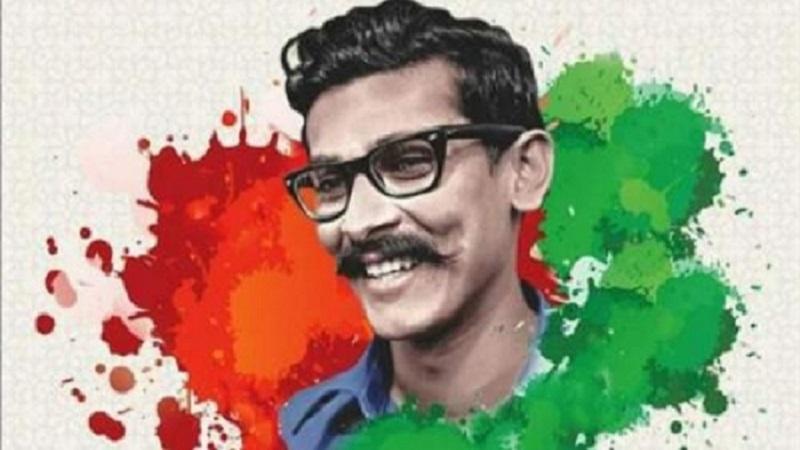
The legacy of Sheikh Kamal

Sheikh Kamal, blue pole-star in the sports arena!

SALEEM SAMAD

At PAF Shaheen School (now BAF Shaheen College), Dhaka, in 1967, everybody took a glimpse of a tall, well-built student with a light moustache, unkempt hair, wearing thick, black-framed spectacles in khaki trousers and a blue school uniform shirt.

Every time I saw the senior student, he was practicing cricket, a game not played by many Bangalees in the 1960s.

He was none but Sheikh Kamal, the eldest son of Bangabandhu Sheikh Mujibur Rahman, who was in prison accused of treason by the military dictator General Ayub Khan for conspiring to bifurcate the eastern province of Pakistan into an independent state, Bangladesh. In fact, the dream came into reality in less than five years.

Kamal was an avid promoter of Bangla-speaking students to join regular sports, especially cricket. Shaheen School fared very well in inter-school competitions in basketball, football, cricket, and other sporting events for his active involvement.

The sports in Shaheen School were dominated by Urdu-speaking students, whose parents and guardians had migrated from India after the 1947 partition, or their parents were serving in the Pakistan Air Force, PIA, and civil bureaucracy.

Kamal used to visit junior classes to recruit students who had a flair for music, dance, and drama.

Many others -- liberation war historian Afsan Chowdhury, acclaimed photographer Dr Shahidul Alam (Drik), Mohammad Ismail (of Rahimafrooz), heritage archive specialist Waqar Khan, Captain Sheikh Naseer Ahmed who was briefly managing director of Bangladesh Biman, Flight Engineer Faizul Islam, Tarique Islam (bagged the gold medal in the All Pakistan School Science Fair) -- did not join any games and sport.

Instead, they were more engaged in school addas during tiffin break, reading books, and watching English movies in Naz, Modhumita, and Balaka cinema halls.

He appeared for the SSC exam in 1967 and left the school. He continued his studies in Dhaka College and then joined Dhaka University, also organizing the East Pakistan Chhatra League.

The de facto student leader of the Bangla-speaking school students organized cultural programs in state-run Pakistan Television (now BTV) through his rightful connections.

PTV Dhaka Centre used to broadcast dance, music, and drama which was participated in by Shaheen School. Titumir’s “Basherkella” drama, directed by Sheikh Kamal, was also broadcast on BTV in 1967.

The school under his encouragement got the best singer and dance choreographers. Singer Munni Begum and Alamgir Haq, who shot into fame in Pakistan, were born in Bangladesh and studied in Shaheen School. Similarly, Afroze Jilany made her debut in the dance program in PTV and is now a choreographer in the United States.

Fortunately, Sheikh Kamal’s pro-active initiative had yielded a positive result. Nearly a dozen footballers and cricketers who studied in Shaheen School joined the national team. Amongst them was Kazi Salauddin, who is presently president of the Bangladesh Football Federation.

Most exciting were Tanveer Mazhar Islam Tanna (SSC 1967) and Jahangir Shah Badshah (SSC 1969) who played cricket in the national team after the independence of Bangladesh.

Days after the birth of Bangladesh, Sheikh Kamal with other friends and footballer Salauddin founded Abahani Krira Chakra in 1972.

Well, the sports enthusiast Kamal played football, cricket, basketball, and hockey. He also excelled in athletics. He was a brilliant organizer indeed. He was good “addabaz” and sang songs.

Before he was recruited in War Course to become a Mukti Bahini officer, he was a member of the Shadhin Bangla Football Team, which held football matches across India to raise funds for the 10 million refugees during the Liberation War in 1971.

At least 16 students joined the Mukti Bahini from the 1967 to 1972 batches. Sarkar Kamal Sayed, a Liberation War veteran, led Shaheen School in 1969 to grab the basketball championship in the Inter-School Sports Competition. He earned the Sword of Honour in the 2nd BMA (December 1975) in Bhatiari, Chittagong.

Ishtiaq Aziz Ulfat also joined the “Crack Platoon,” the guerrillas which made a shiver run through the spines of marauding Pakistan troops in Dhaka during the war. Similarly, Salim Akbar (1971 batch) received the gallantry award Bir Protik for his contribution.

Unfortunately, after 10 days of his 26th birthday and a month after his marriage with Sultana Kamal Khuki, they were brutally murdered by rogue military officers of the armoured corps when they assaulted the private residence of Bangabandhu Sheikh Mujibur Rahman on August 15.

Bangabandhu’s family members were murdered in cold blood on a fateful morning.

May they rest in peace!

First published in The Dhaka Tribune, 15 August 2020

Saleem Samad is an independent journalist, media rights defender, recipient of Ashoka Fellowship and Hellman-Hammett Award. He can be reached at saleemsamad@hotmail.com and on Twitter @saleemsamad