Buy.com Monthly Coupon
Showing posts with label Bangalees. Show all posts

Saturday, August 15, 2020

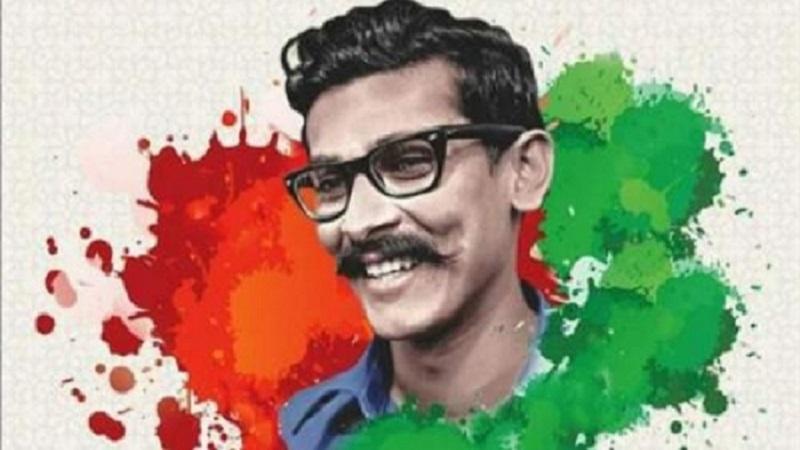
The legacy of Sheikh Kamal

Sheikh Kamal, blue pole-star in the sports arena!

SALEEM SAMAD

At PAF Shaheen School (now BAF Shaheen College), Dhaka, in 1967, everybody took a glimpse of a tall, well-built student with a light moustache, unkempt hair, wearing thick, black-framed spectacles in khaki trousers and a blue school uniform shirt.

Every time I saw the senior student, he was practicing cricket, a game not played by many Bangalees in the 1960s.

He was none but Sheikh Kamal, the eldest son of Bangabandhu Sheikh Mujibur Rahman, who was in prison accused of treason by the military dictator General Ayub Khan for conspiring to bifurcate the eastern province of Pakistan into an independent state, Bangladesh. In fact, the dream came into reality in less than five years.

Kamal was an avid promoter of Bangla-speaking students to join regular sports, especially cricket. Shaheen School fared very well in inter-school competitions in basketball, football, cricket, and other sporting events for his active involvement.

The sports in Shaheen School were dominated by Urdu-speaking students, whose parents and guardians had migrated from India after the 1947 partition, or their parents were serving in the Pakistan Air Force, PIA, and civil bureaucracy.

Kamal used to visit junior classes to recruit students who had a flair for music, dance, and drama.

Many others -- liberation war historian Afsan Chowdhury, acclaimed photographer Dr Shahidul Alam (Drik), Mohammad Ismail (of Rahimafrooz), heritage archive specialist Waqar Khan, Captain Sheikh Naseer Ahmed who was briefly managing director of Bangladesh Biman, Flight Engineer Faizul Islam, Tarique Islam (bagged the gold medal in the All Pakistan School Science Fair) -- did not join any games and sport.

Instead, they were more engaged in school addas during tiffin break, reading books, and watching English movies in Naz, Modhumita, and Balaka cinema halls.

He appeared for the SSC exam in 1967 and left the school. He continued his studies in Dhaka College and then joined Dhaka University, also organizing the East Pakistan Chhatra League.

The de facto student leader of the Bangla-speaking school students organized cultural programs in state-run Pakistan Television (now BTV) through his rightful connections.

PTV Dhaka Centre used to broadcast dance, music, and drama which was participated in by Shaheen School. Titumir’s “Basherkella” drama, directed by Sheikh Kamal, was also broadcast on BTV in 1967.

The school under his encouragement got the best singer and dance choreographers. Singer Munni Begum and Alamgir Haq, who shot into fame in Pakistan, were born in Bangladesh and studied in Shaheen School. Similarly, Afroze Jilany made her debut in the dance program in PTV and is now a choreographer in the United States.

Fortunately, Sheikh Kamal’s pro-active initiative had yielded a positive result. Nearly a dozen footballers and cricketers who studied in Shaheen School joined the national team. Amongst them was Kazi Salauddin, who is presently president of the Bangladesh Football Federation.

Most exciting were Tanveer Mazhar Islam Tanna (SSC 1967) and Jahangir Shah Badshah (SSC 1969) who played cricket in the national team after the independence of Bangladesh.

Days after the birth of Bangladesh, Sheikh Kamal with other friends and footballer Salauddin founded Abahani Krira Chakra in 1972.

Well, the sports enthusiast Kamal played football, cricket, basketball, and hockey. He also excelled in athletics. He was a brilliant organizer indeed. He was good “addabaz” and sang songs.

Before he was recruited in War Course to become a Mukti Bahini officer, he was a member of the Shadhin Bangla Football Team, which held football matches across India to raise funds for the 10 million refugees during the Liberation War in 1971.

At least 16 students joined the Mukti Bahini from the 1967 to 1972 batches. Sarkar Kamal Sayed, a Liberation War veteran, led Shaheen School in 1969 to grab the basketball championship in the Inter-School Sports Competition. He earned the Sword of Honour in the 2nd BMA (December 1975) in Bhatiari, Chittagong.

Ishtiaq Aziz Ulfat also joined the “Crack Platoon,” the guerrillas which made a shiver run through the spines of marauding Pakistan troops in Dhaka during the war. Similarly, Salim Akbar (1971 batch) received the gallantry award Bir Protik for his contribution.

Unfortunately, after 10 days of his 26th birthday and a month after his marriage with Sultana Kamal Khuki, they were brutally murdered by rogue military officers of the armoured corps when they assaulted the private residence of Bangabandhu Sheikh Mujibur Rahman on August 15.

Bangabandhu’s family members were murdered in cold blood on a fateful morning.

May they rest in peace!

First published in The Dhaka Tribune, 15 August 2020

Saleem Samad is an independent journalist, media rights defender, recipient of Ashoka Fellowship and Hellman-Hammett Award. He can be reached at saleemsamad@hotmail.com and on Twitter @saleemsamad

Tuesday, March 17, 2020

Bangabandhu ... statesman among statesmen

SALEEM SAMAD
Bangabandhu Sheikh Mujibur Rahman, days after he returned home following more than nine months of languishing in a prison in Pakistan --- "a journey from darkness to light"--- in early January 1972 was catapulted to being a statesman of the third world.
After Bangabandhu, the independence hero of Bangladesh took charge of the war-ravaged country of 75 million, he soon became an icon of independence, freedom, democracy, socialism and secularism of the south-south nations.
The brutal birth of Bangladesh, after a bloody war with the marauding Pakistan military along with its Islamist militia and dreaded henchmen, as a new sovereign state in South Asian politics with its very strategic geographic location and in the midst of very complicated international politics was a significant event in modern history.
Bangladesh was born at the time 'when a global transformation of power was going on with the formation of the Indo-Soviet axis vis-a-vis Sino-American rapprochement which not only had a bearing on the emergence of Bangladesh but also had an impact on the foreign policy of the country that was emerging'.
The emergence of Bangladesh as an independent state in 1971 in South Asia appears to be a unique phenomenon in international affairs.
Immediately after Sheikh Mujib's homecoming, Bangladesh achieved recognition from all major countries, except Saudi Arabia and China. He was able to establish Bangladesh in the comity of nations.
He declared, "I would like it [Bangladesh] to become the Switzerland of the East." The word Switzerland had two meanings – peaceful coexistence and national development.
The enigmatic world leader in his casual dress in long flowing punjabi, pyjama and black vest dubbed as 'Mujib Coat', declared that Bangladesh would steer clear of the Cold War and would remain non-partisan in the tug of the Cold War between the US and the Soviet Union.
The charismatic leader became personal friends with a wide range of global personalities --- from Indira Gandhi of India to Fidel Castro of Cuba, from Houari Boumediene of Algeria to Marshal Josip Broz Tito of Yugoslavia to Anwar Sadat of Egypt, Alexei Kosygin of the Soviet Union to Zayed bin Sultan Al Nahyan of the Emirates, from Sir Edward Heath of the United Kingdom to Kakuei Tanaka of Japan, and from Senator Edward Kennedy to Prince Karim Aga Khan.
His contacts with the equally charismatic US leader Senator Edward Kennedy allowed Sheikh Mujib to express his thanks to the American people for their unflinching support for Bangladesh's independence, which eventually laid the foundations of Bangladesh's relations with the United States.
With the help of Bangabandhu's international friends and admirers, Bangladesh joined the Organisation of the Islamic Conference (OIC), the Commonwealth of Nations and the Non-Aligned Movement (NAM).
The iconic Cuban leader Fidel Castro compared Mujib's personality with the Himalayas. "I have not seen the Himalayas, but I have seen Sheikh Mujib. In personality and in courage, this man is the Himalayas. I have thus had the experience of witnessing the Himalayas," the Cuban supreme leader remarked during the Non-Aligned Summit in 1973.
For Sheikh Mujib, the Chinese veto to appease Pakistan in blocking Bangladesh's membership to the United Nations was a passing cloud, a test of time.
By dint of Bangabandhu's statesmanship, Bangladesh was steered into the United Nations and at the same time, Sheikh Mujib pursued the goal of coming out of superpower rivalry, and two years after liberation in 1971, Bangladesh joined the Non-Aligned Movement. At the NAM summit in 1973, Bangabandhu was able to draw the attention of world leaders to his diplomacy of friendship for all and malice to none.
Addressing the UN General Assembly on 25 September 1974, Sheikh Mujib categorically said, "Bangladesh has consistently pursued an independent non-aligned foreign policy promoting friendship with all countries of the world based on mutual respect for sovereignty, equality, territorial integrity and non-interference in the internal affairs of other' states".
His statesmanship earned him global accolades. The World Peace Council honoured him with the Julio-Curie Peace Prize for his extraordinary contribution to the oppressed people of the world on 23 May 1973, and from "Bangabandhu", friend of Bengal, he became a universal friend.
No other global leaders could become such popular "friends of the world", as Bangabandhu Sheikh Mujibur Rahman could. His career as a national politician and as a global statesman will surely be remembered in the years to come.

First published in The Business Standard, 17 March 2020

The writer is an independent journalist, media rights defender, recipient of Ashoka Fellow (USA) and Hellman-Hammett Award. Twitter @saleemsamad, Email saleemsamad@hotmail.com

Wednesday, November 27, 2019

Facebook helped fuel hate-campaign against Rohingyas

Bangladesh now host over 1.1 million Rohingyas after 700,000 fled Myanmar since August, 2018 when insurgents’ attack triggered a military crackdown, which the UN say constituted to ethnic cleansing. File Photo/Reuters
SALEEM SAMAD
Here is how Facebook which dominates social media has failed the vulnerable communities, especially concerning the hate campaign and fake news against the Rohingyas and so-called illegal Muslim Bangalees in Assam.
The Facebook admin team has miserably failed to delete 93 percent of posts containing speech violating its own “Community Standards” home rules, a study claimed.
The biggest allegation comes from India, describing how Facebook failed to delete hundreds of memes, images, and posts targeting caste, LGBT, and religious minorities.
The posts demonized Rohingya Muslims, the minority group that had been targeted for persecution in Myanmar. The Bangla-speaking Muslims in the neighboring state of Assam, India were also victims of the wrath of ruling party henchmen.
Social media research unit Equality Labs found that 93 percent of the posts reported to Facebook that contained speech violating the organization's own rules remained on the platform.
Facebook has failed to halt the persecution of Rohingyas fleeing Myanmar to Bangladesh. Analysis by BuzzFeed News sheds new light on Facebook's failures on the Rohingya issue.
The United Nations calls Myanmar’s treatment of the Muslim Rohingya minority a genocide and says Facebook has done little to tackle hate speech.
Lawmakers from the Arakan state of Myanmar’s persecuted Rohingya minority regularly posted hateful anti-Rohingya content on Facebook. In some cases, these explicitly called for violence preceding the atrocities since the military campaign of ethnic cleansing began in August 2017.
Posts by members of Rakhine state’s parliament compared Rohingya to dogs, adding that Muslim women were too ugly to rape, falsely stated that Rohingyas torched their own houses for a payout from NGOs and accused Muslims of seeking to become the dominant group in the state by having too many children.
As the Rohingya crisis worsened in Arakan, the analysis showed that Facebook took no action for months and years. The platform finally removed many posts after BuzzFeed News sent links to the concerned person on Facebook.
UN investigators in a damning report also took Facebook to task, describing it as a “useful instrument for those seeking to spread hate,” adding that the company’s response to concerns about its role had been “slow and ineffective.”
In Myanmar, Facebook admitted shortcomings — as elsewhere — after its policies were cited for exacerbating ethnic cleansing, and promised to reform its processes, by hiring more content moderators.
Hate campaign also targeted Bangla-speaking Muslims in the Indian state of Assam which went viral on Facebook, even as the country’s government launched a controversial program to crack down on people immigrating illegally from Bangladesh.
The report, titled “Megaphone for Hate,” released by Avaaz, a nonprofit social media activist network found serious failures of the popular social media platform Facebook.
Comments and posts that called Bangalee Muslims “pigs,” “terrorists,” “dogs,” “rapists,” and “criminals,” — seemingly in violation of Facebook’s standards on hate speech, showed the Avaaz review.
Facebook once prided itself as a largely neutral platform for content. But the company has devalued its status amid calls from the UN and other groups to take greater responsibility for what users post — especially involving calls for violence.
In response to Buzzfeed, a spokesperson for Facebook said: “The company respects and seeks to protect the rights of marginalized communities in India and elsewhere, and pointed to its rules against hate speech.”
Facebook said that it proactively deleted almost all problematic content on its platform before it’s reported, but hate speech is tougher to recognize because of linguistic and cultural context. But many fear it is too little, too late.
Equality Labs also says Facebook’s staff lacks the diversity that would enable it to moderate hate speech targeting minority groups.
Meanwhile, the Facebook founder Mark Zuckerberg has publicly stated he hopes to move toward automating a substantial part of its content management process using artificial intelligence tools, a statement echoed by company officials in interviews with BuzzFeed News.
NGOs and free speech defenders say it’s tough to imagine that intelligent machines will produce the kind of linguistic and cultural understanding it will take to combat these forms of speech.

First published in the Bangla Tribune online on 27 November 2019

Saleem Samad is an independent journalist, media rights defender, also a recipient of Ashoka Fellow (USA) and Hellman-Hammett Award. He can be reached at saleemsamad@hotmail.com