Buy.com Monthly Coupon
Showing posts with label Bangalee. Show all posts

Sunday, December 04, 2022

Peace on silver jubilee remains elusive for hill people


SALEEM SAMAD

People of the hill forest, an abode of the Mongoloid ethnic Adivasis refuse to celebrate the historic signing of the Chittagong Hill Tracts (CHT) Peace Accord on December 2, which brought to an end a protracted autonomy-seeking insurgency for more than two decades.
However, the government is officially celebrating the silver jubilee of the Peace Accord. The government-sponsored supplements in mainstream newspapers failed to mention the implementation of the accord and instead runs a list of physical developments including how many solar-panel sets were distributed, roads and bridges were built and blah, blah.
On the other hand, the Parbatya Chattagram Jana Samhati Samiti (PCJSS) in a paid supplement in Dainik Samakal stated that in 25 years the peace accord has not been fully implemented, which remains a bone of contention among the ethnic communities in the hills.
Out of 72 provisions of the accord, only 25 provisions and 18 clauses have been partially implemented, said PCJSS supremo Jyotirindra Bodhipriya Larma a.k.a. Shantu Larma on the occasion of the 25th anniversary at Liberation War Museum auditorium which was not a surprise for many.
On the eve of the accord’s silver jubilee, a full-fledged Hill District Council in Rangamati, Khagrachari and Bandarban has not been formed through direct elections. The interim Hill District Councils were formed with hand-picked ruling party members, mostly Bangalee and a few Adivasis. This undemocratic and partisan path gives a wrong message to the hill people of a lack of political commitment.
The government remains silent when the implementation of the fundamental provisions of the accord was raised, which caused further complications.
Despite all odds, Shantu Larma seems hopeful that the accord will surely see the light of day before the ‘golden jubilee’ celebration. Then only the hill people will be able to celebrate the accord, he quipped.
Unless the peace accord, signed on 2 December 1997 during the first tenure of Sheikh Hasina’s government (1996-2001), peace will remain elusive for the Adivasis of the picturesque hills.
In the last quarter century, the CHT Peace Accord Implementation Committee has held its 6th meeting recently. This also gives an impression of the seriousness of the government’s will.
On the other side, the CHT Land Commission formed under the provision of the CHT Accord has not progressed at all.
Nevertheless, Shantu Larma seems to have faith in Prime Minister Sheikh Hasina, who he said has the sincere political will to get the peace deal signed and a bill passed in the parliament.
He argued that the responsibility to implement the peace accord lies with the state and nobody else, not PCJSS.
A road map to implement the accord to achieve peace was also agreed upon with the government. It was not understood what hindered the delay in the implementation of the accord.
The peace process for a solution with the government’s liaison committee had been initiated during the military junta of General H M Ershad. Later when Khaleda Zia’s Bangladesh Nationalist Party (BNP) came to power, the dialogue with the government continued and the end result was zero.
Both regimes experienced hiccups as the liaison committees could not envisage a political solution to the crisis.
When Sheikh Hasina came to power in 1996, a year later a rapid series of dialogues resulted in the CHT Peace Accord after the government recognised the crisis as a political problem.
The CHT Peace Accord was written with the supreme sacrifice of the blood of the Adivasis and the political vision of the Awami League government.
“We are continuing the dialogue to achieve peace,” PCJSS supremo said.
In frustration, Shantu Larma remarked that: “It does not take 25 years to implement a peace accord.”
Most people in Bangladesh, especially those visiting the hill forests as a tourist are not aware that martial law has long gone away with the fall of a dictator in 1990, a de facto military rule continues, and ‘Operation Uttaran’ has not been withdrawn, even though it was agreed in the accord to stop targeting the hill people.
The military dictator General Ziaur Rahman deliberately wanted to Islamise CHT and pushed tens of thousands of landless Bangalee Muslim settlers from the floodplains.
Presently, the authorities are systematically making efforts to “Bangalise” the region – further marginalising the Adivasis.
For the last 25 years, the Adivasi youths and student leaders launched a violent movement to pressure the government to realise the accord’s implementation but were frustrated.
The Adivasis will continue to suffer in pain and agony for non-compliance with the much talked about peace accord with the autonomy-seeking armed ethnic minorities of the CHT.

First published in The News Times, December 3, 2022
Saleem Samad, is an independent journalist, media rights defender, recipient of Ashoka Fellowship and Hellman-Hammett Award. He could be reached at <saleemsamad@hotmail.com>; Twitter @saleemsamad

Saturday, August 15, 2020

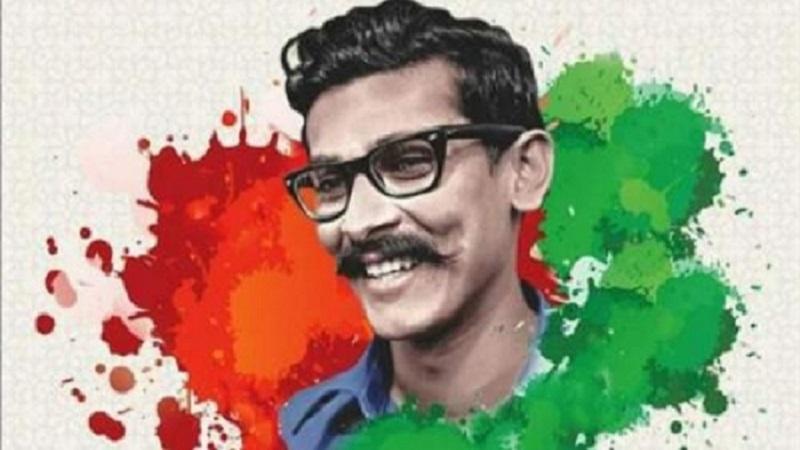
The legacy of Sheikh Kamal

Sheikh Kamal, blue pole-star in the sports arena!

SALEEM SAMAD

At PAF Shaheen School (now BAF Shaheen College), Dhaka, in 1967, everybody took a glimpse of a tall, well-built student with a light moustache, unkempt hair, wearing thick, black-framed spectacles in khaki trousers and a blue school uniform shirt.

Every time I saw the senior student, he was practicing cricket, a game not played by many Bangalees in the 1960s.

He was none but Sheikh Kamal, the eldest son of Bangabandhu Sheikh Mujibur Rahman, who was in prison accused of treason by the military dictator General Ayub Khan for conspiring to bifurcate the eastern province of Pakistan into an independent state, Bangladesh. In fact, the dream came into reality in less than five years.

Kamal was an avid promoter of Bangla-speaking students to join regular sports, especially cricket. Shaheen School fared very well in inter-school competitions in basketball, football, cricket, and other sporting events for his active involvement.

The sports in Shaheen School were dominated by Urdu-speaking students, whose parents and guardians had migrated from India after the 1947 partition, or their parents were serving in the Pakistan Air Force, PIA, and civil bureaucracy.

Kamal used to visit junior classes to recruit students who had a flair for music, dance, and drama.

Many others -- liberation war historian Afsan Chowdhury, acclaimed photographer Dr Shahidul Alam (Drik), Mohammad Ismail (of Rahimafrooz), heritage archive specialist Waqar Khan, Captain Sheikh Naseer Ahmed who was briefly managing director of Bangladesh Biman, Flight Engineer Faizul Islam, Tarique Islam (bagged the gold medal in the All Pakistan School Science Fair) -- did not join any games and sport.

Instead, they were more engaged in school addas during tiffin break, reading books, and watching English movies in Naz, Modhumita, and Balaka cinema halls.

He appeared for the SSC exam in 1967 and left the school. He continued his studies in Dhaka College and then joined Dhaka University, also organizing the East Pakistan Chhatra League.

The de facto student leader of the Bangla-speaking school students organized cultural programs in state-run Pakistan Television (now BTV) through his rightful connections.

PTV Dhaka Centre used to broadcast dance, music, and drama which was participated in by Shaheen School. Titumir’s “Basherkella” drama, directed by Sheikh Kamal, was also broadcast on BTV in 1967.

The school under his encouragement got the best singer and dance choreographers. Singer Munni Begum and Alamgir Haq, who shot into fame in Pakistan, were born in Bangladesh and studied in Shaheen School. Similarly, Afroze Jilany made her debut in the dance program in PTV and is now a choreographer in the United States.

Fortunately, Sheikh Kamal’s pro-active initiative had yielded a positive result. Nearly a dozen footballers and cricketers who studied in Shaheen School joined the national team. Amongst them was Kazi Salauddin, who is presently president of the Bangladesh Football Federation.

Most exciting were Tanveer Mazhar Islam Tanna (SSC 1967) and Jahangir Shah Badshah (SSC 1969) who played cricket in the national team after the independence of Bangladesh.

Days after the birth of Bangladesh, Sheikh Kamal with other friends and footballer Salauddin founded Abahani Krira Chakra in 1972.

Well, the sports enthusiast Kamal played football, cricket, basketball, and hockey. He also excelled in athletics. He was a brilliant organizer indeed. He was good “addabaz” and sang songs.

Before he was recruited in War Course to become a Mukti Bahini officer, he was a member of the Shadhin Bangla Football Team, which held football matches across India to raise funds for the 10 million refugees during the Liberation War in 1971.

At least 16 students joined the Mukti Bahini from the 1967 to 1972 batches. Sarkar Kamal Sayed, a Liberation War veteran, led Shaheen School in 1969 to grab the basketball championship in the Inter-School Sports Competition. He earned the Sword of Honour in the 2nd BMA (December 1975) in Bhatiari, Chittagong.

Ishtiaq Aziz Ulfat also joined the “Crack Platoon,” the guerrillas which made a shiver run through the spines of marauding Pakistan troops in Dhaka during the war. Similarly, Salim Akbar (1971 batch) received the gallantry award Bir Protik for his contribution.

Unfortunately, after 10 days of his 26th birthday and a month after his marriage with Sultana Kamal Khuki, they were brutally murdered by rogue military officers of the armoured corps when they assaulted the private residence of Bangabandhu Sheikh Mujibur Rahman on August 15.

Bangabandhu’s family members were murdered in cold blood on a fateful morning.

May they rest in peace!

First published in The Dhaka Tribune, 15 August 2020

Saleem Samad is an independent journalist, media rights defender, recipient of Ashoka Fellowship and Hellman-Hammett Award. He can be reached at saleemsamad@hotmail.com and on Twitter @saleemsamad

Thursday, August 06, 2020

Can Bangladesh shun political Islam?


SALEEM SAMAD

For millions of people in an impoverished Bangladesh, it seems to have ushered a political blessing. The nation which fought a bloody war of independence in 1971 against Pakistan to establish secularism and democracy was obliterated by subsequent military juntas and pro-Islamic governments.

The first constitution has enshrined secularism, democracy, socialism, and nationalism as the key political philosophy of the independence of Bangladesh, which reflects the spirit of the independence war when the eastern province severed from Pakistan in 1971.

After the assassination of the architect of Bangladesh independence Sheikh Mujibur Rahman in a military putsch in 1975, the military-backed government of General Ziaur Rahman, a former Mukti Bahini commander, with a swagger stick doctored the constitution’s guiding principle and scribbled “Bismillah’ir Rahman’ir Rahim (Faith in Allah)” in 1979 to establish legitimacy of his military government.

After Mujib’s daughter Sheikh Hasina, leader of the Awami League swept to power in 2008 pledged to restoration of secularism and the trial of war criminals.

The Supreme Court in its landmark verdict forbids political parties that advocate political Islam. The apex court also asked to reinstate the four key principles in the constitution.

In separate voluminous judgements in July and August of 2010, the apex court pulled down the Fifth Amendment of 1979 and Seventh Amendment of 1986, including provisions that allowed religious-based politics, which was legitimized by tyrannical rules from 15 August 1975 to 9 April 1979 and 24 March 1982, and 10 November 1986 respectively.

The court in a ruling said the Seventh Amendment retroactively legitimized the very acts that successfully engineered the coups by former Chief of Army Staff Lt. Gen. Husain Muhammad Ershad unseated an elected government of President Justice Abdus Sattar in March 1982.

General Ershad in a bid to woo moral support of majoritarian Sunni Muslims had rewritten the constitution which determines “Islam as state religion” of a once secular nation.

The higher court judges noted, “The proclamation of martial law and its regulations and orders and all actions under this law shall remain illegal until Qayamat (the Last Day of Judgment). “The martial law was beyond the mandate of the constitution and will be invalid for eternity,” and said, “a usurper is a usurper.” It is deemed that the judgement squarely blamed both the military leaders have acted as a usurper to grab the state power.

The apex court’s verdict on the Fifth Amendment said, “The perpetrators of such illegalities should also be suitably punished and condemned so that in future no adventurist, no usurper, would dare to defy the people, their constitution, their government, established by them with their consent.”

The court dubs the “extra-constitutional adventurers” as predators of democracy who ushered military regimes.

General Zia was assassinated in a military coup d’état in 1982 and General Ershad was ousted in 1990, after a bloody pro-democracy revolution. He served a prison sentence for corruption but is a key ally coalition of the ruling party and died last year of old age complications.

Excited by hearing the superior court verdict Shahriar Kabir, a secularist, researcher and staunch advocate for the trial of the war criminals said the people’s mandate in the last general election for the restoration of secularism and trial of perpetrators responsible for the crime against humanity in 1971.

“Religious based politics was prohibited after brutal birth of Bangladesh. We have seen youths belonging to Jamaat-e-Islami (JeI) were engaged as henchmen of marauding Pakistan military. They raised Al-Badr, a death squad to kidnap and murder hundreds of intellectuals who could not escape for their safety and security,” he explained.

All the JeI leaders of the secret militia group Al-Badr were handed down maximum punishment for war crimes and crimes against humanity by the International Crimes Tribunal.

The journalist and film-maker Kabir said General Zia, after the assassination of Sheikh Mujib in a bid to gain political support, withdrew the ban on religious politics and allowed Islamic parties to regain grounds.

The Bangladesh Nationalist Party founded by assassinated General Rahman, presently led by his widow, Begum Khaleda Zia appealed the apex court’s first ruling on the Fifth Amendment last January and lost her in a crucial legal battle which was detrimental to her party.

Notwithstanding, Bangladesh is a Sunni Muslim-majority nation, most people practice a moderate version of Sunni Islam. In the long run, the country’s politicians want the country to transform into a secular democracy rather than “Islam as State Religion”.

Pending a verdict from the Appellate Division of the Supreme Court, the Bangladesh Election Commission has struck off the name of Jamaat-e-Islami (JeI) as a political party. Officially the Islamist party was unable to participate in the 2014 and 2018 general election. Unfortunately, the Islamist party failed to satisfy the Election Commission that it is a Bangladesh origin party, upholds the Bangladesh constitution, and expresses solidarity with the independence of Bangladesh.

JeI handbook and various published documents, the party did not accept the state constitution and demanded to override it with Quran and Sharia Law upon 164 million secular and moderate Muslim majority nation. Unfortunately, the party failed to muster moral support of the majority.

Besides, the party didn’t recognise Bangladesh independence. JeI was politically, morally, and physically supported by the marauding Pakistan military.

Regarding banning of Islamic parties, Sheikh Hasina told the Jatiya Sangsad (parliament) said the Islamic parties will not be banned, while “Bismillah’ir Rahman’ir Rahim” and state religion Islam will remain in the constitution.

Social justice activist Kabir is visibly disturbed regarding the delay in banning of religious-based political parties, especially JeI which opposed the independence of Bangladesh.

He said the prime minister’s statement in parliament has confused the nation and contradicts the verdict of the superior court. The Islamic parties would continue to function and overtly campaign against the war crimes trial.

First published in The South Asian Digest on 6 August 2020

Author is an independent journalist, media rights defender in Bangladesh. Recipient of Ashoka Fellowship and Hellman-Hammett Award

Tuesday, March 17, 2020

Mujib’s challenge was the road to democracy

Bangabandhu Sheikh Mujibur Rahman - Photo Credit: Rafiqur Rahman, Reuters
SALEEM SAMAD
How the architect of our independence paved the way for a democratic nation
Days after Bangabandhu Sheikh Mujibur Rahman returned from Pakistan, after languishing in solitary confinement in Mianwali prison, the stalwart politician quickly understood the challenges ahead.
The architect of Bangladesh’s independence, by dint of political wisdom, overcame the crisis. His first task was to bag diplomatic recognitions. Except for India, Bhutan, and later the Soviet bloc, no Western country had recognized independent Bangladesh.
Mujib decided to send strong messages to the global community and international bodies that war-torn Bangladesh had stepped into democracy.
Just a day after his home-coming on January 10, 1972, Bangabandhu promulgated the “Provisional Constitution of Bangladesh Order of 1972.” The order stated that those elected in the national and provincial parliament held in December 1970 and January 1971 would be deemed as members of the Constituent Assembly of Bangladesh. On the second day, January 12, the leader took an oath of office as the prime minister of Bangladesh and formed an 11-member cabinet of ministers.
Of course, no other political leader had ever been able to drive their country to the road to democracy after a bloody war of independence. In less than three months, Sheikh Mujib held Awami League’s first Council Session on April 7, 1972.
Two days later, the Constituent Assembly held its first session at the Constituent Assembly Hall, which is now the prime minister’s office.
The Constituent Assembly merged all 403 elected members from the national and provincial assembly as Members of the Constituent Assembly. Among the 401 members, all were from Awami League, except for Surenjit Sen Gupta from NAP (Muzaffar), and independent member Manebendra Narayan Larma from the Chittagong Hill Tracts; they were in the opposition bench.
On the first day, the Constituent Assembly formed a 34-member Constitution Drafting Committee with Dr Kamal Hossain, Law and Parliamentary Affairs Minister in the chair.
Kamal Hossain wrote the draft in English and Anisuzzaman, a professor of Bangla from Chittagong University, painstakingly translated it to Bangla. Kamal Hossain was twice summoned by Bangabandhu for consultation regarding the draft constitution. On both occasions, he was accompanied by Professor Anisuzzaman.
Bangabandhu advised constitutional provisions to bifurcate religion and politics. The second was to block party law-makers from crossing the floor during voting in the parliament. Both pieces of advice were included in the first constitution and both the clauses had drawn flak from lawmakers.
The third issue regarding the citizenship was debated by independent lawmaker Manabendra Larma, for the use of the term “Bangali” to describe all Bangladeshi citizens.
He argued: “Under no definition or logic can a Chakma be a Bangali or a Bangali be a Chakma as citizens of Bangladesh, we are all Bangladeshis, but we also have a separate ethnic identity.”
Nevertheless, the draft constitution was adopted with thunderous applause on November 4, 1972, and took effect from December 16, 1972 -- the day 93,000 marauding Pakistan troops surrendered at Dhaka -- and lawmakers decided to commemorate the day as Victory Day.
On December 17, Sheikh Mujibur Rahman and his cabinet colleagues took a fresh oath on the new constitution -- the four pillars of which were nationalism, democracy, socialism, and secularism. The Constituent Assembly decided to hold the first general election on March 7, 1973, to commemorate Bangabandhu’s historic fiery speech at Suhrawardy Uddyan.
After 25 years, the political battle of realizing regional autonomy against the Pakistan junta had yielded a constitution for an independent and sovereign nation.
As Mohiuddin Ahmed, a writer and political historian, described in his book “Bela Obela,” Awami League had envisioned to draft and adopt a constitution in the Constituent Assembly in the shortest time.
Finally, the “road to democracy” adopted a new path after the constitution came into effect.

First published in the Dhaka Tribune on 17 March 2020

Saleem Samad is an independent journalist, media rights defender, and a recipient of the Ashoka Fellow and Hellman-Hammett Award. He can be followed on Twitter @saleemsamad