Buy.com Monthly Coupon
Showing posts with label China. Show all posts

Friday, September 12, 2025

Nepalese Protesters Cries 'Don't Mess With GenZ'

SALEEM SAMAD

We know that the Nepal Prime Minister K P Sharma Oli has resigned and fled on a military helicopter to an unknown destination amid the nation reels from its worst two-day unrest in decades, and 19 people have died in the streets of the capital Kathmandu. The 73-year-old Khadga Prasad Sharma Oli, known as K P Sharma Oli, leads a coalition government that includes the Communist Party of Nepal (Unified Marxist–Leninist) and the staunchly pro-Indian Nepali Congress.

Many South Asian political scientists and observers have noted that the people’s uprising against corrupt and autocratic governments has shadows that occurred in Sri Lanka (2022), then Bangladesh (2024), and now Nepal.

The curious question is, where will the people’s revolution strike next? The uprising will spark only where social media is curbed and corruption among politicians in alliance with bureaucracy and police administration becomes unbearable for the ‘aam janata’ (general public), says Dr Rakim Al Hasan, Executive Director of Centre For Partnership Initiative.

Nepal’s political legacy is no different from the South Asian nations. The country erupted into riot after a social media ban was clamped as an online anti-elite movement was gaining traction.

The Himalayan country is currently witnessing one of its most widespread youth uprisings in modern history, triggered by a government-imposed social-media ban and later followed by growing anger over corruption and nepotism. What sparked Nepal’s Gen Z protests and the rise of the ‘Nepo kid’ campaign?

The ban came just as a viral online movement targeting political elites and their children – dubbed “nepo kids” was gaining traction. Borrowing from the Hollywood term “nepo baby,” Nepali users began exposing the lavish lifestyles of politicians’ children, accusing them of misusing public funds.

Posts on TikTok and Reddit, some viewed over a million times, highlighted foreign trips, luxury purchases, and perceived entitlement, sparking outrage among young citizens. While the social-media shutdown served as the immediate catalyst, protesters say the deeper issue is systemic corruption, inequality, and discrimination.

The Kathmandu government argued it is not banning social media but trying to bring them in concurrence with the Nepali laws. The social media users in the Himalayan country challenged the constitution and traditional laws of the state.

The uprising broke out after the government last week blocked access to 26 platforms – including Facebook, WhatsApp, Instagram, Alphabet’s YouTube, China’s Tencent, Snapchat, Pinterest, and X (formerly Twitter) following a directive requiring all social-media companies to register with the Ministry of Communication and Information Technology.

Thousands of young Nepali people, many in their 20s or even younger, got together to protest in the capital Kathmandu and other cities in the Himalayan country. Many of the protesters were students and joined the demonstrations in their school or college uniforms. The organizers called the protests “demonstrations by Gen Z”.

The government quickly lifted the ban and launched an investigation, but it is too little and too late. The agitating youths demanded the removal of political parties from power and the establishment of a civilian government. The youth representatives have urged during the dialogue with the state party and the Chief of Nepal Army Staff, Ashokraj Sigdel.

The army has urged the protesting youths to remain calm and hold peace talks, but said the youths that after Parliament has been dissolved. The army has been deployed since 10 September morning. The curfews remain in place as discontent continues to simmer.

The army has warned of strict action against vandalism, arson, looting, and violent activities in the name of agitation as punishable crimes. As a result, life in the valley is gradually returning to normal, and the situation has significantly calmed down.

Many of the youth protesters have voiced support for Kathmandu Mayor Balen Shah, a former popular rapper and engineer by profession, to lead the dialogue for peace and security, which covers issues such as forming a civilian government, dissolving parliament, and holding fresh elections.

Meanwhile, the chaotic city of Kathmandu has begun to be cleaned up after the violent protests. Locals and agitating youths are taking to the streets to clean up the mess after the street riots. Last week, Nepal’s government blocked access to several social media platforms after the companies missed the deadline to register under new regulations, aimed at cracking down on misuse.

A government notice directed the regulator, Nepal Telecommunications Authority, to deactivate unregistered social media. The services will be restored once the platforms comply with its order, the government said. Local media reported that the banned platforms include Meta’s Facebook, Instagram, and WhatsApp, Alphabet’s YouTube, China’s Tencent and Snapchat, Pinterest, and X. Blocking the platforms had hit content creators, influencers, and cut small businesses from reaching customers.

The government says it took the action after repeated warnings to the platforms to open offices in Nepal, a Cabinet decision last month setting a deadline, as well as a 17 August Supreme Court ruling that undermines Nepal’s open society, and also requiring them to register and pay the requisite taxes.

However, the Bill cited in the ban, ‘The Operation, Use, and Regulation of Social Media in Nepal’ has not yet been passed by Parliament. Some social media platforms, which were already paying taxes in Nepal even though they are not officially registered, have also been blocked.

The Regional Director of the New York-based Committee to Protect Journalists (CPJ) Beh Lih Yi said ‘Nepal’s sweeping ban on social media sets a dangerous precedent for press freedom. Blocking online news platforms vital to journalists will undermine reporting and the public’s right to information.’

The rights activists have said that while there is a need for the government to regulate extreme content and hate speech, officials appear to be more intent on clamping down on free speech and trying to force platforms to share the revenue.

Nepal’s youngsters say the protest is an expression of their widespread frustration over the social media ban. The widespread arson was sparked by the killing of at least 19 young protesters as they tried to storm the century-old old magnificent parliament building.

A peaceful rally by youth against corruption and nepotism by Nepal’s Gen Z (Generation Z) movement in Kathmandu escalated after the killings. With the prime minister and other ministers having fled the capital, the government not visible and the security forces in retreat, protesters have had the run of the three cities of Kathmandu Valley – Bhaktapur, Lalitpur, and Kathmandu.

As protests spread, police withdrew from guarding official buildings, and thousands of protesters entered the federal government secretariat at Singha Darbar, ransacking and setting fire to buildings and the Parliament building, homes of ministers, hotels and other properties.

Kathmandu Valley was shrouded in smoke under heavy monsoon clouds with a pungent smell in the capital. Many people in Nepal think corruption is rampant, and the government of Prime Minister Sharma Oli has been criticized by opponents for failing to deliver on its promises to tackle graft or make progress in addressing longstanding economic issues.

All members of the opposition RPP (Rastriya Prajatantra Party (RPP) is a constitutional monarchist and Hindu nationalist political party in Nepal, and the RSP (Rastriya Swatantra Party, a National Independence Party) have resigned from parliament. The headquarters of all three main political parties were also set on fire.

Some of the protesters also want an end to federalism, which was also the demand of opposition parties like the RSP and the pro-monarchist RPP. Although the protests were sparked by Gen Z protesters, disparate groups, including monarchists, anti-federalists, disgruntled Maoists, dissidents from the mainstream parties, and others, have joined the protests.

One thing that united them is extreme frustration with the mainstream parties and their leaders, past and present, who have taken turns running and ruining the country. Nepal has struggled with political instability for decades and has seen 14 governments in 17 years.

Nepal’s people’s revolution in 1950–1951, called the Anti-Rana Movement, reduced the king to a figurehead. With support from India and Nepali Congress activists, the revolution ended the Rana autocracy.

The 1990 People’s Movement, a mass uprising, forced King Birendra to end the absolute monarchy. Nepal became a constitutional monarchy with multi-party democracy. The 2006 People’s Movement, after King Gyanendra seized direct power in 2005, ignited mass protests. In April 2006, the king was forced to restore parliament and hand power to the people.

This paved the way for the monarchy’s abolition in 2008, when Nepal became a federal democratic republic. Thus, the final revolution against the king was in 2006, and the monarchy was officially abolished in 2008. Once again, the revolt against corruption, nepotism, and inequality has gripped Nepal.

Nepal is not alone in regulating social media. Most of the dictatorial, autocratic, and totalitarian regimes, including China, ban most Western platforms, and Russia and Turkey regulate them and require platforms to locate their data servers in the country. The regimes in Cuba, North Korea, Iran, and Afghanistan have shut down social media apps and blocked current affairs news. Gulf countries allow social media but keep tight control on dissent.

Nepal’s uprising is expected to bring freedom, but history warns. After the revolution and street protests, the countries have fallen back to the same old tradition of politics and governance. Meanwhile, neighboring India and China, the regional powers, are monitoring the unrest that toppled the Sharma Oli government due to potential implications for regional stability.

The GenZ movement in Nepal is entering a critical juncture in its transition to democracy. The task of restoring law and order, addressing youth-led reform demands, and navigating political transition, all under close regional scrutiny.

Himalayan GenZ protests toppled a failed political order but left deep scars of destruction, loss, and chaos. The real test now lies in whether the youth can transform their zeal for protest into the discipline of governance, wrote Nepal’s popular English daily The Republica.

First published in Stratheia Policy Journal, Islamabad, Pakistan, 12 September 2025

Saleem Samad is an independent journalist based in Bangladesh and a media rights defender with Reporters Without Borders. He is the recipient of the Ashoka Fellowship and the Hellman-Hammett Award. He could be reached at <saleem.samad.1971@gmail.com>; Twitter (X): @saleemsamad

Sunday, April 13, 2025

SALEEM SAMAD

Soon after Professor Muhammad Yunus frankly announced that Bangladesh is the guardian of the ocean—the Bay of Bengal—the bigwigs, military hawks, politicians, and ‘Godi Media’ in India lashed out at Bangladesh for such a statement, which has been deemed a security threat to the most prominent neighbor of South Asian nations.

Conspiracy theories across the border may sound interesting, but equally disgusting. It is frustrating when scores of Indian so-called defense experts and former military hawks speak and write with confidence that China will establish an airbase (not a military base) in northern Bangladesh to battle the Indians to cut off the so-called ‘Chicken Neck’ or Siliguri Corridor, which physically connects India with North East states.

The consequential theory simmering in the heads of Indian defense analysts claims that the Chinese will severe the North East (which is also known as the Seven Sisters) from the Chicken Neck. Incidentally, millions of Chinese soldiers (People’s Liberation Army) will invade from the northeastern Chinese borders.

Ruling Bharatiya Janata Party (BJP) leader Dilip Ghosh in a ‘friendly message’ in December 2024, commented that Bangladesh’s armed forces are no match for India and that Bangladesh’s political leaders should “think carefully” about the ongoing turmoil.

Promptly Eresh Omar Jamal in an Op Ed in The Daily Star, an independent newspaper, wrote: It is important to mention that BJP leaders have repeatedly accused Bangladeshis of trying to take over the “rightful land” of Indians, referring to them as “Jihadis,” “infiltrators,” and “termites,” who should be identified and drowned in the Bay of Bengal.

The hawkish Generals and Indian defense policymakers have already pressed the panic button and are preparing exhaustive defensive strategies to save North East India from being bifurcated.

A defense journal, Defense Security Asia in a recent article says that India has deployed its cutting-edge Russian-built S-400 Trium long-range air defense system to the Siliguri Corridor (20–22 kilometer wide land bridge in West Bengal often dubbed the “Chicken’s Neck” due to its precarious geography).

“This critical strip of land forms the only terrestrial conduit between mainland India and its resource-rich but geographically isolated northeastern states, making it one of the country’s most vital and vulnerable military arteries.

“The positioning of the S-400 system — renowned for its ability to simultaneously engage multiple aerial targets at ranges exceeding 400 kilometers is viewed as a calibrated response to intensifying aerial activity by China and Bangladesh near India’s eastern frontier.”

The article does not hesitate to say that New Delhi’s “security establishment has grown increasingly alarmed by the frequency and complexity of Chinese and Bangladeshi air maneuvers” along their respective borders with the Siliguri Corridor, interpreting them as probing gestures with strategic undertones.

The write-up also does not provide evidence from aerial and surveillance photos to claim the military maneuver of the Chinese and Bangladesh. There is no airbase in northern Bangladesh.

The Indian security experts believe that Bangladesh has given the airfields to the Chinese to convert them into a military base. There are two tiny abandoned airstrips at Thakurgaon and Lalmonirhat built by the British colonialists during the Second World War to defend against Japanese invasion.

British Raj built a dozen airfields for light fighter aircraft in East Bengal (now Bangladesh). Also another two dozen airfields were built in neighboring Indian states of West Bengal and North East India.

The conspiracy theories cropped up following the collapse of the staunch pro-India Sheikh Hasina government. The potential move to give the airfields to China has stirred alarm in the Indian capital, given the site’s proximity to the Siliguri Corridor.

The timing of India’s force posture recalibration coincides with a discernible diplomatic pivot by Bangladesh’s interim administration under Mohammad Yunus, whose government has moved closer to Beijing in both rhetoric and action, writes the Defense Security Asia. They fear in a bid to recalibrate its foreign policy footing, Bangladesh under Yunus has actively pursued economic and infrastructure partnerships with Beijing, raising red flags in India’s intelligence and security community.

The trust and confidence between the two neighboring countries have further slid, after Delhi came to know that the Interim Government has courted investment and defense cooperation with China and Pakistan — two nations New Delhi regards as strategic antagonists.

During the 1965 and 1971 India-Pakistan wars in the eastern war theater, the Pakistan Army with air support never came to their heads to occupy the Siliguri Corridor in a bid to cut off North East from mainland India.

Military strategist believes such a foolish attempt to occupy the ‘chicken neck’ would have caused huge casualties of soldiers and military hardware, which would not have been practical.

The scenario of a bifurcated India has led to a doctrinal shift in India’s Eastern Command, which now prioritizes rapid response, multi-domain deterrence, and sustained forward deployment in and around the corridor.

India has consistently rejected China’s Belt and Road Initiative (BRI), warning that it enables the People’s Liberation Army (PLA) to embed dual-use infrastructure across the Indo-Pacific, which will undermine sovereignty and military balance in the region.

In response to these converging threats, India has activated its S-400 batteries in the Siliguri region and has reinforced its tactical aviation presence by deploying a squadron of French-built Rafale multirole fighters to nearby Hashimara Airbase.

Bangladesh has a couple of squadron ageing Russian MiG-29 and Chinese Chengdu F-7 fighter planes. Some of the planes are deployed in southeast Bangladesh, providing layered air dominance and enhancing its ability to respond swiftly to any hostile incursion from Myanmar.

Indian media published the procurement of a Turkish-made Bayraktar TB2 drone, operated by Bangladesh forces, which has allegedly flown perilously close to the India-Bangladesh border. However, there was no official warning from Delhi to Dhaka for violation of airspace along the international border.

India has jittered after it learnt that Bangladesh is acquiring 32 JF-17 Thunder fighter jets, a fourth-generation multirole platform jointly developed by Pakistan Aeronautical Complex (PAC) and China’s Chengdu Aircraft Industry Group (CAIG) to replace its ageing combat aircraft.

The already strained bilateral relationship between India and Bangladesh has added fresh suspicion and distrust when a high-level Pakistan’s spy agency Inter-Services Intelligence (ISI) officials led by Major General Shahid Amir Asfar visited Dhaka a few months ago.

Promptly, India’s Ministry of External Affairs issued a carefully worded statement, noting that the government is “closely monitoring all developments in the region” and would respond appropriately to any threats to national security. “We are vigilant about all regional movements and actions that may affect national security. The Indian government will act decisively as needed,” said ministry spokesperson Randhir Jaiswal.

India’s recalibration of its defense posture in the Siliguri Corridor reflects not only its growing apprehensions over regional power shifts but also its determination to harden its eastern front against a potential two-front scenario involving China and Pakistan – both now drawing closer to Dhaka, concluded Defense Security Asia. Another article in the Economic Times was published with a self-explanatory headline: India to build underground nuclear submarine fortress to counter China as Bangladesh offers air base to Beijing near Chicken Neck.

India is quietly nearing the commissioning of a strategically significant naval base near the village of Rambilli, tucked into the Andhra Pradesh coastline, about 50 km south of the Eastern Naval Command headquarters in Visakhapatnam.

Built as part of the classified Project Varsha, the Rambilli facility means these vessels can slip into the Bay of Bengal undetected by enemy satellites — especially those operated by China — and head towards the strategic Malacca Strait and beyond for deterrent patrols.

India’s moves come at a time of heightened concern about Chinese military presence in the Bay of Bengal. Though the Chinese jets have not been stationed in India’s eastern neighborhood, even the possibility raises eyebrows.

India’s security concerns in this region are already amplified by China’s expanding presence in the Indian Ocean and infrastructure projects across South Asia.

Prestigious, The Economic Times, concludes that while submarines patrol the deep and airfields rise near borders, one thing is clear – India is preparing, quietly but firmly, for the long game.

Amid the host of defense preparations to engage China in the Bay of Bengal a make-believe airbase in Lalmonirhat, last week India’s External Affairs Minister Subrahmanyam Jaishankar while emphasizing that New Delhi is troubled over the recent turn of events in Bangladesh and the support that the ruling dispensation is giving to radical elements in the neighbor said: “No other country wishes well for Bangladesh more than India.” The welcome note did not bring a smile to Dhaka.

First published in Stratheia Policy Journal, Islamabad, Pakistan on 12 April 2025

Saleem Samad is an award-winning independent journalist based in Bangladesh. A media rights defender with the Reporters Without Borders (@RSF_inter). Recipient of Ashoka Fellowship and Hellman-Hammett Award. He could be reached at saleemsamad@hotmail.com; Twitter (X): @saleemsamad

Thursday, February 15, 2024

China's dam on the Brahmaputra to threaten Bangladesh, India


SALEEM SAMAD

China secretly building the world's biggest dam over the mighty Brahmaputra River which is likely to jeopardise the ecology, environment and morphology.

If the mega project goes through will immensely cause hardship for several million people in downstream India, and of course Bangladesh.

China's $1.5 billion dam over Brahmaputra, known as Zangmu Hydropower Station, has raised serious concerns in Bangladesh and India.

China did not consult with the two neighbouring countries, which is mandatory according to the Helsinki Rules on the Uses of the Waters of International Rivers is an international guideline regulating how rivers and their connected ground waters that cross national boundaries may be used, adopted by the International Law Association (ILA) in Helsinki, Finland in 1966.

Dhaka and New Delhi know very well that diplomatic parleys will not dent the simmering issue with the arrogant Beijing administration.

The hydropower dam over the mighty Brahmaputra River, China is opening another flashpoint with India, as Bharatiya Janata Party (BJP) has its party in power in the northeast state of Assam, where the river flows further south and enters Bangladesh delta.

The Brahmaputra River once it enters Bangladesh, at Bahadurabad in Jamalpur, gets a local name. The Jamuna River directly flows from the yawning Brahmaputra River, said researcher and writer Mohiuddin Ahmad.

The people along the Jamuna River people are critically dependent on the river for rejuvenating life in the monsoon for massive agricultural activities and navigation to millions in the floodplains.

China’s planned super dam on a major river that flows into northeast India threatens to turn into another in a series of flashpoints with New Delhi and Beijing and is likely to spark concerns in Bangladesh.

Brahma Chellaney is professor emeritus of strategic studies at the Centre for Policy Research in New Delhi and a former adviser to India's National Security Council. He is the author of nine books, including ‘Water: Asia's New Battleground.’

China is unmatched as the world's hydro hegemony, with more large dams in service than every other country combined. Now it is building the world's first super dam, close to its heavily militarised frontier with India.

This megaproject, with a planned capacity of 60 gigawatts, would generate three times as much electricity as the Three Gorges Dam, now the world's largest hydropower plant.

China, though, has given few updates about the project's status since the National People's Congress approved it in March 2021.

China presented the super dam project for the approval of the National People's Congress only after it had built sufficient infrastructure to start transporting heavy equipment, materials and workers to the remote site.

Barely two months after parliament's approval nearly three years ago, Beijing announced that it had accomplished the feat of completing a "highway through the world's deepest canyon." That highway ends very close to the Indian border.

Opacity about the development of past projects has often served as cover for quiet action. Beijing has a record of keeping work on major dam projects on international rivers under wraps until the activity can no longer be hidden in commercially available satellite imagery.

The super dam is located in some of the world's most treacherous terrain, in an area long thought impassable. The hydrology and river morphology have not been fully explored, meaning research on the gigantic river is still under study by experts.

Bangladesh is trailing behind in conducting a study on the river Brahmaputra, said Ahmad, who had worked for Bangladesh Delta Plan (BDP) for 100 years.

To understand, the Brahmaputra, known to Tibetans as the Yarlung Tsangpo, drops almost 3,000 meters as it takes a sharp southerly turn from the Himalayas into India, with the world's highest-altitude major river descending through the globe's longest and steepest canyon.

Twice as deep as the Grand Canyon in the United States, the Brahmaputra gorge holds Asia's greatest untapped water reserves while the river's precipitous fall creates one of the greatest concentrations of river energy on Earth. The combination has acted as a powerful magnet for Chinese dam builders.

During the British Raj, several British expeditions and researchers failed to enter Tibet, now a territory of China, said Sanat Chakraborty, a journalist and researcher on the river morphology, life and history of rivers in northeast India.

Another journalist Samrat Chowdhury, an acclaimed Indian journalist who floated on the Brahmaputra for days in the northeast as well as in Bangladesh has written a book The Braided Rivers, which describes the life of boatmen, fishermen, the chars (shoals) people, vibrant trading in hats (market) and farmers. He described how millions of people are dependent on the river.

The behemoth dam, however, is the world's riskiest project as it is being built in a seismically active area. This makes it potentially a ticking water bomb for downstream communities in India and Bangladesh, writes Chellaney.

What is alarming, the southeastern part of the Tibetan Plateau is earthquake-prone because it sits on the geological fault line where the Indian and Eurasian plates collide.

The 2008 Sichuan earthquake, along the Tibetan Plateau's eastern rim, killed 87,000 people and drew international attention to the phenomenon of reservoir-triggered pressure from a dam's reservoir may have helped trigger the earthquake.

Some Chinese and American scientists drew a link between the quake and Sichuan's Zipingpu Dam, which came into service two years earlier near a seismic fault. They suggested that the weight of the several hundred million cubic meters of water impounded in the dam's reservoir could have triggered RTS or severe tectonic stresses.

But even without a quake, the new super dam could be a threat to downriver communities if torrential monsoon rains trigger flash floods in the Great Bend of the Brahmaputra. Barely a few years ago, some 400 million Chinese were put at risk after record flooding endangered the Three Gorges Dam.

In pursuing its controversial megaproject on the Brahmaputra, China is cloaking its construction activity to mute international reaction, alleges the Centre for Policy Research.

The Brahmaputra was one of the world's last undammed rivers until China began constructing a series of midsized dams on sections upstream from the famous canyon. With its dam building now moving close to border areas, China will in due course be able to leverage transboundary flows in its relations with rival India.

But the brunt of the environmental havoc that the megaproject is likely to wreak will be borne by Bangladesh, in the last stretch of the river. The environmental damage, however, is likely to extend up through Tibet, one of the world's most bio-diverse regions. In fact, with its super dam, China will be desecrating the canyon region which is a crucial Tibetan holy place.

A cardinal principle of water peace is transparency. The far-reaching strategic, environmental and inter-riparian implications of the largest dam ever conceived make it imperative that China be transparent. Only sustained international pressure can force Beijing to drop the veil of secrecy surrounding its project.

First published in The Daily Messenger, 15 February 2024

Saleem Samad an award-winning journalist is Deputy Editor of The Daily Messenger. An Ashoka Fellow and recipient of the Hellman-Hammett Award. Email: saleemsamad@hotmail.com; Twitter (X): @saleemsamad

Friday, November 10, 2023

Was Bangladesh Discussed at the ‘2+2’ Dialogue in Delhi?

The fifth edition of 2+2 dialogue between India and the US has concluded on Friday.

SALEEM SAMAD

The entire media and foreign offices of South Asian countries are eagerly watching as the development unfolds in New Delhi.

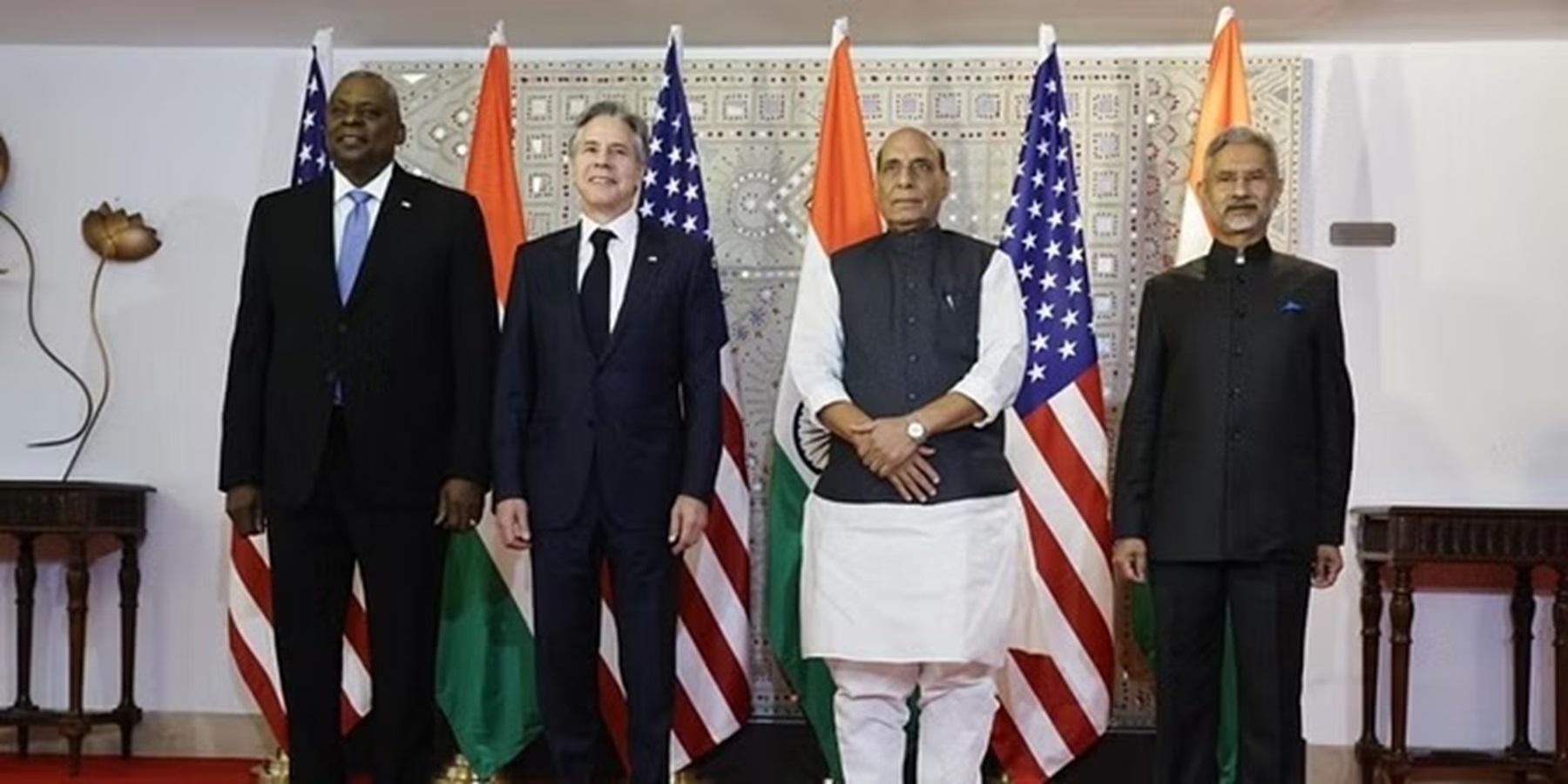
The Southeast Asian countries are also waiting for the outcome of the 2+2 ministerial dialogue from the visit of a high-profile American delegation led by United States Secretary of State Antony Blinken and US Defence Secretary Lloyd Austin while External Affairs Minister Subrahmanyam Jaishankar and Defence Minister Rajnath Singh headed the Indian side.

The agenda for the dialogue on Friday (10 November), on the eve of a weekend, would not discuss the wars in Gaza and Ukraine but would focus on security challenges in the Indo-Pacific and concerns over China.

China has kept all its eyes and ears of the red dragon focused on Delhi to understand what resolutions have been adopted at the so-called 2+2 talks against the giant of Asia.

The 61-year-old Foreign Secretary Vinay Mohan Kwatra, responding to a query by journalist Yeshi Seli of the New Indian Express about whether Bangladesh was on the menu, the veteran diplomat said “As I mentioned, extensive discussions took place on different regional developments in South Asia and other parts of the world also. And so far as Bangladesh is concerned we shared our perspective very, very clearly.

“It is not our space to comment on the policy of a third country. I think when it comes to developments in Bangladesh, elections in Bangladesh, it is their domestic matter. It is for the people of Bangladesh to decide their future.

“We as a close friend and partner of Bangladesh respect the democratic processes in Bangladesh and will continue to support that country’s vision of a stable, peaceful and progressive nation that the people of that country seek for themselves.

“We were very clear in sharing our perspective on how we look at situations in different parts of the world and that includes Bangladesh with the US side during these discussions,” the veteran diplomat said softly.

Meanwhile, the United States Ambassador Peter Haas to Bangladesh has flown to New Delhi ahead of Blinken’s arrival.

Sources said, Haas is likely to update the Indian and US sides on where things stand for them in Bangladesh. It could not be ascertained what has transpired from the official briefing by the US envoy, who has been recently threatened to be beaten up black and blue by a ‘golden boy’ from the governing Awami League for Haas, allegedly hobnobbing with the opposition Bangladesh Nationalist Party (BNP). The governing party did not take action against the henchman.

The US has been reiterating that there should be free, fair and inclusive elections in Bangladesh. The upcoming national election is expected in early January 2024.

Both India and the USA are concerned about Bangladesh that it should not be allowed to slip into the fold of the Red Dragon. Understanding that the country is in debt due to loans it needs to repay to China under its so-called Belt and Road Initiative. Many define the Chinese motive behind the mega projects are debt trap for a poor country.

The United States, India, Japan and Korea do not want to see a pro-Chinese regime come to power. China is deep down in Bangladesh’s politics and so-called economic development partner.

The United States, India and Japan see China as a threat to regional security having its visible footprint in Bangladesh.

These countries have time and again expressed doubt about the strong pro-Chinese lobbies in the country, which besides the political parties and their leaders, includes the media and the business community remains an influential force.

That is why India and the United States cannot trust the principal opposition BNP, for not only being anti-Indian but also a die-hard pro-Chinese.

China first made inroads into Bangladesh during General Ziaur Rahman’s era when the military dictator made his first official visit to Beijing in 1977.

China recognised Bangladesh after the assassination of Bangabandhu Sheikh Mujibur Rahman, the independence hero.

The military dictator sought China’s political and military blessings to counter Indian influence, which was suddenly disrupted on 15 August 1975 after the death of Sheikh Mujib. Its a long history in short.

India surely does not wish Bangladesh to go away and envisages that Bangladesh should continue to remain a good neighbour.

Delhi is nervous after China’s increasing influence in South Asia and meddling with politics. After Mohammed Muizzu won the elections in Maldives. India, lost its political clout in the island nation located in the Indian Ocean as the country slid into the Chinese lap.

China does not care about free and fair elections, as they do not practice democracy in an authoritarian rule and have rebuked the West without naming any country for “interfering in domestic affairs”.

First published in Northeast News, 10 November 2023

Saleem Samad is an award-winning independent journalist based in Bangladesh. A media rights defender with the Reporters Without Borders (@RSF_inter). Recipient of Ashoka Fellowship and Hellman-Hammett Award. He could be reached at saleemsamad@hotmail.com; Twitter: @saleemsamad

Saturday, October 14, 2023

China-Russia-America, who is the friend of Bangladesh?


SALEEM SAMAD

As the much-talked-about general elections expected in early January 2024 approach, the global superpowers are zooming their hawkish eyes on Bangladesh.

Most concerned people in the West, of course, the Bangladeshi expatriates and especially the Indians frankly ask why the superpowers are interested in the political development in a country of 173 million people.

In one word – the “China card”. The West, neighbouring India and even Japan are feeling jittery over the growing Chinese influence in the Sheikh Hasina-led government and her party Awami League.

Once an Indian diplomat in a private gathering sought opinion on why China’s mega-projects get approval quickly, and India’s infrastructure development projects are delayed due to bureaucratic red tape. He was told that the Japanese had a similar experience of projects falling through the faultline of bureaucracy.

China’s inroad to Bangladesh and getting contracts for mega projects had irked India, Japan and the United States.

Indian media have written on the expansion and development project of the third largest airport at Sylhet, in northeast Bangladesh and the proposed Teesta River Comprehensive Management and Restoration Project. However, the later project was shelved showing errors in the loan proposal.

The Osmani International Airport in Sylhet is in close proximity to Assam and Arunachal state is further north, where India borders with Tibet in China. The airport is in a strategic location for eavesdropping into Indian northeast states, it is feared by Delhi. Recently China’s official map shows Arunachal as South Tibet, inviting fresh ruckus with Red Dragon.

What is China’s interest in the Teesta River, a transboundary river that flows through India and Bangladesh? The proposed project has raised eyebrows in the region. The river is a significant source of water for both India and Bangladesh.

Indeed, the river is crucial for the economic development of the region as it is a source of water for agriculture and hydroelectric power generation. The river water sharing has been a bone of contention between the two neighbours for decades.

China’s involvement in the Teesta River dispute has added a new dimension to the conflict. The Red Dragon’s interest in the Teesta River can be attributed to its strategic ambitions in the region. The river originates in the Himalayas and flows through the Indian states of Sikkim and West Bengal before entering Bangladesh, says a river morphologist.

Japan has undertaken to construct the largest deep-sea port on Maheskhali island, in the Bay of Bengal and has been able to bulldoze the Chinese proposal of a second deep-sea port in Sonadia, not far from the ongoing project of the Rising Sun.

Tokyo has been able to convince Delhi that the deep-sea port on the Bangladesh coast which serves adequately to export/import of northeast Indian states, will boost economic growth and immensely contribute to the country’s GDP.

Bangladesh, last week became the 33rd member of the nuclear club. The under-construction Russian project Rooppur Nuclear Power Plant will augment electric generation in energy-starved northern Bangladesh.

Other than the nuclear power plant, Russia does not have a second mega project in Bangladesh.

Bangladesh imports food grains from Russia and exports various garments items, jute, frozen foods, tea, leather, home textiles and ceramic products.

Bangladesh, however, has a historic relationship with Russia. The former Soviet Union took a proactive position in favour of Bangladesh’s independence war in 1971.

Delhi and Moscow signed a historic Indo–Soviet Treaty of Peace, Friendship and Cooperation which expedited the bloody independence of Bangladesh.

Meanwhile, the United States is being bombarded by cyber-warriors with anti-American rhetoric in social media after Washington announced visa restrictions on officials of the governing party, opposition, government officials, police administration, judiciary and media persons. This applies to those who undermine or cause hindrance to the democratic elections in Bangladesh, the axe will fall upon individuals and their immediate family members.

It is understood that the visa restriction by the USA triggers a chain reaction in Australia, Canada, France Germany, Italy, Spain, the United Kingdom, and the allies in the West in denial of entry to their countries.

The US Embassy in Dhaka to counter the rhetoric has launched the #DidYouKnow campaign for Bangladesh’s audience in social media.

For example: #DidYouKnow, the United States is the biggest foreign direct investor in #Bangladesh?

Bangladesh received USD 3.44 billion in foreign direct investment (FDI) during 2021-2022 for three broad sectors of FDI inflows: infrastructure, manufacturing, and services, according to Bangladesh Bank (the central bank).

The USA FDI stood at $575 million in 2022, while China seems the largest FDI source of Bangladesh climbed to $940 million for 2022, reported Dhaka Tribune.

Diverse sectors offer opportunities for U.S. companies, including natural gas exploration and production, power generation, financial services, infrastructure, agribusiness, information technology, consulting services, and civil aviation to name just a few.

The garment sector has been a key driver of economic growth for Bangladesh over the past few decades. The US-Bangladesh has a $14 billion trade relationship and it’s growing, tweets the US Embassy in Dhaka.

What irks Bangladesh is when America expresses concern on stellar human rights record, democratic election process, freedom of the press and freedom of expression.

The relations went cold in 2021 when the US imposed punitive measures, in support of US Global Magnitsky human rights sanctions, targeting six of the elite anti-crime Rapid Action Battalion’s (RAB’s) former officials, including current and immediate past heads of the Bangladesh police.

The sanction did make an impact. A study claimed that RAB’s extra-judicial killings and enforced disappearances have dramatically reduced, which received accolades from human rights organisations.

Meanwhile, Abed Khan, Chief Editor of Dainik Kalbela warns that in a week several economic sanctions against individuals, business establishments and government entities are likely to be imposed citing corruption and money-laundering, which is now a transnational crime.

Journalist Chandan Nandy, based in New Delhi writes in the Northeast News portal (blocked by Bangladesh authorities) also claims that sanction is in the offing against money laundering and corruption.

Foreign Minister Dr AK Abdul Momen trashed rumours of fresh sanctions by the US, in response to media reports told journalists. “We were in the US…they (US) only want free and fair elections. Even the words – participatory or caretaker government – were not mentioned,” he remarked.

While the United States pressure on the current government on the upcoming general election is visible, China and Russia’s position contradicts the United States, quoting unnamed sources in Washington DC.

The polarisation of the rivals United States, China and Russia has been observed, writes a commentator for BBC Bangla Service.

Humayun Kabir, a former Bangladesh ambassador to Washington, opines that Bangladesh has become the new ‘field of polarisation’ of the United States, China and Russia.

He said that the US President Joe Biden administration’s foreign policy envisages ‘establishing democracy and human rights’ in different countries of the world and Bangladesh is in the bigger canvass to neutralise China’s hegemony in South and South East Asia.

Another reason is that America’s Indo-Pacific strategy has focused on actively implementing the United States domination in the Asia region, with new and old allies.

Kabir said, the European Union too also want Bangladesh to strengthen democracy and hold free and fair elections in upcoming polls. In exchange, Bangladesh will benefit equally, especially from the trade facility, which is believed to strengthen the democratic process in the country.

China is a development partner of Bangladesh, retorted Prime Minister Sheikh Hasina, when she was confronted by overjealous Indian journalists.

Professor Imtiaz Ahmed of Dhaka University says Bangladesh is caught in a triangle of Russia, China and America, because of its geo-strategic position.

Bangladesh, positioned on the coast of the Bay of Bengal which merges with the Indian Ocean and the Pacific Ocean comes under the fold of strategic partnership with America, Japan and India.

Political historian Mohiuddin Ahmad said the reason Bangladesh is a strategic partner in Asia because the country has made dramatic economic development and has been fairing on the parameters of Sustainable Development Goals (SDG), which gives hope to the big powers rivals that the country is not a failed state like Pakistan or Somalia.

Therefore, the agenda of the United States, European Union, Japan and India to encourage Bangladesh to hold free, fair and credible elections and remain steadfast on the path to democracy will enable Sheikh Hasina to be the longest-serving prime minister to return to power for the fifth tenure.

First published in Northeast News, Guwahati, Assam, India, 14 October 2023

Saleem Samad is an award-winning independent journalist based in Bangladesh. A media rights defender with the Reporters Without Borders (@RSF_inter). Recipient of Ashoka Fellowship and Hellman-Hammett Award. He could be reached at saleemsamad@hotmail.com; Twitter: @saleemsamad


Sunday, July 09, 2023

Fears of an American base at Saint Martin’s Island kicks fresh row in Bangladesh politics


SALEEM SAMAD

In the mid-60s the radical students of the East Pakistan Chattra (Student) League and also a few leftist elements to arouse dissent against the regime of a military dictator General Ayub Khan of Pakistan said that he has leased Saint Martin’s island in the southeast tip of the country to the United States to build a military base to counter India.

After the independence of Bangladesh, the myth loaded with political jargon melted away. A similar story of St. Martin’s being given away to America popped up several times since its independence in 1971. A couple of times during the military juntas of a liberation war hero, General Ziaur Rahman (1977-1981) and founder of Bangladesh Nationalist Party (BNP), and General Hussain Muhammad Ershad (1982-1990), founder of Jatiya Party were in power. They were deliberately blamed for facilitating inroads for America to counter the regional influence of India.

Once again, Bangladesh’s only coral island, Saint Martin’s is in fresh controversy for being given away to the Americans, this time not to counter India, but China’s hegemony in the South Asia region.

This time, Prime Minister Sheikh Hasina herself exploded a bomb, when she asked “How did BNP come to power in 2001?” at the press conference at her official residence Ganabhaban on 21 June.

“They came to power by pledging to sell gas [to India]. Now do they want to sell the country [to the United States] or come to power by pledging to sell Saint Martin’s island,” she told.

Well, she did not mention the name of any country, but it is understood by political analysts, that she pointed her fingers towards two countries. The export of natural gas through a pipeline to energy-starved West Bengal, India and the coral island to the American for a military base.

She was upbeat to politically admonish BNP that the ‘Kings party’ had negotiated with India, which helped the rightist party leader Khaleda Zia to return to power in the 2001 October elections.

She blames BNP negotiated with Washington DC to give away the ‘critically endangered’ coral island to America for a military establishment to watch over a huge swatch of the Bay of Bengal, which merge with the Indian Ocean in the far south.

Promptly, BNP secretary general Mirza Fakhrul Islam alleged that prime minister Sheikh Hasina, as of her political strategy, provided false information about BNP’s stance on St. Martin’s Island.

“The remark on St. Martin’s island is part of her political strategy. They want to gain an advantage through such statements. No country signs a deal with the opposition, it is signed with the government,” he remarked.

The United States State Department spokesperson Matthew Miller scoffed off the rumour centring on the island and the USA.

In a press briefing in Washington last week, he said that the ruling Awami League and its [political] allies have been alleging for the last few days that the US wants to take over Saint Martin’s island and the opposition Bangladesh Nationalist Party (BNP) wants to come to power by “making a pledge to lease it out”.

The US had no intentions to acquire Saint Martin’s Island. “We have never engaged in any conversations about taking over Saint Martin’s Island,” he remarked.

The spokesperson, putting away his diplomatic niceties did not hesitate to comment that in the “last 15 years, she [Sheikh Hasina] is in power without reflection of the will of the people of Bangladesh, though.”

The issue was first raised in the Jatiya Sangsad (parliament) on 14 June by a left leader, Rashed Khan Menon, president of Bangladesh Workers’ Party and an alliance of governing Awami League said the countries that “have the US as a friend, do not need any enemies”.

He stressed that the US sought Saint Martin’s and Bangladesh’s participation in the Quadrilateral Security Dialogue (Quad), a strategic Indo-Pacific alliance, where Australia, India, Japan and the United States are primary members.

Six days later, another radical politician Hasanul Haq Inu, president of Jatiya Samajtantrik Dal (JSD), also an ally of Awami League in his speech in parliament said, “The time has come for us to think about the reason for this over-enthusiasm of the US. Is it democracy or Saint Martin’s Island?”

A British team of surveyors’ in 1900 included Saint Martin’s island as part of the British Raj in India and named it after a Christian priest Saint Martin.

The Department of Environment (DoE) in 1999 declared the 8 Sq. Km island an Ecologically Critical Area (ECA). As per section 19 of the ECA Management Rules 2016, notwithstanding anything contained in any other law, the class of land of any ECA cannot be changed without permission of the DoE. Thus, any construction of establishments on the island is illegal and dangerous for saving the coral reef at Cox’s Bazar-Teknaf peninsula.

Despite several official notices and high court orders, the island has more than 230 hotels, resorts, cottages and restaurants, either one-storey or multi-storied.

Green activists and researchers say the island is home to several globally endangered marine turtles and birds, including rare Pacific reef-egret, red crab, dolphin and vulnerable olive Ridley sea turtles, which are also on the verge of disappearance.

Professor Kawser Ahmed, dean of the Earth and Environmental Sciences Faculty of Dhaka University in his article published in Ocean Science Journal in 2020 predicts that coral species would completely disappear by 2045.

Bangladesh Environmental Lawyers Association’s (BELA) chief executive Syeda Rizwana Hasan doubts whether an ecologically threatened island would be suitable for any military purpose.

The longstanding political debate over the island could be understood from a news report on 18 December 1980. The defunct Dainik Bangla published a report under the heading “None will be allowed to establish a naval base at Saint Martin’s”.

A stern warning was issued in a statement by the Bangladesh Ministry of Foreign Affairs. The statement alleged that several political parties claimed that a country [United States] has been allowed to set up its naval base at Saint Martin’s island is completely baseless.

However, political historian and researcher Mohiuddin Ahmad quoted in a reputed Bangla-vernacular newspaper Prothom Alo that he first heard in February 1971 about leasing Bhola’s Monpura island out to the USA.

The rumour had spread, soon after Bangabandhu Sheikh Mujibur Rahman held a parley with the US Ambassador to Pakistan, Joseph Simpson Farland, on 28 February 1971 – a month before the genocidal campaign ‘Operation Searchlight’ launched by Pakistan military, which sparked the liberation war.

The pro-Chinese left Maoist parties and their affiliated youth organisations printed a propaganda leaflet that Monpura Island will be given away to America, in exchange for US support for the independence of Bangladesh.

The disinformation against Sheikh Mujib died when the United States tilted towards Pakistan’s military junta during the bloody war of Bangladesh’s independence in 1971.

The blame game by political opponents in Bangladesh is a dilemma alleging the ruling elites are going to lease out Monpura or Saint Martin’s Island to the US or going to provide benefit to India are age-old political bashing, said writer Ahmad.

Some political observers believe that the imposition of sanctions by the USA against the anti-crime special unit Rapid Action Battalion’s (RABs) seven current and former senior officers were accused of violating human rights including extra-judicial killings and enforced disappearances – recent US visa restrictions for officials, the ruling party and opposition, whoever undermines democracy and cause hindrance to a free and fair parliament elections in January 2024, have raised eyebrows among political leaders and government officials.

They did not hesitate to slam the United States’ foreign policy and deemed the announcement as interference in the internal affairs of a sovereign country.

Meanwhile, Bangladesh Foreign Minister Dr AK Abdul Momen said this week “We welcome the continuous engagement with the US to wipe off misunderstanding between Dhaka and Washington if there was any.” He told reporters when he was asked to comment on the upcoming high-level official visit from the United States.

Dhaka would welcome if the US delegation led by US Under Secretary for Political Affairs Victoria Nuland and US Assistant Secretary of State for the Bureau of South and Central Asian Affairs Donald Lu scheduled in early July came up with a “bright idea” as Bangladesh is committed to hold free, fair and violence-free elections, said Dr Momen.

First published in the India Narrative, 9 July 2023

(Saleem Samad is an award-winning independent journalist based in Bangladesh. Views expressed are personal. Twitter: @saleemsamad)

Tuesday, May 02, 2023

Japan-Bangladesh partnership yielding new Indo-Pacific doctrine to counter China

Bangladesh’s Prime Minister met her Japanese counterpart Kishida Fumio in Tokyo

SALEEM SAMAD

Last week Bangladesh’s Prime Minister met her Japanese counterpart Kishida Fumio in Tokyo, which political observers described as a much-awaited crucial strategic partnership.

Before embarking upon a three-nation tour of Japan, the United States and Britain, Hasina buried months of speculation on the strategic alliance on 26 April.

Bangladesh unveiled its “Indo-Pacific Outlook (IPO)”, and these three nations have crucial roles in pursuing the policy of an open and free Indo-Pacific.

The Indo-Pacific Outlook is based on the dictum “Friendship towards all, malice towards none.” Whether this dictum would be enough to address the Chinese concern about committing to the objectives of rules-based order and a free and open Indo-Pacific has to be seen in the coming days, remarks veteran columnist Kamal Ahmed.

Bangladesh took a deep breath to develop a strategic partnership with Japan against Chinese hegemony through the implementation of an ambitious Road and Belt Initiative (BRI) in the region.

In fact, the two countries have achieved significant progress in bilateral relations based on the “Comprehensive Partnership” established in 2014, the joint Bangladesh-Japan statement said.

The Japanese initiative envisages replacing BRI with the Bay of Bengal Industrial Growth Belt (BIG-B).

Japan was one of the very few countries that extended foreign aid for reconstructing war-torn Bangladesh during the post-independence era. Since then, Japan has become Bangladesh’s single largest bilateral donor.

The ‘Land of the Rising Sun’ has been an all-weather economic and development partner of Bangladesh before China’s inroads into the country.

In the fiscal year 2020-2021, Japan provided more aid to Bangladesh than any other country, amounting to $2.63 billion. Since Bangladesh’s independence, Japan has provided a total of $24.72 billion, almost evenly split between grants and loans, writes Hussain Shazzad in The Diplomat.

Japan’s financial assistance to Bangladesh has been proven mutually beneficial for both countries rather than being exploitative, unlike a few development partners that have been blamed for encouraging corruption in getting approval for mega projects.

Columnist Ahmed writes in The Daily Star: The United States, which originally conceived and floated the Indo-Pacific Strategy (IPS), has been urging Bangladesh for the last few years to join them in implementing the IPS. Though Bangladesh doesn’t use the term strategy or IPS, the vision it lays out is remarkably similar to the IPS.

Japan’s Prime Minister Kishida also outlined a newly released plan for a “Free and Open Indo-Pacific (FOIP),” which will strengthen Japan’s efforts to further promote the FOIP vision, with the four pillars of cooperation: “Principles for Peace and Rules for Prosperity”; “Addressing Challenges in an Indo-Pacific Way”; “Multi-layered Connectivity” and “Extending Efforts for Security and Safe Use of the Sea to the Air” and hopes that Bangladesh will also agree with the strategy.

Hasina reiterated Bangladesh’s principled position on a “free, open, inclusive, peaceful and secure Indo-Pacific based on international law and shared prosperity for all” and she believes the international community and global commons will contribute to the development of (the) blue economy in the exploitation of the use of the sea.

The joint statement gave a green signal, which was a blessing for India and G-7 members including the United States, who are partners of the much-talked-about QUAD (Quadrilateral Security Dialogue).

Quad was first mooted by former Japanese Prime Minister Shinzo Abe in 2007 and aims to ensure and support a “free, open and prosperous” Indo-Pacific region is a strategic security dialogue between Australia, India, Japan and the United States with a shared but unstated goal of countering China’s growing political, economic and military power in the region.

Hasina could finally, shrug off her ‘Tom and Jerry’ policy with China and lend her diplomatic support to Indo-Pacific countries, despite China’s warning of “substantial damage” to ties if Bangladesh joined the US-led Quad alliance.

Beijing described joining the QUAD, a military alliance against China’s adversaries (India, Japan and the USA) and its relationship with neighbours.

The former Chinese ambassador Li Jiming on 10 May 2021, breaking diplomatic norms in Dhaka, told Bangladesh authorities that relations with Beijing would “substantially get damaged.”

Chinese Foreign Minister Qin Gang’s surprise “technical stopover” at Dhaka in early January, en route to African nations was in fact not for late midnight tête-à-têtes over coffee between the two leaders.

For Qin, it was his first meeting with his counterpart, Dr Abul Kalam Abdul Momen in Dhaka since assuming office last year. He did not hesitate to vent his frustration over unfulfilled promises from China.

Bangladesh’s lopsided export to China was over $12 billion deficit, which was a special concern to Dhaka in the backdrop of the shaky foreign exchange reserves amid the global economic turmoil sparked by the war in Ukraine.

Momen reminded his counterpart that Chinese President Xi Jinping’s 2016 visit to Bangladesh had promised many investment pledges that have not materialised even after over six years. The complaint includes that an agreement to remove duties and quotas on 98 per cent of Bangladeshi goods has yet to see the light of day.

Whereas, Japan is Bangladesh’s largest export destination in Asia, in the last decade, Bangladesh’s exports (mostly apparel and leather products) to Tokyo have almost doubled. Nevertheless, there is still huge untapped trade potential for Bangladesh, which are “pharmaceuticals, agricultural and fishery products”, according to a Japanese diplomat.

The makeover of marginal trade imbalance will be reorganised after the signing of the free trade agreement (FTA).

A fresh impetus for strengthening trusted relations between the two countries could materialise, as Bangladesh is one of the most Japanese-friendly countries in Asia, with 71 per cent of Bangladeshis holding a favourable view of Japan, according to a 2014 Pew Research survey.

Japan’s BIG-B, an initiative for changing South Asia’s economic outlook, can play a key role in transforming Bangladesh into the heart of the regional economy by creating a gateway between South Asia and Southeast Asia, ensuring closer interregional cooperation, and incorporating Bangladesh into regional and global value chains, experts said.

Recently in New Delhi, when Kishida proposed developing an industrial hub in Bangladesh with “supply chains” to the landlocked north-eastern states of India, and to Nepal and Bhutan beyond by developing a port and transport in the region, “to foster the growth of the entire region,” hardly anybody understood the depth of his vision.

He was indicating to a mega deep-sea port under construction in southern Bangladesh would be a key economic hub for Japan and India as the QUAD partners aim to counter Chinese influence.

Development of the port of Matarbari will put a Japan-backed facility just north of Sonadia, another prime location on the Bay of Bengal where China has been eyeing development of  a deep-water port.

In fact, that facility never materialised, and Dhaka reportedly dropped the idea a few years ago on the behest of multi-pronged diplomacy by Delhi, reported Nikkei Asia.

“Geostrategy, much like real estate, is about location, location, location, and with Matarbari one can certainly check off that box,” said Michael Kugelman, director of the South Asia Institute at the Wilson Centre in Washington.

Japan, Bangladesh’s biggest development partner for decades, has long been aware of its strategic significance, which is why it committed to developing a port there about five years ago, said Kugelman.

The feel-good project to serve as a key port for the landlocked northeast Indian states (also known as Seven Sisters) is expected in 2027. The economic development will immensely contribute to the rich cultural heritage of the millions of vibrant communities living in the region, bordering China on the side and restive Myanmar in the south.

Meanwhile, projects for road and railway connectivity projects to the desired port from the Seven Sisters are almost completed by India and Bangladesh.

First published in India Narrative, New Delhi, India on  2 May 2023

(Saleem Samad is an award-winning independent journalist based in Bangladesh. Views expressed are personal. Twitter: @saleemsamad)


Saturday, March 25, 2023

China has to ensure return of Rohingya to Myanmar


SALEEM SAMAD

The lights are dim at the end of the tunnel in case of repatriation of Rohingya refugees living in squalid camps in the coastal district of Cox’s Bazar in Bangladesh.

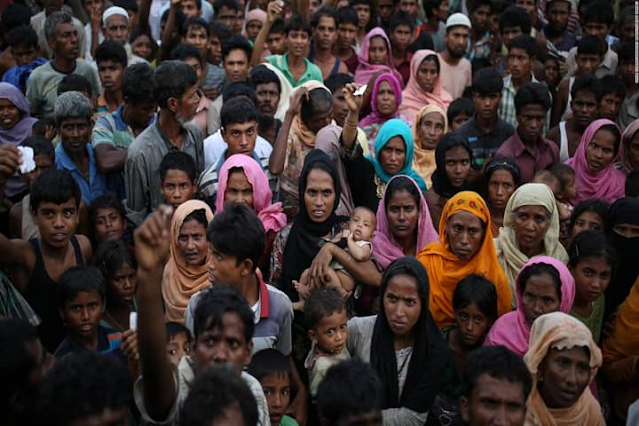
The country hosts nearly 1.2 million Muslim Rohingya people who have fled ethno religious strife in neighbouring Myanmar during a military genocidal campaign, which killed at least 9,000 people in 2017.

The Tatmadaw (Myanmar military) backed campaign that the United Nations labelled a “textbook example of ethnic cleansing” saw hundreds of thousands of Rohingya driven across the border into Bangladesh in September 2017.

More than a million refugees are crammed in tens of thousands of make-shift huts made of bamboo, thin plastic sheets and corrugated tin roofs and the living conditions in the nauseating camps are dangerous. Often, fires blaze through the camps leaving thousands without shelter.

Last week, a 17-member delegation from Myanmar’s immigration and population ministries crossed into Bangladesh in mid-March and interviewed 480 Rohingya in Cox’s Bazar as part of a plan for possible repatriation to their country.

The Myanmar delegation, led by Aung Myo, the social welfare minister for Rakhine State, was selecting members for a pilot ‘family-based repatriation’ project.

The Myanmar delegation’s visit to the camps is believed to be brokered by China and facilitated by the UNHCR.

The Refugee Relief And Repatriation Commissioner (RRRC) in Cox’s Bazar, Mohammed Mizanur Rahman, said the Myanmar junta officials cleared 711 Rohingyas out of 1,140 recommended by Bangladesh. The newborn and newly married couples have been excluded from verification.

When journalists asked when the repatriation is expected to start, Rahman said that the “Myanmar delegation did not have the power to commit to a possible repatriation date.”

Before the visit of the delegation, the Myanmar junta for the first time since the 2017 crackdown, allowed diplomats from Bangladesh, India, China, and five other countries to tour the restive Rakhine State.

It was only then, the officials expressed the military junta’s plan to begin Rohingya repatriation under the pilot project.

Earlier, Bangladesh formally sought cooperation from China to repatriate Rohingya refugees to Myanmar during a visit by Foreign Minister Wang Yi and also China’s State Councillor promised to resolve a political solution to the Rohingya crisis.

China had used its influence in Myanmar to broker a November 2017 agreement to repatriate Rohingyas.

China’s ambassador to Bangladesh Yao Wen hoped that the first batch of displaced Rohingya would be repatriated to Myanmar soon while China continued its role as mediator, the official news agency Bangladesh Sangbad Sangstha reported.

On 17 March 2023, Bangladesh Foreign Minister Dr AK Abdul Momen also urged the Organisation of Islamic Cooperation (OIC) member states to take collective responsibility to ensure a safe and dignified return of the most persecuted Rohingyas to their homeland, Myanmar.

Indeed, OIC backed Gambia to file a genocide case with the International Court of Justice (ICJ). Only Turkey has a visible presence at the Rohingya camps in Cox’s Bazar.

India also launched “Operation Insaniyat” to provide relief assistance in response to the humanitarian crisis faced by a large influx of Rohingya refugees into Bangladesh from Myanmar.

Bangladesh and Myanmar began the negotiation for repatriation, but since 2018 none has returned so far and recent verification of a few hundred potential returnees for a pilot repatriation project remains unclear when they would be going home.

Despite attempts to send them back, the refugees refused, fearing insecurity in Myanmar, which was exacerbated by the military takeover last year.

Amid the situation, the United Nations High Commissioner for Refugees (UNHCR) in a statement on March 19 said they are observing developments of the Myanmar delegation’s visit to Bangladesh to verify a selected number of refugees on a bilateral pilot project on their possible returns.

The UN Refugee organisation reiterated that conditions in Myanmar’s Rakhine State are currently “not conducive to the sustainable return of Rohingya refugees”.

Bangladesh has consistently reaffirmed its commitment to “voluntary and sustainable repatriation” since the onset of the current crisis which echoes UNCHR policy that every refugee has a right to return to their home country based, make an informed choice and no refugee should be forced to repatriate.

China always wanted to impress upon their “feel good” diplomacy, but despite best intentions, it seems the repatriation has entered into a fresh deadlock as both Bangladesh and UNCHR, responsible for the safe return of the displaced Rohingyas are concerned about their safety and security in the Rakhine State.

The Rohingya issue must be addressed by China, a country [Myanmar] over which it has significant influence. Only China can make conclusive negotiations on the safe return of the Rohingyas, writes security analyst Samina Akhter in Modern Diplomacy.

Bangladesh and China have close political and military relations in addition to the fact that China is Bangladesh’s top trading and development partner.

Last week, Bangladesh has inaugurated a naval base in Cox’s Bazar with two conventional diesel-electric powered refurbished Chinese submarines bought for $205 million in 2016 to enhance Bangladesh’s naval capacity, after the demarcation of its maritime boundary with India and Myanmar.

It is equally true, that Myanmar’s military junta, which took power in a coup two years ago, has demonstrated no intention to take back any refugees.

Most importantly, the Rohingya refugee groups based in Bangladesh said for sustainable and dignified repatriation will only be possible when the Myanmar regime recognises the Rohingya as an ethnic community; provide legal citizenship which was stripped in 1982; school education; healthcare services; freedom of movement and livelihood.

Rohingya’s human rights groups believe the face-saving exercise to repatriate refugees happened after the Chinese exerted pressure on the Myanmar military junta to demonstrate a “feel good policy” otherwise face the compliance declared by the International Court of Justice (ICJ). The genocide case is resuming at ICJ on 24 April.

“Taking back a few refugees, even if it is less than one percent of the population, shall allow Myanmar to come up with a counterargument under the very false pretence they are sincere about the return of refugees,” the Arakan Rohingya National Alliance (ARNA) said in a statement.

First published in the India Initiative, New Delhi, India on 25 March 2023

Saleem Samad is an award-winning independent journalist based in Bangladesh