Buy.com Monthly Coupon
Showing posts with label India-Bangladesh ties. Show all posts

Monday, September 08, 2025

Why is Bangladesh-India Relations Cliff-Hanging?

SALEEM SAMAD

Last week, Bangladesh stated that there are no barriers from Dhaka’s end to improve relations with New Delhi, but progress requires the cooperation of both sides, remarked Bangladesh’s Foreign Affairs Adviser Touhid Hossain.

Why has Bangladesh publicly declared a willingness to improve bilateral relations, and what does this reveal about the nature of the current impasse? Delhi and Dhaka often boast of a century-old heritage, tradition, and cultural relations. Suddenly, both countries have ceased flowery diplomatic jargon. A stark indicator that the relationship is sailing through a rough sea.

South Asia researcher Sohini Bose with an Indian based Observatory Research Foundation (ORF) said, Bangladesh resets its foreign policy post-Hasina, India faces a rising challenge – a friend turning uncertain and Pakistan gaining ground. She deliberately did not mention developing relations with China, the United States, and the European Union. It is understood why she is playing with the Pakistan card.

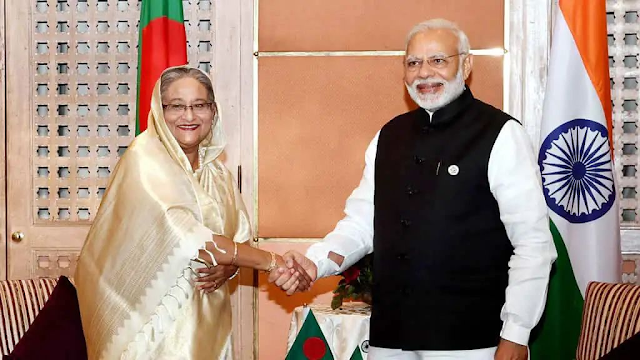
The bilateral relations only a year ago were passing through a ‘Golden Era’. The so-called relationship was limited to two persons (Sheikh Hasina and Narendra Modi) and the Awami League and Bharatiya Janata Party.

India has developed love and hate relations with its neighbors. Bilateral and regional relations are sailing smoothly with Nepal, Maldives, Sri Lanka, and Bhutan, of course, with Bangladesh and Pakistan, which are often looked at with suspicion and distrust.

The Indian pundit wrote that Bangladesh and India are connected in multiple ways, extending beyond just the bilateral relationship between their governments. They share an enduring bond through their common history, culture, land, transboundary rivers, and adjacent maritime zones. Overjealous Indian leaders contemplate that Dhaka is getting closer to Islamabad and sticking close to New Delhi. Which is a half-truth!

The giant neighbor has indeed helped Bangladesh gain independence in 1971 from Pakistan. Time and again, the jealous leaders were intermittently reminded of India’s contribution to the independence struggle. India has provided shelter to ousted Sheikh Hasina, who is living in exile somewhere in Delhi. Like King Kong, Indian leaders should beat their chest and proudly claim hosting the most-wanted person of interest – Sheikh Hasina! Unfortunately, they are not doing it.

Foreign Adviser Touhid Hossain lamented that there was no update from India on the request for former Sheikh Hasina’s extradition to face the music of justice for crimes against humanity. “We [Bangladesh] wrote once, and updates will be shared if another request is sent,” Hossain said his government would continue to pursue Hasina’s extradition.

After Hasina fled her country in August 2024 after the collapse of her tyrannical regime following a mass uprising dubbed as Monsoon Revolution, Dhaka sent a diplomatic note to Delhi last December, formally requesting her extradition.

Nobel laureate Prof Muhammad Yunus, chief of the Interim Government, recently told an international media outlet that he may authorize the International Court of Justice (ICJ) for the trial of Sheikh Hasina and top officials of her government for committing crimes against humanity during her tenure (2009-2024) – especially the July-August revolution.

The trial in the ICJ would be based on a fact-finding investigation conducted by the Geneva-based United Nations human rights agency (OHCHR). The report has evidence of Hasina ordering his security forces to use excessive force and shoot and kill the street protesters. The fact-finding report claims nearly 1,400 people, mostly students, youths, vendors, day-laborers, public transport drivers, restaurant staff, and garment workers, during 36 days of the Monsoon Revolution.

Delhi remains conspicuously tight-lipped and gives no sign from the South Block in New Delhi of their mind. The Indian government made several remarks about the persecution of the Hindu population and urged protection and safety guarantees for the community. India also urged Bangladesh that the Interim Government should hold an exclusive and credible election in the upcoming national elections in February 2026.

The remark was made after the oldest party, Awami League, which inspired the independence of the country, the political activities were restricted, and its student wing, Chattra League, was banned for committing violence against the protesters during last year’s July-August street protest.

India has seen Bangladesh through the prism of Hasina. That was the reason Delhi is paying heavily, said Professor Sriradha Dutta of OP Jindal Global University in India. Satisfied with what India had received from Bangladesh. Delhi deliberately ignored the simmering discontent of the opposition, dissidents, critics, and rights groups, reflected in the media.

India turned a blind eye when Hasina ensured that no opposition contested elections and held sham elections in 2014, 2018, and 2024, according to independent election monitoring groups, reported in mainstream media. Obviously, India was always the first country to felicitate Hasina for being reelected in landslide victories, with full knowledge that the elections were fraudulent and were not free, fair, and inclusive.

When Hasina was elected for her fifth term through vote fraud, Modi did not hesitate to congratulate and shower blessings on her in January 2024. Several political scientists and political historians predicted that she would not be able to survive for another six months after the 2024 election. South Block was not reading the pulse of the people, who were bearing the brunt of the repressive regime.

Independent media, civil society, and rights groups had been beeping alarms over Hasina’s autocratic regime, which was monitored in Delhi – but largely disregarded. Sohani wrote in ORF that the Indian government gave lots of priority to the bonds of partnership with the former Awami League administration in Bangladesh, led by Sheikh Hasina.

Not only was this exhibited by their expanding portfolio of areas of cooperation, ranging from connectivity, security, to collaboration in public health, but also by their ability to continue nurturing bilateral ties in several domains, despite lingering contentious issues such as the Teesta Water sharing dispute, border killings of Bangladesh nationals, lopsided trade deficit, human trafficking, stop Hasina addressing on social media, which Dhaka interprets as jeopardizing the relations further.

A decade of this partnership had thus ushered in near-permanent amicability in the India-Bangladesh relationship, providing a strong foundation for New Delhi’s aspirations to ‘Act East’ by putting its ‘Neighborhood First’, stated Sohani. The overthrow of Hasina from power abruptly halted this partnership. Bangladesh’s new government’s foreign policy reflects uncertainty about India amidst struggles to secure its own legitimacy.

Both neighbors are suspicious, lack trust, and shed doubts on each other’s relationship. This has been further heightened by Indian Godi media disseminating anti-Bangladesh rhetoric. “Godi media” coined by Indian journalist Ravish Kumar, which describes the Indian media that are overtly biased and loyal to the ruling Bharatiya Janata Party (BJP) and the Prime Minister Narendra Modi’s government. The term comes from the Hindi word “godi,” meaning “lap,” and refers to the media’s sycophantic, “lapdog” behavior towards the government.

Apparently, India is the second-largest trading partner, one of the top 15 sources of Foreign Direct Investment (FDI), and a foremost development partner with a development portfolio of US$8 billion, says ORF. As India’s Minister for External Affairs, Subrahmanyam Jaishankar, in a recent statement, “Bangladesh must decide what kind of ties it wants with India.”

First published in Stratheia Policy Journal, Islamabad, Pakistan, 9 September 2025

Saleem Samad is an independent journalist based in Bangladesh and a media rights defender with Reporters Without Borders. He is the recipient of the Ashoka Fellowship and the Hellman-Hammett Award. He could be reached at <saleem.samad.1971@gmail.com>; Twitter (X): @saleemsamad

Sunday, April 13, 2025

SALEEM SAMAD

Soon after Professor Muhammad Yunus frankly announced that Bangladesh is the guardian of the ocean—the Bay of Bengal—the bigwigs, military hawks, politicians, and ‘Godi Media’ in India lashed out at Bangladesh for such a statement, which has been deemed a security threat to the most prominent neighbor of South Asian nations.

Conspiracy theories across the border may sound interesting, but equally disgusting. It is frustrating when scores of Indian so-called defense experts and former military hawks speak and write with confidence that China will establish an airbase (not a military base) in northern Bangladesh to battle the Indians to cut off the so-called ‘Chicken Neck’ or Siliguri Corridor, which physically connects India with North East states.

The consequential theory simmering in the heads of Indian defense analysts claims that the Chinese will severe the North East (which is also known as the Seven Sisters) from the Chicken Neck. Incidentally, millions of Chinese soldiers (People’s Liberation Army) will invade from the northeastern Chinese borders.

Ruling Bharatiya Janata Party (BJP) leader Dilip Ghosh in a ‘friendly message’ in December 2024, commented that Bangladesh’s armed forces are no match for India and that Bangladesh’s political leaders should “think carefully” about the ongoing turmoil.

Promptly Eresh Omar Jamal in an Op Ed in The Daily Star, an independent newspaper, wrote: It is important to mention that BJP leaders have repeatedly accused Bangladeshis of trying to take over the “rightful land” of Indians, referring to them as “Jihadis,” “infiltrators,” and “termites,” who should be identified and drowned in the Bay of Bengal.

The hawkish Generals and Indian defense policymakers have already pressed the panic button and are preparing exhaustive defensive strategies to save North East India from being bifurcated.

A defense journal, Defense Security Asia in a recent article says that India has deployed its cutting-edge Russian-built S-400 Trium long-range air defense system to the Siliguri Corridor (20–22 kilometer wide land bridge in West Bengal often dubbed the “Chicken’s Neck” due to its precarious geography).

“This critical strip of land forms the only terrestrial conduit between mainland India and its resource-rich but geographically isolated northeastern states, making it one of the country’s most vital and vulnerable military arteries.

“The positioning of the S-400 system — renowned for its ability to simultaneously engage multiple aerial targets at ranges exceeding 400 kilometers is viewed as a calibrated response to intensifying aerial activity by China and Bangladesh near India’s eastern frontier.”

The article does not hesitate to say that New Delhi’s “security establishment has grown increasingly alarmed by the frequency and complexity of Chinese and Bangladeshi air maneuvers” along their respective borders with the Siliguri Corridor, interpreting them as probing gestures with strategic undertones.

The write-up also does not provide evidence from aerial and surveillance photos to claim the military maneuver of the Chinese and Bangladesh. There is no airbase in northern Bangladesh.

The Indian security experts believe that Bangladesh has given the airfields to the Chinese to convert them into a military base. There are two tiny abandoned airstrips at Thakurgaon and Lalmonirhat built by the British colonialists during the Second World War to defend against Japanese invasion.

British Raj built a dozen airfields for light fighter aircraft in East Bengal (now Bangladesh). Also another two dozen airfields were built in neighboring Indian states of West Bengal and North East India.

The conspiracy theories cropped up following the collapse of the staunch pro-India Sheikh Hasina government. The potential move to give the airfields to China has stirred alarm in the Indian capital, given the site’s proximity to the Siliguri Corridor.

The timing of India’s force posture recalibration coincides with a discernible diplomatic pivot by Bangladesh’s interim administration under Mohammad Yunus, whose government has moved closer to Beijing in both rhetoric and action, writes the Defense Security Asia. They fear in a bid to recalibrate its foreign policy footing, Bangladesh under Yunus has actively pursued economic and infrastructure partnerships with Beijing, raising red flags in India’s intelligence and security community.

The trust and confidence between the two neighboring countries have further slid, after Delhi came to know that the Interim Government has courted investment and defense cooperation with China and Pakistan — two nations New Delhi regards as strategic antagonists.

During the 1965 and 1971 India-Pakistan wars in the eastern war theater, the Pakistan Army with air support never came to their heads to occupy the Siliguri Corridor in a bid to cut off North East from mainland India.

Military strategist believes such a foolish attempt to occupy the ‘chicken neck’ would have caused huge casualties of soldiers and military hardware, which would not have been practical.

The scenario of a bifurcated India has led to a doctrinal shift in India’s Eastern Command, which now prioritizes rapid response, multi-domain deterrence, and sustained forward deployment in and around the corridor.

India has consistently rejected China’s Belt and Road Initiative (BRI), warning that it enables the People’s Liberation Army (PLA) to embed dual-use infrastructure across the Indo-Pacific, which will undermine sovereignty and military balance in the region.

In response to these converging threats, India has activated its S-400 batteries in the Siliguri region and has reinforced its tactical aviation presence by deploying a squadron of French-built Rafale multirole fighters to nearby Hashimara Airbase.

Bangladesh has a couple of squadron ageing Russian MiG-29 and Chinese Chengdu F-7 fighter planes. Some of the planes are deployed in southeast Bangladesh, providing layered air dominance and enhancing its ability to respond swiftly to any hostile incursion from Myanmar.

Indian media published the procurement of a Turkish-made Bayraktar TB2 drone, operated by Bangladesh forces, which has allegedly flown perilously close to the India-Bangladesh border. However, there was no official warning from Delhi to Dhaka for violation of airspace along the international border.

India has jittered after it learnt that Bangladesh is acquiring 32 JF-17 Thunder fighter jets, a fourth-generation multirole platform jointly developed by Pakistan Aeronautical Complex (PAC) and China’s Chengdu Aircraft Industry Group (CAIG) to replace its ageing combat aircraft.

The already strained bilateral relationship between India and Bangladesh has added fresh suspicion and distrust when a high-level Pakistan’s spy agency Inter-Services Intelligence (ISI) officials led by Major General Shahid Amir Asfar visited Dhaka a few months ago.

Promptly, India’s Ministry of External Affairs issued a carefully worded statement, noting that the government is “closely monitoring all developments in the region” and would respond appropriately to any threats to national security. “We are vigilant about all regional movements and actions that may affect national security. The Indian government will act decisively as needed,” said ministry spokesperson Randhir Jaiswal.

India’s recalibration of its defense posture in the Siliguri Corridor reflects not only its growing apprehensions over regional power shifts but also its determination to harden its eastern front against a potential two-front scenario involving China and Pakistan – both now drawing closer to Dhaka, concluded Defense Security Asia. Another article in the Economic Times was published with a self-explanatory headline: India to build underground nuclear submarine fortress to counter China as Bangladesh offers air base to Beijing near Chicken Neck.

India is quietly nearing the commissioning of a strategically significant naval base near the village of Rambilli, tucked into the Andhra Pradesh coastline, about 50 km south of the Eastern Naval Command headquarters in Visakhapatnam.

Built as part of the classified Project Varsha, the Rambilli facility means these vessels can slip into the Bay of Bengal undetected by enemy satellites — especially those operated by China — and head towards the strategic Malacca Strait and beyond for deterrent patrols.

India’s moves come at a time of heightened concern about Chinese military presence in the Bay of Bengal. Though the Chinese jets have not been stationed in India’s eastern neighborhood, even the possibility raises eyebrows.

India’s security concerns in this region are already amplified by China’s expanding presence in the Indian Ocean and infrastructure projects across South Asia.

Prestigious, The Economic Times, concludes that while submarines patrol the deep and airfields rise near borders, one thing is clear – India is preparing, quietly but firmly, for the long game.

Amid the host of defense preparations to engage China in the Bay of Bengal a make-believe airbase in Lalmonirhat, last week India’s External Affairs Minister Subrahmanyam Jaishankar while emphasizing that New Delhi is troubled over the recent turn of events in Bangladesh and the support that the ruling dispensation is giving to radical elements in the neighbor said: “No other country wishes well for Bangladesh more than India.” The welcome note did not bring a smile to Dhaka.

First published in Stratheia Policy Journal, Islamabad, Pakistan on 12 April 2025

Saleem Samad is an award-winning independent journalist based in Bangladesh. A media rights defender with the Reporters Without Borders (@RSF_inter). Recipient of Ashoka Fellowship and Hellman-Hammett Award. He could be reached at saleemsamad@hotmail.com; Twitter (X): @saleemsamad

Monday, April 07, 2025

Chai-walla tête-à-tête with the inventor of social business


SALEEM SAMAD

News media in Bangladesh and India were agog due to the news that Prof Muhammad Yunus, Chief Advisor of the Interim Government, and Indian Prime Minister Narendra Modi met officially for the first time in a decade on the sidelines of the BIMSTEC Summit in Bangkok, Thailand, on 4 April.

The meeting buried all speculations on the question of ‘to be or not to be’ a tête-à-tête meeting between two neighboring countries, Bangladesh and India. They sat down for a meeting eight months after the change of guards in Bangladesh, after the bloody street protest, which ousted autocrat Sheikh Hasina from power.

The leaders of these two major South Asian countries greeted each other with mutual respect and a shared openness for dialogue. Their 40-minute exchange was candid, productive, and constructive, the Indian official spokesperson said.

Narendra Modi in a Tweet (now X) says: [I met] “Mr. Muhammad Yunus, the Chief Adviser of the interim government of Bangladesh. India remains committed to a constructive and people-centric relationship with Bangladesh. “I reiterated India’s support for peace, stability, inclusivity and democracy in Bangladesh. Discussed measures to prevent illegal border crossings and expressed our serious concern for the safety and well-being of Hindus and other minorities.”

The meeting was supposedly engineered by Pranay Kumar Verma, the Indian High Commissioner to Bangladesh, who had made it possible for Yunus and Modi to meet face-to-face. Professor Yunus enquired about the status of Bangladesh’s formal request for the extradition of Sheikh Hasina, the former Prime Minister of Bangladesh, which remains pending with the Indian government. The journalists were told that Bangladesh reiterated Hasina’s possible extradition plan, India’s Foreign Secretary Vikram Misri said. “There were talks on Sheikh Hasina’s extradition. Can’t say more on that,” he furthermore added.

Modi was told that Hasina had been making inflammatory remarks and accusations against the interim government of Bangladesh to various media outlets and attempting to destabilize the situation in Bangladesh, which seemed to be an abuse of the hospitality India has extended to her. “We request that the Government of India take appropriate measures to restrain her from continuing to make such incendiary statements while she remains in your country,” his press secretary, Shafiqul Alam stated.

Indian Prime Minister promptly blamed social media for the tensions around Sheikh Hasina’s remarks. However, Modi, in response to Hasina’s issue, stated that “rhetoric that vitiates the environment” is best avoided. One of the things he said in the meeting was that while India had good relations with Sheikh Hasina, “We saw her disrespectful behavior towards you. But we continued to respect and honor you.”

He clarified that India’s attachment is with a country, not with any individuals or political organization. “Our relationship is people-to-people,” Modi told Yunus. What he meant was that India did not pledge loyalty to Awami League only. Although in reality, Delhi has put all its eggs in one basket during 15-years of Hasina’s misrule.

India deliberately avoided mentioning the July-August uprising – Monsoon Revolution when 1,400 students and protesters (figure quoted from OHCHR Fact-Finding Report, February 2025) were killed by law enforcement forces and armed Awami League vigilantes. The UN report notes that the Prime Minister herself had ordered security forces to kill protesters  and specifically instructed them to “arrest the ringleaders, kill them, and hide their bodies.”

Hasina had pathological hatred against the opposition, critics, dissidents, independent journalists, human rights activists and social media users. The journalists, critics, human rights activists and social media influencers were booked under non-bailable charges under repressive cybercrime laws.

India or the Indian media hardly reacted to Hasina’s repressive regime. She ruled the country with an iron hand. This was the reason for rising enforced disappearances, the encampment in secret prisons managed by dreaded security agencies and extra-judicial deaths with impunity.

Public opinion in Bangladesh has turned against India over its decision to provide sanctuary to fugitive Hasina, while the Dhaka courts are waiting to put her on the dock for alleged crimes against humanity during the July-August street protests.

Regarding the official statement of Vikram Misri, it is argued that despite India having a functional democracy for seven decades, Delhi never gave sermons to Hasina to hold an inclusive election in 2014, 2018 and 2024. Instead, the Indian Prime Minister promptly congratulated Hasina for being re-elected to power.

All three elections were flawed. The regime kept tens of thousands languishing in prison until the elections were over, according to election observers and human rights groups. The bilateral relations plunged through the cracks of the fault line after India decided to give political shelter to ousted Sheikh Hasina in August last year.

“PM Modi reiterated India’s support for democratic, stable, peaceful, progressive and inclusive Bangladesh. He underlined India’s desire to forge a positive and constructive relationship with Bangladesh. The PM also urged that any rhetoric that vitiates the environment is best avoided,” Misri said.

Modi underlined India’s concerns over the safety and security of minorities, including Hindus in Bangladesh, and expressed his expectation that the Bangladesh government would ensure their security, including by thoroughly investigating the cases of atrocities committed against them. Responding to Modi’s concern over the condition of minorities in Bangladesh, the Chief Adviser said the reports of attacks on the minorities were hugely inflated and “the bulk of them were fake news”.

Yunus said he has instituted an effective system for monitoring every incident of religious and gender violence in the country, and his government was taking serious actions to stop any occurrence of such incidents. Yunus also raised the issue of border killings and stressed the need of working together to reduce the number of fatalities. “On the border, strict enforcement of the law and prevention of illegal border crossings, especially at night, is necessary for maintaining border security and stability. The bilateral mechanism could meet as appropriate to review and take forward our ties,” reads the Indian press statement. Modi furthermore explained that the Indian border troops opened fire only in self-defense and the fatalities occurred in Indian territories.

The leaders agreed that strict enforcement of the law and prevention of illegal crossings would help to build trust and confidence and to strengthen the relationship between India and Bangladesh. India’s inconsistent stance on border killings has contributed to a rise in anti-India sentiments in Bangladesh.

Bangladesh's Chief Adviser’s Office gave a strong diplomatic message to India and the Indians when a photograph was presented to Modi. The photo is about Narendra Modi presenting a gold medal to Nobel laureate Professor Yunus at the 102nd Indian Science Congress that took place in Mumbai on 3 January 2015. The Indians cannot deny that Modi knew the inventor of social business and micro-credit, which salvaged millions of disadvantaged women from poverty.

Addressing the challenges facing the relationship between the two countries, Professor Yunus said, “Excellency, we seek to work together with you to set the relationship on the right track for the benefit of both our peoples.” “Bangladesh deeply values its relationship with India,” said Professor Yunus. “The deep-rooted friendship between our two countries is founded on intertwined histories, geographical proximity, and cultural affinity. We remain thankful for the unwavering support of the government and people of India during our most challenging time in 1971 [the brutal birth of Bangladesh].”

Al Jazeera writes: “Sheikh Hasina’s overthrow sent Bangladesh’s relationship with neighboring India into a tailspin, culminating in Yunus choosing to make his first state visit last month to China – India’s biggest rival. “Bangladesh has also moved closer to India’s arch-enemy Pakistan amid the diplomatic chill,” Al Jazeera remarked.

In an editorial, the largest circulated independent newspaper, the Prothom Alo writes: “Though delayed, we welcome the high-level meeting between Bangladesh and India. At the same time, we believe that one or two meetings alone are not sufficient to resolve the ongoing tensions in the bilateral relations of the two countries. Dialogue must be sustained at all levels. Bangladesh had long emphasized the need for such a meeting between the two heads of government.

“Since the fall of the Awami League government on 5 August last year and former Prime Minister Sheikh Hasina seeking refuge in India, there have been certain strains in Bangladesh-India relations. Although the political transition in Bangladesh is entirely an internal matter, policymakers in Delhi have found it difficult to accept this reality.”

Prothom Alo urged for healthy bilateral relations, communication and movement between the peoples of both nations as essential.

Writer and researcher Mohiuddin Ahmad lamented that India has imposed a blanket moratorium on the issuance of visas to Bangladeshi nationals since August last year. The non-issuance of visas halted three direct train and bus services. The flights between the two countries have also significantly reduced. Bangladesh did not reciprocate to the Indian visa regime policy and instead asked all missions to issue visas to Indian nationals, especially for journalists on the fast track.

Another bone of contention was water sharing. Bangladesh and India not only share a land border of nearly four thousand kilometers but also 54 common rivers. While the issue of the land boundary was resolved during the tenure of the Modi government, the matter of water sharing from the common rivers remains unsettled. The Ganges water-sharing treaty is set to expire in 2026.

Harsh Pant, foreign policy head at the Observer Research Foundation, an Indian think tank, expressed hope that the meeting between Modi and Yunus would “start the process of rebuilding some engagement” between the two historically close nations. Several think tanks on both sides of the border stated after the meeting took place that it was clear that India wants to chart a new course in its relationships with Bangladesh.

First published in the Stratheia Policy Journal, Islamabad, Pakistan on 7 April 2025

Saleem Samad is an award-winning independent journalist based in Bangladesh. A media rights defender with the Reporters Without Borders (@RSF_inter). Recipient of Ashoka Fellowship and Hellman-Hammett Award. He could be reached at saleemsamad@hotmail.com; Twitter (X): @saleemsamad

Wednesday, December 11, 2024

India’s efforts to thaw the frosty ties with Bangladesh will be difficult

Dr Yunus (R), Indian Foreign Secretary Vikram Misri with Bangladesh counterpart Jashim Uddin.
Photo Collected

SALEEM SAMAD

The much-talked-about India-Bangladesh talks held on 9 December, apparently did not melt the desired amount of ice after the fall of the autocratic regime of Sheikh Hasina in early August.

In fact, the Foreign Secretary of India, Vikram Misr offers were too little, too less and too late to warm up the strained relations after Nobel laureate Dr Muhammad Yunus took oath as Chief Adviser of the Interim Government.

The Foreign Office Consultations (FOC) with his Bangladesh counterpart Foreign Secretary Jashim Uddin. The visiting Foreign Secretary highlighted India’s support for a democratic, stable, peaceful, progressive and inclusive Bangladesh.

“To that end, therefore, I have underlined today India’s desire to work closely with the interim government of Bangladesh authorities,” he said.

Vikram Misri said there is no reason why this mutually beneficial relationship should not continue to develop in the interest of our people.

He said they have always seen in the past and will continue to see in the future the relationship as a people-centric and people-oriented relationship—one that has the benefits of all the people as its central motivational force.

The parleys did not make any proactive decisions regarding the visa regime, which was unilaterally stalled by the Indian government after the sudden change of government. There were no tangible discussions on the resumption of the Dhaka-Agartala, Dhaka-Kolkata bus service, Dhaka-Kolkata, Dhaka-Siliguri, and Khulna-Kolkata Maitree trains, which came to a screeching halt.

The non-issuance of visas has also impacted the Dhaka-Delhi, Dhaka-Kolkata, Dhaka-Chennai, and Chattogram-Kolkata flights, which have been reduced to one-fourth after the Indian High Commission visa processing centres, except on special cases stopped after 5 August, the day Hasina fled the country.

Regarding issuing Indian visas to Bangladesh nationals, Environment, Forest and Climate Change Adviser Syeda briefing the media said Misri has assured that steps would be taken to increase the number of Indian visas for Bangladeshi nationals.

After reading out a written press briefing by Misri, he hurriedly walked away without taking any questions from the journalists, including dozens of Indian journalists presently in town.

Walking away from a press briefing means that the speaker either has something to hide or wants to avoid taking questions, which could be embarrassing for Delhi’s South Block.

The press statement issued by the Indian Ministry of External Affairs (MEA) is fully loaded with diplomatic phrases and jargon. It says, Misri reiterated India’s willingness to build a positive and constructive relationship with Bangladesh, based on mutual trust and respect and mutual sensitivity to each other’s concerns and interests.

The Indian Foreign Secretary emphasized that people are the main stakeholders in India-Bangladesh relations, and noted India’s development cooperation and multifaceted engagements with Bangladesh.

The MEA statement mentions that both sides held comprehensive discussions on a wide range of issues covering political and security matters, border management, trade, commerce and connectivity, cooperation in water, power and energy sectors, development cooperation, consular, cultural and people-to-people ties.

The statement does not mention how the people, identified as the main stakeholders in India-Bangladesh relations interaction in the face of India’s blanket ban on visas will continue with people-to-people contact.

Political historian and researcher Mohiuddin Ahmad asked, “How will the so-called people-to-people ties will continue? On WhatsApp or social media?”

Ahmad was keenly following the recent development of India-Bangladesh relations, which have dipped to an all-time low in 53 years of all-weather friendship.He said when Indian media sang to the tune of the ruling Bharatiya Janata Party (BJP) advocating Hindutva, an extremist religious-cultural philosophy had embarked upon anti-Bangladesh rhetoric, challenging the legitimacy of Yunus administration, which was tantamount to downgrading the status of the India-Bangladesh ties.

Misri could not assure Bangladesh officials of the means to stop the anti-Bangladesh campaign of the ruling BJP and the Indian media to stabilise the hard-earned friendship, since the brutal birth of Bangladesh in 1971.

About the propaganda being spread by a section of Indian media against Bangladesh, Adviser Rizwana Hasan told journalists that the Indian foreign secretary claimed that the Indian government is not responsible for the anti-Bangladesh campaign and that Delhi does not subscribe to the disparagement against Bangladesh.

The Indian side also claimed that their government did not own the propaganda, the environment adviser added.

The majority of mainstream media picked up sources from fake news floating on social media without fact-checking. Several fact-checkers in India and Bangladesh have debunked scores of fake news, but Indian media has not stopped.

At least 49 Indian media outlets spread fake reports, according to fact-check outfit Rumour Scanner based in Bangladesh.

They are still playing with the Hindu card, terming the attacks on Hindus in the aftermath of the Iron Lady Hasina fleeing the country.

The Indian political leaders, several organisations and television news channels did not hesitate to coin words of ‘genocide’ and ‘ethnic cleansing’, without understanding the academically accepted definition found in textbooks and also in Encyclopaedia Britannica.

Mohiuddin Ahmad, who is a genocide survivor said how will one classify the ethnicity of the Adivasis? Never knew that Hindus are ethnic, he remarked.

Well, Misri aptly raised the concern of religious minorities and urged for their safety, security and welfare. He also raised some regrettable incidents of attacks on cultural, religious and diplomatic properties.

Misri also paid a courtesy call with Dr Yunus, he stressed reviving the South Asian Association for Regional Cooperation (SAARC), an inter-governmental organisation that promotes economic, social, and cultural development among Afghanistan, Bangladesh, Bhutan, India, Maldives, Nepal, Pakistan, and Sri Lanka.

SAARC was put into cold storage after India, Bangladesh and Nepal declined to attend the 19th Summit scheduled in Islamabad, Pakistan after a border skirmish in Kashmir.

The two officials during their parley, also exchanged views on sub-regional, regional and multilateral issues, and agreed to enhance consultations and cooperation to advance regional integration, including under the BIMSTEC framework. Misri did not mention SAARC, except nodding his head while speaking to Dr Yunus.

Misri will be the second senior-most Indian official to have met Dr Yunus, after the Indian High Commissioner Pranay Verma met the inventor of micro-credit Dr Yunus days after he took oath on 8 August.

After the parley with the Yunus, Rizwana Hasan briefing the journalists said India is eager to clear the cloud formed in the sky over Bangladesh and India relations after the ouster of the Hasina government.

There was no comment regarding, India recognising the Monsoon Revolution, the student uprising which ousted the autocratic Hasina regime.

He concluded that the discussions have allowed both the countries to take stock of the relations, and appreciates the opportunity in holding the meeting to have had a frank, candid and constructive exchange of views with all my interlocutors.

First published in the International Affairs Review, New Delhi, India on 11 December 2024 

Saleem Samad is an award-winning independent journalist based in Bangladesh. A media rights defender with the Reporters Without Borders (@RSF_inter). Recipient of Ashoka Fellowship and Hellman-Hammett Award. Email: <saleemsamad@hotmail.com>; Twitter (X): @saleemsamad

Friday, November 01, 2024

Shutdown of Indian visa likely to strain relationship with Bangladesh


SALEEM SAMAD

On 5 August, the day the autocratic regime of Sheikh Hasina collapsed after angry students joined by protesters forced her government to collapse and she fled to India. The first thing the Delhi administration decided was to shut down the visa processing centres in Dhaka and elsewhere in the country indefinitely.

A couple of Indian visa centres were vandalised by anti-Indian mobs in the aftermath of the collapse of the kleptocracy regime. In the absence of police and auxiliary forces in fear of reprisal from the angry students for the deaths of more than a thousand protesters, they abandoned their posts and went into hiding.

Responding to a query from a journalist, Ministry of External Affairs spokesman Randhir Jaiswal in Delhi said that India would resume normal visa operations in Bangladesh.

MEA spokesperson in New Delhi said: “We are issuing limited visas. If someone needs to come to India for medical or urgent reasons, we are providing a limited number of those visas.”

He, however, said, “We are already issuing medical visas and visas for emergency requirements. Once the law and order situation improves and the situation becomes conducive to our resumption of normal visa operations (in Bangladesh), we will do that.”

The MEA spokesperson mentioned the “law and order situation”, which literally means Bangladesh is a lawless country.

The mindset of bigwigs sitting in the Indian capital, after Sheikh Hasina fled to Delhi, the country has plunged into chaos, like in Haiti or Kabul.

Indian media seems hesitant to raise the ongoing closure of visa processing for most categories; instead, they are busy critiquing the Interim Government of Nobel laureate Dr Muhammad Yunus. Playing with Hindu cards worried about the threats on the Hindu community by radicalised Muslims and Islamist groups.

The Indian media hardly wrote a line on the intermittent attacks, vandalism of business establishments and desecration of temples during the 15 years of Sheikh Hasina’s autocratic regime.

Squeezing of issuance of Indian visas to Bangladesh nationals is a tit-for-tat for widespread August incidents of idol vandalism during Durga Puja celebrations across various places in Bangladesh, India feels that the situation has not yet normalised, as indicated by the spokesperson.

Indian media and South Block have aptly ventilated their anger and frustration blaming Dr Yunus for his failure to contain the sectarian riots in several cities and towns.

Jaiswal further stated: “I would advise the interim government of Bangladesh to implement the assurances they have given (to Indian Prime Minister Narendra Modi) regarding the protection of Bangladesh’s religious minorities. Measures should be taken to ensure they feel safe.”

On the other hand, Foreign Affairs Adviser Touhid Hossain observed that issuing of visa is a sovereign decision of India, and cannot be questioned.

The Indian High Commission has resumed operations after a brief suspension during the student movement in July but is currently issuing only a limited number of visas.

“However, we have communicated with the Indian High Commission, as many individuals travel to India to obtain visas for other countries. This situation also affects students who wish to study in countries that issue visas from the New Delhi mission.”

The Adviser suggested to the High Commissioner that “if you relax the visa process, it will be helpful for us.”

The Indian High Commissioner Pranay Kumar Verma updated Bangladesh’s Foreign Adviser on the situation, noting that they are currently operating at “10% capacity” and have security concerns to address.

He (Verma) also mentioned that the South Block in New Delhi is working to facilitate visa applications for countries that do not have missions in Dhaka.

When asked if Bangladesh would reciprocate by restricting visas in response to India’s limited issuance, the adviser said, “That’s speculative. They have not stated that they stopped issuing visas; they mentioned it’s a temporary problem due to manpower issues and security concerns.”

The MEA spokesperson added: “Only when the law-and-order situation improves and we have a suitable environment for our regular operations will we be able to issue visas as before.”

“We will try to ensure security for the Indian Visa Centres,” the Adviser added.

Meanwhile, the passenger flights from Dhaka and Chattogram have significantly reduced flights to several Indian destinations due to fewer passengers.

Similarly, the direct passenger trains from Khulna and Dhaka to Kolkata and Siliguri have also stopped for want of passengers.

Only the land borders are open to several Indian states, including West Bengal, Meghalaya, Assam, and Tripura.

The reduction of tourists to Indian cities, especially Kolkata has severely dented the hotel, restaurant and tour operator industry. Shopping tourism from Bangladesh has been equally harmed, according to Indian media.

Among the top 15 countries, Bangladesh (22.3 percent) topped in Foreign Tourist Arrivals (FTAs) in India in 2023, while the United States of America and the United Kingdom stand second and third respectively, according to the Indian Ministry Of Tourism.

Approximately 2.12 million tourists visited India in 2023, making Bangladesh the top source of FTAs in India that year.

A top Indian diplomat in the Indian High Commission posted in Dhaka confided that lack of security at the visa centres deters normal functioning.

Over a hundred non-essential Indian staff managing the centres have left for India in the aftermath of the student uprising and attacks in some centres outside the capital Dhaka.

He could not say when the visa processing centres are expected to resume normal function. The decision remains with the government in New Delhi after consultation with Dhaka.

It seems that tens of thousands of tourists are not expected to begin their journey in the coming winter.

First published in the Northeast News, Guwahati, India, 1 November 2024

Saleem Samad is an award-winning independent journalist based in Dhaka, Bangladesh. A media rights defender with the Reporters Without Borders (@RSF_inter). Recipient of Ashoka Fellowship and Hellman-Hammett Award. He could be reached at saleemsamad@hotmail.com; Twitter (X): @saleemsamad


Monday, October 28, 2024

Dr Yunus Gets Stuck in Dhaka Traffic, Bumps Into Rising Prices


SALEEM SAMAD

Dr Yunus, Bangladesh interim government chief adviser, is dealing with serious challenges amid public outcry. Dhaka is notorious for poor transport service and traffic jams, which symbolizes the situation faced by the Nobel laureate.

Celebrated Nobel laureate Dr Muhammad Yunus was appointed as Bangladesh interim government chief adviser in early August after a students-led uprising toppled former prime minister Sheikh Hasina.

But for the third month in a row, the people, who welcomed the change, feel the pinch. They have taken to social media to criticize the government for failing to control the vegetable prices, law and order, corruption and traffic system.

The price hike of essentials like groceries, eggs, rice, and lintels has skyrocketed, putting them beyond the reach of not only lower-middle-income groups but also the middle class.

As a result, the media has also joined in amplifying the silent voice of the disadvantaged population, especially daily wagers and low-income groups, who are the majority.

The egg prices as well as that of onions and green chilies have reached a point where the government allowed traders to swiftly importing from India to arrest the trend.

Dhaka Traffic Jam:

Meanwhile, people in Dhaka continue experiencing excruciating traffic jam daily, with commuters including students, stranded for several hours on the roads. And the net result is massive loss of human hours, imported transport fuel and the commuters’ anger.

But the main reason behind this mess is the absence of a mass transit system that could cater of the needs of millions. One can feel the pain of the around 23 million people living in Greater Dhaka, who are at the mercy of a rogue transport sector.

The public buses flout traffic rules and use old vehicles – which also cause air pollution – as they do not park these at designated bus stops. Not to speak of charging fares at their free will.

Hence, the people in Dhaka have now started calculating distance in “time”, not kilometers, because even a one-kilometer journey may require 30 minutes.

Last week, the Yunus government announced that all 25-year-old public transport to be taken off the road or face reprisal, in an attempt to tackle the situation.

However, the unrest in garments export industries over wage disputes and unpaid arrears has gradually subsided. The industrial actions by agitating workers were mostly against their factory owners.

In Bangladesh, there are two categories of export-oriented factories: Red and Green. There have not been any labor-management disputes and industrial actions in factories marked as Green.

These factories strictly follow international compliance which the factory owners, buyers, laborer rights groups and fair-trade networks have to religiously obey or their exports would face boycott.

Inefficient Government Machine:

Unfortunately, the law-and-order situation is not as satisfactory as expected. The military troops are deployed at key police stations in the cities and towns. In the aftermath of the Monsoon Revolution, mass absence of the police force impacted law enforcement. An overwhelming majority of police force from constables to officers were recruited on the basis of being affiliated with Awami League.

The entire police force went into hiding to escape the wrath of the angry students for the deaths of nearly 1,500 during the bloody Monsoon Revolution.

It means extortion, protection money and corruption have emerged after a brief hiatus. As reported in mainstream media, the underworld has changed hands – from Awami League hooligans to members of the opposition Bangladesh Nationalist Party (BNP) days after Hasina fled the country.

Mohiuddin Ahmad, a political historian, says the BNP goons in the absence of an effective government are fishing in troubled waters. With the law enforcement agencies and civil administration missing on the ground, the student leaders who overthrew the autocratic regime had to come to the aid of restoring law and order.

During the first few weeks of the student uprising, the stock exchange felt an earthquake. However, the mafias, who control the financial centers, have either fled the country or lying low draped with political color. But the passage of time, the stocks have gradually stabilized, with broad smiles on the faces of investors.

U-turns:

On the other hand, the government on several occasions has backtracked on its decisions during its three months in office, casting doubts about the civil bureaucracy.

Most of these decisions concerned the appointments for crucial government positions after hundreds of pro-Hasina senior and junior officials were shunted out. This backpedaling was a result of the pressure created by social media outcry and public perception amid a shifting political landscape.

Political analysts interpret this as signs of inconsistency, a lack of experience and determination, and the uncertainty troubling the government as it struggles to strike a balance between diverse demands.

The government’s U-turns sometimes appeared to be a result of having to navigate diverse pressure groups and maneuver around different preferences of the political forces.

Prof Al Masud Hasanuzzaman, who teaches government and politics at Jahangirnagar University, describes this approach as sign of “indecision”.

“The government had to take many decisions hastily because time was of the essence and thus some mistakes were made,” he recently told an independent newspaper, The Daily Star.

He said that the government was in in search of experienced and efficient officials to run the administration, but often had to give in to people’s demands.

Most importantly, 84-year-old Dr Yunus is managing a temporary administration, to tackle what he has called the “extremely tough” challenge of restoring democratic institutions.

Awaiting Reforms:

“None of us are aiming at staying for a prolonged time,” Yunus reiterated in an interview published by the largest circulated newspaper Prothom Alo.

“Reforms are pivotal,” he added. “If you say, hold the election, we are ready to hold the election. But it would be wrong to hold the election first.”

Without reforms in democratic institutions, like the electoral system, the announcement of an election roadmap would bring back the same old legacy of vote fraud, vote buying, intimidating the opponent candidates, influencing the polling officers and the worst of all – the filthy rich acquiring party nomination through highest bidding.

Most of the political parties have given nod to Yunus’ plan to hold elections after much-talked-about reforms. A couple of the interim government advisers have indicated that the ousted Awami League will also have to participate to hold inclusive elections.

To depoliticize the key pillars of democracy, the Yunus administration has constituted 10 commissions for recommending reforms in judiciary, law enforcement, election system, constitution, anti-corruption, public administration, and other sectors.

Hasina’s government has been accused of politicization of the judiciary, civil bureaucracy, and law enforcement as well as organizing flawed elections, to dismantle democratic checks on its power.

Yunus said he had inherited a “completely broken down” system of public administration that needed a comprehensive overhaul to prevent a future return to autocracy.

The hiccup of the new administration is not because the revolutionaries nor Dr Yunus have gotten enough time to do their homework on how to run a government. They also could not predict that Hasina’s kleptocracy regime would cave in 36 days of violent anti-government street protests, the political historian said.

In the post-revolution period, history says, the revolutionaries in different countries went through trial and error while riding on the back of a crazy horse, remarked Mohiuddin Ahmad.

First published in Stratheia Policy Journal, Islamabad, Pakistan, 28 October 2024

Saleem Samad is an award-winning independent journalist based in Bangladesh. A media rights defender with the Reporters Without Borders (@RSF_inter). Recipient of Ashoka Fellowship and Hellman-Hammett Award. He could be reached at saleemsamad@hotmail.com; Twitter (X): @saleemsamad

Monday, May 08, 2023

How India and Bangladesh are set to transform regional connectivity, bolster Act East policy


SALEEM SAMAD

India and Bangladesh are thinking big on multimodal connectivity- a move that not only be important for the two countries but would be key to sub-regional economic integration.

In fact, multimodal connectivity is no more a dream, as the two nations have stepped into heightened economic cooperation, which is gradually turning a vision into reality.

Once it takes-off, it will hugely benefit India’s landlocked northeast as it would open the pathway of rapid development.

Better connectivity will increase the value, resilience and dependability of the supply chains in the region.

To make the cooperation more energetic, the two countries have zeroed in on roads, water and railway connectivity. Several initiatives have been taken in the last few years, which are near completion.

Both Dhaka and Delhi underscore the enhancement of connectivity through air, water, rail, road will be mutually beneficial.

Last week, the High Commissioner of India to Bangladesh Pranay Verma at a seminar in Dhaka said that multimodal connectivity is the future of a new level of cooperation between the two countries.

The scope and quality of connectivity is a common aspiration, which reflects India’s growing partnership with Bangladesh, he remarked.

The envoy pointed out that the future links between the two countries would be shaped by multimodal connectivity, including through road and rail, inland waterways, coastal shipping, as well as energy and digital connectivity.

The High Commissioner said in the last five years, bilateral trade has more than doubled, and Bangladesh’s exports to India have now touched nearly USD 2 billion, with India emerging as the largest export market for Bangladesh in Asia.

Delhi has granted Duty-Free Quota Free access to all Bangladeshi goods except a few for a decade. Despite the trade balance being in India’s favour, many imported items help in adding value to Bangladeshi exports.

Already, the opening of the Mongla and Chattogram ports for the transhipment of goods to and from Indian north-eastern states to the rest of India was an important step.

Earlier the two countries had signed an agreement on coastal shipping in 2015 and an agreement in October 2018 on the use of Chattogram and Mongla Ports for trans-shipment of goods to and from India.

Bangladesh’s trade with its neighbours India, Nepal, and Bhutan has been on a positive trend over the last decade, writes Robart Shuvro Guda, Lead Economist of research think-tank Unnayan Shamannay.

The transportation connectivity will also connect Bhutan and Nepal with Bangladesh, according to a deal of BBIN MVA (Bangladesh, Bhutan, India and Nepal Motor Vehicle Agreement) which will optimise trade and commerce with the two landlocked countries.

Bangladesh, Bhutan, India, and Nepal agreed on the free movement of cargo and passenger vehicles in the sub-region. Unfortunately, Bhutan did not ratify the BBIN MVA citing environmental concerns, writes Robart Shuvro Guda.

Bhutan has raised the potential contribution to carbon footprint for which the picturesque country is known as the most environmental-friendly place in the world.

The threat to the environment from the vehicular movement of cargo would also cause damage to the road infrastructure, and likely to increase air pollution from the smoke from vehicles and non-recyclable waste generated from vehicular movements were the primary reasons for the pull-out of the agreement.

Once the connectivity is in full swing, the distance between Kolkata to Agartala via Dhaka in Bangladesh will be reduced by 1100 km compared to the typical route via Chicken’s Neck. Currently, only bus passengers are allowed to operate on the transit route.

With the opening of Hasina’s dream project, the Padma Bridge, the transports from Agartala and beyond will benefit from seamless connectivity. Similarly, the railroads over Padma Bridge and under construction Jamuna railway bridge will also make transportation hassle-free.

These two mix-modal routes are now available for connecting the rest of India with the northeast via Bangladesh. The Chattogram to Agartala land route will be connected via the Ramgarh-Subroom border crossing which will reduce the distance by 135 km.

The High Commissioner noted that as Bangladesh moves forward to make an important economic graduation to become a developing country in 2026, the negotiations for a Comprehensive Economic Partnership Agreement (CEPA) between India and Bangladesh would create a new institutional framework for leveraging the economic opportunities emanating from the transforming economies of both the countries.

Given the opportunity provided by the transition of Bangladesh into a developing country in 2026, India has decided to soon start negotiating on CEPA through which both countries can harness each other’s growing potential, said the Indian envoy.

It is well understood that the BIN MVA initiative will help to remove the hassle of transhipment at the India and Bangladesh border crossing points and trade time will be reduced significantly.

The envoy emphasised the long-term significance of connectivity in facilitating closer economic, cultural, and people-to-people ties between the two countries.

Verma remarked that Bangladesh sits on the cusp of India’s Act East Policy and Neighbourhood First policy for both of which connectivity is the core element.

First published in India Narrative, Delhi, India on 8 May 2023

(Saleem Samad is an award-winning independent journalist based in Bangladesh. Views expressed are personal. Twitter: @saleemsamad)


Monday, April 03, 2023

Is USD hegemony in South Asia likely to dent as India-Bangladesh consider INR trade?

India and Bangladesh are considering dumping the dollar and trading in their own currencies

SALEEM SAMAD

Amid a dollar crunch following the Coronavirus pandemic and the Russia-Ukraine war, New Delhi and Dhaka are considering trading in the Indian Rupee.

The Russia-Ukraine conflict came as the sword of Damocles as the conflict in Eastern Europe has caused an unprecedented rise in fuel prices worldwide.

For the same reason, the US dollar – the most common international currency – is also rising. It has also been weaponized to some extent by the US to isolate Russian President Vladimir Putin over his war on Ukraine.

Owing to a rise in imports and the slow inflow of foreign remittances by expatriates, Bangladesh has been dented by dollar crisis affecting imports of fuel and export-oriented factories, dependent on imports of raw materials.

Bangladesh’s $416-billion economy is battling rising prices of energy and food as the Russia-Ukraine conflict widens its current account deficit, and dwindling foreign exchange forces sought $4.5 billion loan from the International Monetary Fund (IMF).

In Bangladesh, the cash US dollar rate climbed to an all-time high of Bangladesh Taka (BDT) 112 on 26 July last year and in February 2023 was BDT 108.35. Inflation Rate in Bangladesh averaged 0.53 per cent from 2011 until 2023, reaching an all time high of 3.47 per cent in August of 2022.

Bangladesh’s neighbour and major trade partner India is also being affected by the rising dollar. The Indian Rupee (INR) – declined to a record low of more than 80 to the dollar, adding to worries of imported inflation as well as an external deficit blowout, according to Bloomberg.

Well, Bangladesh is contemplating trading with India using the INR, instead of the US dollar, reports a private news agency United News of Bangladesh (UNB).

Quoting government officials, the agency said, the commerce ministry placed a written recommendation at Prime Minister Sheikh Hasina’s cabinet meeting for the possibility of using INR instead of the dollar.

Bangladesh wants to cut dependency on the dollar, commerce minister Tipu Munshi said recently, and it does not see a problem in dealing with INR.

Meanwhile, the Bangladesh Bank has explored the pros and cons of using Indian currency in trade and commerce.

A central bank’s top official who is privy to the bilateral decision told UNB that an agreement has to be reached between neighbouring countries after Dhaka and New Delhi signed an agreement on using Rupee.

India proposed Bangladesh introduce the Rupee as a medium of bilateral trade at the Bangladesh-India ministerial meeting on trade, held in New Delhi last December.

Then, on the sidelines of the meeting of G20 Finance Ministers and Central Bank Governors held in Bengaluru, India on 24-25 February, the Bangladesh Bank governor Abdur Rauf Talukder and Reserve Bank of India governor Shaktikanta Das discussed switching to ‘de-dollarised’ payment system.

“I am not sure how useful it might be for us, because of the trade deficit. We import goods worth around $10 billion from India but export goods worth around just $2 billion. Where will we find the excess rupee, questioned Dr Khondaker Golam Moazzem, research director, Centre for Policy Dialogue.

Accordingly, the trade deficit of Bangladesh with India has increased from 19 per cent to 33 per cent in the fiscal year 20-21.

Meanwhile, India is trading in Rupees with Russia, Mauritius, Iran and Sri Lanka and recently with Malaysia.

On the other hand, top lender State Bank of India has asked exporters to avoid settling deals with Bangladesh in the dollar and other major currencies as it looks to curb exposure to Dhaka’s falling reserves.

“The country is facing a shortage of foreign currency due to higher import bills and weaknesses of Bangladeshi taka against the dollar in recent times,” the SBI said in an August 24 letter sent to its branches and seen by the Reuters news agency.

India is one of the largest trading partners of Bangladesh. The existence of different tariffs, non-tariff and anti-dumping barriers in India, however, mean that our exports to India are comparatively low in comparison to our imports, says Salim Ahmed, a banker and analyst.

The Indian government has amended its Foreign Trade Policy to allow international trade invoicing, payment and settlement in the Indian rupee, activating the mechanism announced by the Reserve Bank of India to facilitate trade in the domestic currency.

Salim Ahmed explains, under this mechanism banks in Bangladesh will open a ‘Rupee Vostro’ account in India with any Indian bank to settle our trade transactions in INR. From an Indian perspective, it is a special INR Vostro account to them. Similarly, India will open an INR Vostro account in Bangladesh with any bank for settling their trade transactions with us.

First published in the India Initiative @india_narrative on 3 April 2023

Saleem Samad is an award-winning independent journalist and is based in Bangladesh

Thursday, May 08, 2014

New government at the Centre disturbing improved relations with Bangladesh would lose credibility internationally

SUBIR BAUMIK

Whoever forms the next government in Delhi will have to face a host of serious foreign policy issues. Repairing frosty relations with the US without surrendering to Washington and carrying forward improving relations with China, simultaneously, would be the biggest foreign policy challenge for the new government. But the immediacy of settling the line on Bangladesh cannot be underestimated. 

Former MEA secretary (east) Rajiv Sikri has observed that Bangladesh is India's most important neighbour — more important than Pakistan in many ways. India's military intervention in 1971 to create this new nation was motivated by her concern for its own insurgency-ravaged northeast. 

A friendly Bangladesh was seen as the best guarantee for the security of India's east and northeast — a region afflicted by underdevelopment and prone to ethnic separatism, which was fuelled by strong support from both Pakistan and China. 

Indira, Mujib's Legacy 
Indira Gandhi's wisdom was carried forward by Manmohan Singh when he sought to carry bilateral relations with Dhaka to a new high. With Sheikh Mujibur Rahman's daughter Sheikh Hasina in power and willing to deliver on India's security and connectivity concerns, Manmohan's 2010 Dhaka visit set the stage for a huge breakthrough. 

But Mamata Banerjee's fierce opposition scuttled the Teesta water-sharing treaty and made it difficult, if not impossible, to implement the land boundary agreement signed during Singh's visit. The security situation in India's troubled northeast is better than ever before after Bangladesh's crackdown on northeast Indian rebel groups based there. 

A Chittagong court has awarded death sentences against two former ministers, two former intelligence chiefs and Ulfa military wing supremo Paresh Barua in a 2004 arms smuggling case, underscoring the importance of a friendly regime in Dhaka for India's security. 

Delhi-Friendly Dhaka 
That the two ministers belonged to the BNP-Jamaat alliance and the arms were being smuggled with the connivance of senior functionaries of Khaleda Zia's government stands in stark contrast to the crackdown on the rebel groups after Hasina took charge. But a change of regime in Dhaka could make a lot of difference. 

It is payback time for Delhi and the next government would have to find ways to carry forward the Teesta water-sharing deal and implement the land boundary agreement. BJP hardliners like Subramaniam Swamy have gone to the absurd extent of demanding Bangladesh land for settling illegal migrants from there. 

The party will have to distance itself from such positions. Narendra Modi will have to refrain from talking about sending all Muslims in Bengal back to Bangladesh. If he takes his Rajdharma seriously, there is no way Modi can reverse Manmohan's Bangladesh policy. 

If India fails to push the Teesta and land boundary agreements, no other country would take India seriously or come forward to resolve contentious issues. The BNP is already stepping up the heat on the Teesta issue. 

On April 22-23, it organised a Long March to the Teesta barrage at Nilphamari in northern Bangladesh, blaming the Awami government for failing to clinch a deal with India. A low waterline in the Teesta is an emotive issue with farmers in northern Bangladesh. The BNP wants to corner the Awami League on this, after failing to dislodge it through an agitation leading to a poll boycott. 

Tripping Over Hard Line 
Hasina is understandably worried. A coalition of regional parties with Mamata Banerjee as an important player is her worst-case scenario because the Bengal chief minister would do all to block the Teesta and land boundary agreement. 

With Congress looking on its way out and the Left not as influential as before, her only hope is a BJP government that does not pander to its hardliners like Swamy or Assam unit chief Sarbananda Sonowal, and implements India's sovereign commitments. Failure to do that would not only undermine India's credibility but also adversely affect its most trusted ally in the region. 

In 2001, the BJP decided not to put its eggs in one basket and A B Vajpayee's national security adviser Brajesh Mishra rushed to congratulate Khaleda Zia on taking over as Prime Minister, even as Hindus were suffering one of the worst recent pogroms inflicted by BNP-Jamaat hardliners. 

If Vajpayee got Kargil for Lahore, he was rewarded by heightened Bangladesh support for northeastern insurgents, a point the 2004 Chittagong arms case drives home. 

Modi or any other BJP prime minister should not repeat that mistake because there is nothing to suggest the BNP-Jamaat combine would address India's security and connectivity concerns like Hasina has. 

It is easy to argue Indian policy should not be regime-specific but what can Delhi do if some regimes warm up to it while others remain perpetually hostile. Bangladesh should be the first priority for the next government in Delhi.


The article was first published in The Economic Times, 8 May 2014


Subir Baumik is a writer, a veteran journalist, is now senior editor with Dhaka-based bdnews24.com