Buy.com Monthly Coupon

Monday, August 31, 2020

Getting away with enforced disappearances


When will this stop in Bangladesh?

SALEEM SAMAD

On August 30 - the International Day of the Victims of Enforced Disappearances - hundreds of families in Bangladesh must have been heart-broken for their loved ones. 

A son cries for his father, a mother cries for her son. The wife grieves for her husband and the heart of a sister aches for her abducted brother.

“Enforced disappearances are grave violations of international law and are crimes against humanity,” explains constitutional lawyer Dr Shahdeen Malik. He laments that the state lacks the initiative to rescue abducted persons as police stations refuse to register complaints of their families.

The New York-based Human Rights Watch (HRW), quoting the rights groups in Bangladesh, said that in the last 18 months from January 1, 2019, to July 31, 2020, at least 572 people have been reported to have been forcibly disappeared by security forces and law enforcement agencies.

While some were eventually released, shown arrested, or discovered killed by law enforcement agencies in so-called “crossfires,” the whereabouts of many of them remain unknown.

We all know that enforced disappearance has frequently been exercised as a tool to spread terror among critics. In a political void, both the state and non-state actors regularly fish in murky waters to settle their scores. Most of the acts of disappearances could be clustered into three groups. First in the line of fire are the political opponents and antagonists of the state. Second, are security threats to the state and non-state actors, and third is obviously for extortion. The latter two are never freed. Mostly they are executed.

The sensational abduction in recent times is the case of journalist Shafiqul Islam Kajol. The journalist was “found” blindfolded, with his legs and arms bound at the no-man’s-land of the Bangladesh-India international border 53 days after he disappeared.

Also, rights defenders have not forgotten the mysterious abduction of indigenous rights activist Kalpana Chakma 22 years ago from a village in Rangamati in the Chittagong Hill Tracts. 

She was taken away hours after midnight, on the eve of the 1996 general election. No one has been tried for her disappearance. She is presumed to have been killed after her abduction to cover up the incident.

The day before Kajol’s suspicious disappearance on March 10, the journalist was one of 32 individuals booked for criminal defamation complaints by a member of parliament of the ruling Awami League.

Kajol was accused under the controversial Digital Security Act, 2018 of publishing defamatory posts on the lawmaker on Facebook. His disappearance, and suspected torture, appear to be heavily connected to the trumped-up charges. 

After 203 days since Kajol had disappeared, he had been “found” and then taken into custody. The ailing journalist is now languishing in prison and is refused proper health care despite a court order.

On the other hand, the families in grief squarely blame the authorities for not responding to the repeated appeals from the victims’ families for investigations into the enforced disappearance of their loved ones.

The UN Working Group on Enforced or Involuntary Disappearances, the UN Committee against Torture, and the UN Human Rights Committee have all expressed their concern over the Bangladesh government’s failure to disclose information regarding arbitrary arrests, unacknowledged detention, and enforced disappearances.

However, the government persistently denies that enforced disappearances occur in Bangladesh and refuse to credibly investigate the fates and whereabouts of disappeared persons, according to HRW.

The government has yet to sign or ratify the International Convention for the Protection of All Persons from Enforced Disappearance. The end of impunity of state actors will not cease unless accountability and transparency of a democratic government are assured. Safety and security are enshrined in the constitution.

First published in the Dhaka Tribune on 31 August 2020

Saleem Samad is an independent journalist, media rights defender, and recipient of Ashoka Fellowship and Hellman-Hammett Award. He can be reached at saleemsamad@hotmail.com. Twitter @saleemsamad


Monday, August 24, 2020

Pakistan’s desperate attempt to come closer to Bangladesh

WEB_ Prime-Minister-Sheikh-Hasina-Imran-Khan
File photo: Bangladeshi Prime Minister Sheikh Hasina (left), and her counterpart Pakistan's Prime Minister Imran Khan

SALEEM SAMAD

"Bilateral synergy between Bangladesh and Pakistan remains a work in progress"

For most journalists, columnists, and academicians in Pakistan, when they write or speak on Bangladesh affairs, it could be understood that they are bashing India and trying to appease Bangladesh by stating or using the term “brotherly Muslim” country.

The Bangladesh Ministry of Foreign Affairs has stated about the delinquent Indian press in undermining the relations of the two neighbours. The government could have warned equally about the Pakistan media writing provocative articles and commentaries that Bangladesh has realized after almost 50 years that India is no friend of Bangladesh, and is instead tilting towards China.

A Pakistani columnist Inam Ul Haque in The Express Tribune has written: “Taking a leaf from post-war European history would do well for both brotherly Muslim countries.”

Bangladesh, even after almost half-a-century, has not forgotten the marauding Pakistan Army launched a “jihad war” against the people. 

Thus, the broadcast of Radio Pakistan aptly said that the people of Bangladesh are “kafirs” and “gaddhars” (traitors) and have joined hands with their arch enemy, the Hindu-India.

Pakistan must backtrack their statement of officially declaring the people of Bangladesh as “kafirs” and traitors which gave them the moral legitimacy to commit genocide and rape as a weapon of war.

An estimated 10 million refugees fled Bangladesh and trekked into neighbouring states of India. They fled when their villages and towns were raided. Their relatives and neighbours were slaughtered by the Pakistan Army and their Islamic henchmen.

The plunders and arson of villages and bazaars and desecrating places of worship, and the genocide by Islamist militia -- these narratives are documented in the history of the Liberation War.

The Pakistan media put up stories on the first page regarding Pakistan Prime Minister Imran Khan’s telephone tete-a-tete with his Bangladesh counterpart Sheikh Hasina.

Both Bangladesh and Pakistan’s official statements did not mention that Imran Khan wanted to convince Bangladesh to support Pakistan on the Kashmir issue. PM Hasina in three words silenced Khan when she stated that Kashmir is “India’s internal affair.” Full stop.

What Pakistan media will not publish was that Bangladesh reiterated that Pakistan should provide a public apology to the war crimes committed during the Liberation War.

Barrister Tania Amir says that Bangladesh should muster support from friendly countries to hold Islamabad responsible for flouting the historic 1974 Tripartite Agreement signed in New Delhi which released 93,000 prisoners of war (POW).

In Clause 13 of the agreement jointly signed by the foreign ministers of Bangladesh, India, and Pakistan regarding the governments for reconciliation, peace, and friendship in the sub-continent, “the 195 Pakistani prisoners of war should be held to account and subjected to the due process of law.”

However, the Pakistan minister of defense and foreign affairs in the agreement said that “his government condemned and deeply regretted any crimes that may have been committed.”

Former Foreign Minister Dr Kamal Hossain, a signatory of the agreement in Clause 13, stated that the manifold crimes committed by POWs constituted, according to the relevant provisions of the UN General Assembly Resolutions and International Law, war crimes, crimes against humanity, and genocide, and that there was universal consensus that persons charged with such crimes as the 195 Pakistani POWs should be held to account and subject to the due process of law.

The Tripartite Agreement stated that the 195 listed as war criminals will face court-martial under the Manual of Pakistan Military Laws (MPML), 1957.

In the home front, during a live discussion over a TV channel on the relationship between India and Bangladesh and the recent developments in regards to Pakistan, Foreign Minister Abdul Momen said the recent tensions between India and China were impacting ties with Bangladesh of both the nations, and he asserted that both India and China were its “neighbours” and that both the nations always had a big heart for Bangladesh.

Pakistan and Bangladesh need to realize that bilateral synergy can bring tremendous good to their people, wrote columnist Inam Ul Haque in The Express Tribune. Political observers merely scoffed at such wild ideas. 

First published in the Dhaka Tribune on 24 August 2020

Saleem Samad is an independent journalist, media rights defender, and recipient of Ashoka Fellowship and Hellman-Hammett Award. He can be reached at saleemsamad@hotmail.com.  Twitter @saleemsamad

Thursday, August 20, 2020

Remembering the August bloodbath

SALEEM SAMAD

On this day in 2004, Sheikh Hasina survived a brutal attack on the Awami League leadership

As dusk fell on August 21, 2004, I received a desperate phone call from a diplomat (his identity cannot be disclosed). His voice was very urgent and he said his head of mission demanded to know whether Sheikh Hasina was safe.

Hasina was an opposition leader of the Awami League and was intermittently boycotting the parliament sessions to protest against the stubbornness of the ruling alliance of Bangladesh Nationalist Party (BNP) and Islamist party Jamaat-e-Islami in refusing the opposition adequate participation in the parliamentary debate.

Why, what’s the news of Sheikh Hasina, I asked the diplomat? He disclosed that several hand bombs were lobbed at the rally, dozens of senior AL leaders were wounded, and many more were dead and nearly 200 rally participants were grievously injured at Bangabandhu Avenue. Please call back to confirm her status, whether she is injured and where she is now.

The call came 20 minutes after the brutal attack, which is believed to have had an objective to eliminate Sheikh Hasina, neutralize the Awami League party by killing senior leaders, and thus, the opposition would be paralyzed.

It was an evil dream of Hawa Bhaban, the de facto power out of Prime Minister’s Office. He manned a separate office in the posh Banani area by Prime Minister Khaleda Zia’s eldest son -- an obtrusive politician Tarique Rahman (a fugitive in exile in London); I could not digest the breaking news.

I began to call the press photographers, including Pavel Rahman of Associated Press, Rafiqur Rahman of Reuters, Shambunath Nandi of Bangladesh Observer, and few others. Unfortunately, none of them responded to my phone calls.

Out of the blue, my colleague in the Bangladesh Observer, Khandaker Mohitul Islam Ranju, called me. He was listening to the rally near Dhaka Stadium, a stone’s throw distance from the scene of the occurrence, and a stark witness of the carnage.

Quickly, I asked him about Hasina, whether he has had any knowledge of her status. He said he couldn’t confirm her status.

Still not getting information about Hasina, I called a field officer of National Security Intelligence (NSI). After several anxious calls on his mobile phone, finally he responded in a stress-free mood as if nothing had happened.

I asked whether he had any information about Hasina. Promptly he said that the rally had ended more than an hour ago and Hasina must have left the place.

My second quick question was, where was he? He replied that he was at a music store at Topkhana Road (not far from the venue) and was listening to Rabindra Sangeet with a headphone. The third question was, did you not listen from other field officers of what happened at Bangabandhu Avenue over walkie-talkie? He said his walkie-talkie was switched off.

I repeated what I heard from the diplomat and my journalist friend. He laughed at the information I shared with him. I earnestly requested him to switch on his walkie-talkie.

Once he switched on the two-way radio, I could hear clattering noises from his radio. Before I could request him to call back on any news of Hasina, he hung up and did not respond to my calls throughout the night.

Three hours after the incident, still no news of the fate of Hasina. Ranju called back and confirmed that Hasina’s private security had dashed her to Dhanmondi. I asked him which hospital in Dhanmondi. He said no, she has reached her Shuda Shadan residence. The following day, while walking to the place of occurrence from Press Club, I met the NSI officer (his name has been suppressed for security reasons) walking towards the Secretariat Building.

While walking and talking, I asked him why he had abandoned his position in the rally and was listening to music. He replied that his superior officer had asked all the Field Officers to leave the venue after Hasina arrived at Bangabandhu Avenue. So, he moved away, ad as nothing else was expected otherwise, he switched off the radio.

By the way, who was his superior? He did not hesitate to indicate that it was none other than the director-general of NSI, Major General Rezaqul Haider Chowdhury (a notorious officer presently languishing in prison pending appeal verdict of the infamous 10-truck arms haul in Chittagong).

To my surprise, he voluntarily gave me additional information that the NSI chief was at Holy Family Hospital at Eskaton instead of Combined Military Hospital on the fateful evening. “Now you understand who is responsible for the incident,” the NSI officer said and walked away, requesting me not to quote him ever.

Describing the incident, lawmaker Saber Hossain Chowdhury and former junior minister in previous Awami League cabinet said the driver of the vehicle intelligently outwitted the assassins and bombers and saved Hasina from the attack.

The customized bullet-proof vehicle Range Rover, a gift of Chowdhury, was shot several times. The snipers continued to target the grieving Hasina seated on the front passenger side to accomplish their killing mission. The windshield, window, and door bore marks of bullets.

The assassin team had deployed sharp-shooters in strategic points on rooftops. On an ominous day, armed police were deliberately not positioned on the rooftops on duty.

As soon as the vehicle managed to manoeuvre out of the massacre site, the nervous Special Branch officer onboard the escape vehicle sought clearance over his walkie-talkie for a secured route. An unnamed officer in the control room barked at him to wait for the police escort vehicle, but the driver refused to listen.

The vehicle zigzagged through the Dhaka University campus and reached home safely in 15 minutes and, thus, Sheikh Hasina cheated death.

First published in The Dhaka Tribune, 20 August 2020

Saleem Samad is an independent journalist, media rights defender, and recipient of Ashoka Fellowship and Hellman-Hammett Award. He can be reached at saleemsamad@hotmail.com. Twitter @saleemsamad


Saturday, August 15, 2020

The legacy of Sheikh Kamal

Sheikh Kamal, blue pole-star in the sports arena!

SALEEM SAMAD

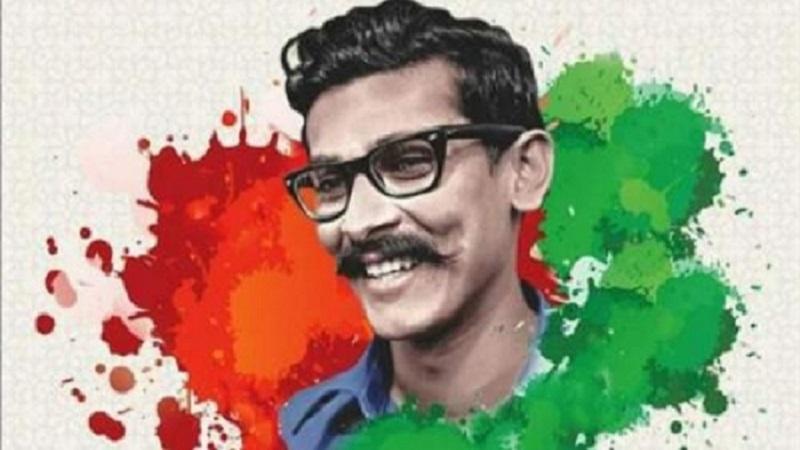
At PAF Shaheen School (now BAF Shaheen College), Dhaka, in 1967, everybody took a glimpse of a tall, well-built student with a light moustache, unkempt hair, wearing thick, black-framed spectacles in khaki trousers and a blue school uniform shirt.

Every time I saw the senior student, he was practicing cricket, a game not played by many Bangalees in the 1960s.

He was none but Sheikh Kamal, the eldest son of Bangabandhu Sheikh Mujibur Rahman, who was in prison accused of treason by the military dictator General Ayub Khan for conspiring to bifurcate the eastern province of Pakistan into an independent state, Bangladesh. In fact, the dream came into reality in less than five years.

Kamal was an avid promoter of Bangla-speaking students to join regular sports, especially cricket. Shaheen School fared very well in inter-school competitions in basketball, football, cricket, and other sporting events for his active involvement.

The sports in Shaheen School were dominated by Urdu-speaking students, whose parents and guardians had migrated from India after the 1947 partition, or their parents were serving in the Pakistan Air Force, PIA, and civil bureaucracy.

Kamal used to visit junior classes to recruit students who had a flair for music, dance, and drama.

Many others -- liberation war historian Afsan Chowdhury, acclaimed photographer Dr Shahidul Alam (Drik), Mohammad Ismail (of Rahimafrooz), heritage archive specialist Waqar Khan, Captain Sheikh Naseer Ahmed who was briefly managing director of Bangladesh Biman, Flight Engineer Faizul Islam, Tarique Islam (bagged the gold medal in the All Pakistan School Science Fair) -- did not join any games and sport.

Instead, they were more engaged in school addas during tiffin break, reading books, and watching English movies in Naz, Modhumita, and Balaka cinema halls.

He appeared for the SSC exam in 1967 and left the school. He continued his studies in Dhaka College and then joined Dhaka University, also organizing the East Pakistan Chhatra League.

The de facto student leader of the Bangla-speaking school students organized cultural programs in state-run Pakistan Television (now BTV) through his rightful connections.

PTV Dhaka Centre used to broadcast dance, music, and drama which was participated in by Shaheen School. Titumir’s “Basherkella” drama, directed by Sheikh Kamal, was also broadcast on BTV in 1967.

The school under his encouragement got the best singer and dance choreographers. Singer Munni Begum and Alamgir Haq, who shot into fame in Pakistan, were born in Bangladesh and studied in Shaheen School. Similarly, Afroze Jilany made her debut in the dance program in PTV and is now a choreographer in the United States.

Fortunately, Sheikh Kamal’s pro-active initiative had yielded a positive result. Nearly a dozen footballers and cricketers who studied in Shaheen School joined the national team. Amongst them was Kazi Salauddin, who is presently president of the Bangladesh Football Federation.

Most exciting were Tanveer Mazhar Islam Tanna (SSC 1967) and Jahangir Shah Badshah (SSC 1969) who played cricket in the national team after the independence of Bangladesh.

Days after the birth of Bangladesh, Sheikh Kamal with other friends and footballer Salauddin founded Abahani Krira Chakra in 1972.

Well, the sports enthusiast Kamal played football, cricket, basketball, and hockey. He also excelled in athletics. He was a brilliant organizer indeed. He was good “addabaz” and sang songs.

Before he was recruited in War Course to become a Mukti Bahini officer, he was a member of the Shadhin Bangla Football Team, which held football matches across India to raise funds for the 10 million refugees during the Liberation War in 1971.

At least 16 students joined the Mukti Bahini from the 1967 to 1972 batches. Sarkar Kamal Sayed, a Liberation War veteran, led Shaheen School in 1969 to grab the basketball championship in the Inter-School Sports Competition. He earned the Sword of Honour in the 2nd BMA (December 1975) in Bhatiari, Chittagong.

Ishtiaq Aziz Ulfat also joined the “Crack Platoon,” the guerrillas which made a shiver run through the spines of marauding Pakistan troops in Dhaka during the war. Similarly, Salim Akbar (1971 batch) received the gallantry award Bir Protik for his contribution.

Unfortunately, after 10 days of his 26th birthday and a month after his marriage with Sultana Kamal Khuki, they were brutally murdered by rogue military officers of the armoured corps when they assaulted the private residence of Bangabandhu Sheikh Mujibur Rahman on August 15.

Bangabandhu’s family members were murdered in cold blood on a fateful morning.

May they rest in peace!

First published in The Dhaka Tribune, 15 August 2020

Saleem Samad is an independent journalist, media rights defender, recipient of Ashoka Fellowship and Hellman-Hammett Award. He can be reached at saleemsamad@hotmail.com and on Twitter @saleemsamad

Wednesday, August 12, 2020

Should China apologize to Bangladesh?


SALEEM SAMAD

Chinese wolf-warrior diplomacy was on the lookout for ‘friends’ in South Asia to create political pressure on India. China brought together their all-weather friend Pakistan, new ally Nepal, debt-trap Sri Lanka under its folds, except Bangladesh, Afghanistan, and Bhutan.

China seems desperate to take diplomatic and economic ties with Bangladesh to a new height.

Since 1991 after a democratic government took power the China-Bangladesh relationship was intertwined for the partnership for economic development.

The new pro-Islamist regime of Khaleda Zia reached out to China to shrug off Indian influence which was an extended strategic gain for both countries.

China and Pakistan was the major military hardware supplier to Bangladesh military forces, which was also needed for United Nations Peacekeeping operations. The weighing scale plummeted under the growing influence of the China-Pakistan axis and penetrated deep into politics, bureaucracy, and economic development of the country.

In subsequent years, China emerged as the major economic partner in mega infrastructure development in Bangladesh and the cheering politicians began to beat their chest like King Kong.

Sheikh Hasina, a woman prime minister for successive fourth term has told her government officials that Bangladesh will give second-thought regarding multi-billion dollar development projects with China.

The world media reports have caught the attention of the Bangladesh leaders regarding several third-world countries were caught in debt-trap in South Asia, Africa, and the Pacific Ocean Islands. What happened was the country’s national exchequer failed to repay the huge loan invested in mega projects. China in a bid to salvage the debt-trap government took a 99-years lease of maritime ports and other facilities. End of the story!

Not very long Sheikh Hasina, the daughter of assassinated Bangabandhu Sheikh Mujibur Rahman, the founder of Bangladesh has reassured the Indian journalists that India is an ‘organic’ friend of Bangladesh and have jointly shed blood during the brutal independence in 1971.

She also said that China is a development partner and there is no conflict of interest. In 1971, the marauding Pakistan troops in eastern war theatre in desperate attempted to keep the two wings of Pakistan united. Pakistan troops and their Islamic militia continued to commit genocide and rape as a weapon of war.

Pakistan troops were in a quagmire. In the monsoon rain in floodplain delta coupled with Mukti Bahini guerilla’s hit and run operations gave the soldiers a hard time. Fortunately, Pakistan an ally of the Chinese Communist Party (CCP) received unlimited military supply and political support for the war to suppress the people.

Like the Pakistan media, Chinese media were tight-lipped of the genocide committed by marauding soldiers. China should admit the responsibility for the genocide perpetrated by Pakistan’s military hawks in Bangladesh.

For each victim of genocide, China delivered gifts via the Rawalpindi hawks which were “Made in China” bullets in brass that were pumped into the martyrs who wanted an independent Bangladesh.

China ignored world opinion on the Bangladesh liberation war in 1971. CCP closed their ears not to hear the cries and agonies of 10 million refugees who fled to neighboring India. Many countries in the world do not have 10 million populations!

On the other hand, on request of the Bangladesh government in exile, Maulana Abdul Hamid Khan Bhashani, chairman of the pro-China left-leaning National Awami Party’s appeal to the CCP for political support for Bangladesh went unanswered. Instead, China increased the supply of arms and ammunition.

After independence, China continued to politically and diplomatically harass the newly emerged independent nation.

The architect of Bangladesh’s independence, Sheikh Mujib after three weeks of the historic surrender of 93,000 Pakistan armed forces and para-military forces in Dhaka, had returned from the prison of Pakistan.

He took charge of a war-ravaged nation with a promise to feed the hungry people and task to rehabilitate the millions of refugees slowly trickled back home from camps in India. This phenomenon created a challenge for the new government. By April 1972, one after another, including the United States, Canada, Great Britain, European countries, allies of the Soviet Union, Japan, Australia, and scores of countries recognized the war-torn nation of 75 million. The trouble started when Bangladesh applied for membership to the United Nations in 1972. China spontaneously twice vetoed Bangladesh membership in the United Nations as the country desperately needed international food aid and budget for rehabilitation of the returnees from Indian refugee camps. China deliberately vetoed the application because two United Nations resolutions regarding the repatriation of Pakistani prisoners of war (POWs) and civilians held in India had not yet been implemented. Chinese move was certainly to keep Pakistan in good humor.

To withstand Asian-giant China, Sheikh Mujib to add diplomatic clouts joined the Non-Aligned Movement (NAM), The Commonwealth, and the Organisation of Islamic Conference (OIC), which indeed strengthened Bangladesh foothold in the global arena.

However, Pakistan recognized Bangladesh in 1974 under duress of the leaders of Islamic nations weeks before the OIC conference.

Even after diplomatic recognition by Pakistan, China continued to intimidate the government of Sheikh Mujib.

Overtly the pro-Beijing communist parties in the country received political blessings from CCP. The left parties despite divided into several factions opposed the liberation war, rejected independent Bangladesh, and expressed dissent on the government of Sheikh Mujib, blaming him a stooge of India.

The pro-Chinese extremist groups remained underground and their parties deliberately had prefix “East Pakistan (Purbo Pakistan)” or” East Bengal (Purbo Bangla)”.

Not to anybody’s surprise, the left extremist raised their heads above the ground and made the unconditional suspension of armed struggle during the military junta on the behest of the CCP’s.

Mujib in his book ‘Amar Dekha Nayachin’ (New China As I Saw) had visited China twice. First in 1952 and second in 1957. During his visit, he met both Mao Zedong, Zhou Enlai, and other CCP’s key leaders. He was confident that the Chinese leaders would listen to his request to recognize Bangladesh.

Stubborn Mujib opened diplomatic channels to win the heart of CCP. Pakistan’s veteran envoy to Beijing (1969-1972), Ambassador Khwaja Mohammad Kaiser, a member of Nawab clan in old Dhaka after his tenure in Beijing opted to return home.

Chinese Prime Minister Zhou Enlai confided to Ambassador Kaiser that he understood his difficulties. Well, Kaiser returned to Beijing, as Bangladesh Ambassador in 1984 for two years.

Mujib had also despatched a journalist and poet Faiz Ahmed to China. Faiz had friends in high places among CCP leadership when he was working in Radio Peking (now Beijing) Bangla Service in the 1960s. Faiz was Mujib’s play card game partner in Dhaka prison during 1966-1969. There he heard of Faiz’s relationship with the Chinese political leaders.

He traveled to Beijing via Hong Kong and met the CCP senior leaders. Unfortunately, he returned home with an empty hand. Despite the missions reached a dead end, Mujib did not lose hope.

Finally, China recognized Bangladesh, but not an elected government of Sheikh Mujib, but after his brutal assassination on 15 August 1975. China recognized the regime governed by coup leaders.

China was among the last countries to recognize independent Bangladesh on 31 August 1975.

The ‘dirty dozen’ army officers, mostly liberation war veterans who spearheaded the mutiny remained in power for 84 days. Expect for few fugitives most of the leaders were captured and rewarded the death penalty.

CCP’s anti-people policy during the bloody birth of Bangladesh, overtly providing military aid to Pakistan which augmented genocide with Chinese bullets should apologize. CCP should also apologize for harassing Bangabandhu Sheikh Mujibur Rahman.

First published in The South Asian Digest, Montreal, Canada on 12 August 2020

Author is an independent journalist, media rights defender in Bangladesh. Recipient of Ashoka Fellowship and Hellman-Hammett Award. He could be reached at saleemsamad@hotmail.com; Twitter: @saleemsamad

Thursday, August 06, 2020

Can Bangladesh shun political Islam?


SALEEM SAMAD

For millions of people in an impoverished Bangladesh, it seems to have ushered a political blessing. The nation which fought a bloody war of independence in 1971 against Pakistan to establish secularism and democracy was obliterated by subsequent military juntas and pro-Islamic governments.

The first constitution has enshrined secularism, democracy, socialism, and nationalism as the key political philosophy of the independence of Bangladesh, which reflects the spirit of the independence war when the eastern province severed from Pakistan in 1971.

After the assassination of the architect of Bangladesh independence Sheikh Mujibur Rahman in a military putsch in 1975, the military-backed government of General Ziaur Rahman, a former Mukti Bahini commander, with a swagger stick doctored the constitution’s guiding principle and scribbled “Bismillah’ir Rahman’ir Rahim (Faith in Allah)” in 1979 to establish legitimacy of his military government.

After Mujib’s daughter Sheikh Hasina, leader of the Awami League swept to power in 2008 pledged to restoration of secularism and the trial of war criminals.

The Supreme Court in its landmark verdict forbids political parties that advocate political Islam. The apex court also asked to reinstate the four key principles in the constitution.

In separate voluminous judgements in July and August of 2010, the apex court pulled down the Fifth Amendment of 1979 and Seventh Amendment of 1986, including provisions that allowed religious-based politics, which was legitimized by tyrannical rules from 15 August 1975 to 9 April 1979 and 24 March 1982, and 10 November 1986 respectively.

The court in a ruling said the Seventh Amendment retroactively legitimized the very acts that successfully engineered the coups by former Chief of Army Staff Lt. Gen. Husain Muhammad Ershad unseated an elected government of President Justice Abdus Sattar in March 1982.

General Ershad in a bid to woo moral support of majoritarian Sunni Muslims had rewritten the constitution which determines “Islam as state religion” of a once secular nation.

The higher court judges noted, “The proclamation of martial law and its regulations and orders and all actions under this law shall remain illegal until Qayamat (the Last Day of Judgment). “The martial law was beyond the mandate of the constitution and will be invalid for eternity,” and said, “a usurper is a usurper.” It is deemed that the judgement squarely blamed both the military leaders have acted as a usurper to grab the state power.

The apex court’s verdict on the Fifth Amendment said, “The perpetrators of such illegalities should also be suitably punished and condemned so that in future no adventurist, no usurper, would dare to defy the people, their constitution, their government, established by them with their consent.”

The court dubs the “extra-constitutional adventurers” as predators of democracy who ushered military regimes.

General Zia was assassinated in a military coup d’état in 1982 and General Ershad was ousted in 1990, after a bloody pro-democracy revolution. He served a prison sentence for corruption but is a key ally coalition of the ruling party and died last year of old age complications.

Excited by hearing the superior court verdict Shahriar Kabir, a secularist, researcher and staunch advocate for the trial of the war criminals said the people’s mandate in the last general election for the restoration of secularism and trial of perpetrators responsible for the crime against humanity in 1971.

“Religious based politics was prohibited after brutal birth of Bangladesh. We have seen youths belonging to Jamaat-e-Islami (JeI) were engaged as henchmen of marauding Pakistan military. They raised Al-Badr, a death squad to kidnap and murder hundreds of intellectuals who could not escape for their safety and security,” he explained.

All the JeI leaders of the secret militia group Al-Badr were handed down maximum punishment for war crimes and crimes against humanity by the International Crimes Tribunal.

The journalist and film-maker Kabir said General Zia, after the assassination of Sheikh Mujib in a bid to gain political support, withdrew the ban on religious politics and allowed Islamic parties to regain grounds.

The Bangladesh Nationalist Party founded by assassinated General Rahman, presently led by his widow, Begum Khaleda Zia appealed the apex court’s first ruling on the Fifth Amendment last January and lost her in a crucial legal battle which was detrimental to her party.

Notwithstanding, Bangladesh is a Sunni Muslim-majority nation, most people practice a moderate version of Sunni Islam. In the long run, the country’s politicians want the country to transform into a secular democracy rather than “Islam as State Religion”.

Pending a verdict from the Appellate Division of the Supreme Court, the Bangladesh Election Commission has struck off the name of Jamaat-e-Islami (JeI) as a political party. Officially the Islamist party was unable to participate in the 2014 and 2018 general election. Unfortunately, the Islamist party failed to satisfy the Election Commission that it is a Bangladesh origin party, upholds the Bangladesh constitution, and expresses solidarity with the independence of Bangladesh.

JeI handbook and various published documents, the party did not accept the state constitution and demanded to override it with Quran and Sharia Law upon 164 million secular and moderate Muslim majority nation. Unfortunately, the party failed to muster moral support of the majority.

Besides, the party didn’t recognise Bangladesh independence. JeI was politically, morally, and physically supported by the marauding Pakistan military.

Regarding banning of Islamic parties, Sheikh Hasina told the Jatiya Sangsad (parliament) said the Islamic parties will not be banned, while “Bismillah’ir Rahman’ir Rahim” and state religion Islam will remain in the constitution.

Social justice activist Kabir is visibly disturbed regarding the delay in banning of religious-based political parties, especially JeI which opposed the independence of Bangladesh.

He said the prime minister’s statement in parliament has confused the nation and contradicts the verdict of the superior court. The Islamic parties would continue to function and overtly campaign against the war crimes trial.

First published in The South Asian Digest on 6 August 2020

Author is an independent journalist, media rights defender in Bangladesh. Recipient of Ashoka Fellowship and Hellman-Hammett Award

Wednesday, August 05, 2020

From Khuda Hafez to Allah Hafez

The rise of radicalism has made a dent in the secular fabric of society
SALEEM SAMAD
The Muslim festival celebrated on the occasion of Hajj is Eid-ul-Azha, with the customary sacrifice of cattle all over the Islamic countries, as well in hundreds of other countries where there are followers of Islam.
While tens of thousands on social media and writings in print, the nation seems to have awakened to find that the traditional words heard for centuries in Bengal -- “Eid-ul-Azha” -- have been renamed “Eid-ul-Adha.”
Earlier, our grandfather taught children to say “Roza” and the conventional social salutation was “Ramzan Mubarak.” What they want us to hear now is “Ramadan Kareem.”
wwaBengal, the land of Sufis and Bauls, a unique place in ancient India where Muslims, Hindus, Buddhists, Christians -- the ethnic and cultural minorities -- lived in harmony along with nature.
When we were in the Pakistan era, the existence of orthodox or radicalized Muslims was not visible. There was a significant rise of progressive Muslim writers, poets, lyricists, and musicians.
In post-1947 -- liberal spaces encouraged cinema, theatre, folk music, and traditional Jatra. Cultural activities thrived with the resurgence of a new generation of creative people in society.
Suddenly the Jatra and folk music were attacked by Islamists, coupled with civil administration refusing to give permits to hold folk festivals in rural areas.
The rise of radicalism is a new phenomenon, which has made a dent in the secular fabric of society. Such peculiar development has been noticeable in Bangladesh for more than three decades.
Presently, the bauls, cartoonists, writers, and sculpture artists are unable to exercise their profession. Firstly, they are physically attacked and secondly, they are slapped with the controversial Digital Security Act.
Nowadays, the bigots scoff if somebody says namaaz and corrects it to salaat. They have changed “Milad-un-Nabi” into “Siratun-Nabi” and gradually everything which is Persian is being changed.
Most importantly, our goodbye greeting -- “Khuda Hafez” -- has been forcibly converted to “Allah Hafez.” Most Islamic practitioners in the country do not realize that long ago, Khuda Hafez arose at the authoritative Islamic learning centre at the Al-Azhar, Cairo.
Everybody knows “Allah” is Arabic and “Khuda” is Persian. The great blind scholar of the Qur’an, Taha Hussain said: “A child calls his mother by so many names and also ‘coins’ new words and she invariably responds. Does she ever say why haven’t you called me mother?”
“Allah Hafez” was first imported from Pakistan during Khaleda Zia’s pro-Islamist regime in 1991. Well, in Pakistan, liberal and secular intellectuals, academics, and mainstream media have squarely rejected “Allah Hafez."
In Pakistan, experimenting with neo-Islamic culture has become a national activity of the military regime in converting whatever was Persian to Arabic.
Of course, the first step in the Islamization of the country had taken deep root when General Ziaur Rahman, through a military proclamation, amended the 1972 constitution and inserted “Bismillah-Ar-Rahman-Ar-Rahim” (In the name of Allah, the beneficent, the merciful) in the preamble of the constitution.
The principle of secularism was removed from the constitution in 1977 by the Fifth Amendment. Furthermore, another military dictator in 1988 declared: “Islam as the state religion” to appease the conservative Sunni Muslim majority.
In public events, the political speakers begin with the salutation Bismillah-Ar-Rahman-Ar-Rahim and end it with Allah Hafez.
Writer and researcher in war crimes Shahriar Kabir debated that the Charter of Medina signed by Prophet Muhammad (pbuh) did not write “Bismillah-Ar-Rahman-Ar-Rahim."
He asked the Islamic zealots why they deleted Khuda Hafez and coined Allah Hafez? Well, goodbye in Arabic is Fee Amanillah.
The followers of the Wahhabi sect, which advocate strict Sharia laws, were hailed by the Taliban and IS; the orthodox groups consciously deleted Persian words from Muslims in Bangladesh, India, and Pakistan.
This geopolitical shift occurred after the so-called Islamic Revolution in Iran. The Arab states felt threatened that regime change would jeopardize the Islamic ummah.
The pro-Wahhabi Islamist party Jamaat-e-Islami first introduced the endnote slogan Allah Hafez which was adopted from Pakistan Islamist conglomerates.
The Islamist party was able to influence leaders of the Bangladesh Nationalist Party to adopt Allah Hafez, while the Awami League leaders in the 1990s were still saying, Khuda Hafez.
In a major shift after 2009, gradually, Awami League leaders, MPs, and bureaucrats picked up the end salutation Allah Hafez and it is now established as Muslim etiquette.

First published in the Dhaka Tribune, 4 August 2020

Saleem Samad is an independent journalist, media rights defender, and recipient of Ashoka Fellowship and Hellman-Hammett Award. He can be reached at saleemsamad@hotmail.com. Twitter @saleemsamad

Monday, July 27, 2020

What is the ‘golden ring’ axis?

China continues to consolidate power and strengthen ties with Asian countries
SALEEM SAMAD
In a geopolitical response to the decline of the Western influence in South Asia and West Asia, China, Russia, Iran, Pakistan, and Turkey envisage a “golden ring” axis to expand their hegemony on South and West Asia.
The vision of the golden ring of China, Russia, Iran, Pakistan, and Turkey was first disclosed recently by Iran’s ambassador to Pakistan.
The effort to forge an alliance surfaced after Afghanistan refused to be drawn into the golden ring axis. Kabul does not trust their immediate neighbour Pakistan and the nation has not forgotten the ruthless Russian occupation installing a puppet regime.
Afghanistan squarely blames Pakistan’s elite security agency in Rawalpindi GHQ for aiding and abetting ruthless Taliban militia.
Kabul is equally not comfortable with the Islamic Republic of Iran. The assassinated General Qasem Soleimani of the elite Al Quds military had recruited Afghan Shia militia to fight the Kabul government, which Iran believes is a stooge of the Americans, and thus an enemy of Islam.
Contrary to US perceptions, the Kremlin realizes the importance of Pakistan for a peaceful settlement of the Afghan conflict. Unfortunately, Afghanistan seemed to have disappeared from the White House radar in the run-up to the US Presidential Elections.
The US author Robert D Kaplan wrote in his book, The Revenge of Geography: “Pressure on land can help the United States thwart China at Sea.” But post exit from Afghanistan, America will lose that advantage since its “pivot Asia” will be largely reduced to the high seas.
Well, the US has been an undisputed global power since the collapse of the Soviet Union. China has risen from Mao’s anti-capitalist policy into a strong rival to the US. The Trump administration’s aggressive foreign policy is pushing away China and pulling closer allies who were never their loyal partners in economic development.
China has strengthened its ties with countries that were ignored or bullied by America. Therefore, the emergence of a new golden ring of China, Russia, Iran, Pakistan, and Turkey is becoming a reality.
China has fathomless pockets to fund economic development, and forging ties with Iran, Pakistan, Russia, and Turkey to join the ambitious Belt and Road Initiative (BRI).
In 2019, Iran formally joined China’s “One Belt One Road” initiative. Tehran announced that it has partnered with Beijing for the strategist Chabahar port in Iran. It will make Iran an integral part of the BRI, linking China with Europe via Turkey.
Turkey, despite being an ally of the NATO military alliance, has drifted from Washington in recent times.
Ankara’s occupation of Northern Cyprus for more than four decades, military assistance to rogue rebel General Haftar opposed to UN-backed Libyan government, intermittent military strikes against Kurds -- the bravehearts who fought the dreaded Islamic State marauder -- has angered not only the US, but also European nations.
America could have said “checkmate” when US aircraft carriers and hosts of battleships were joined by naval forces of Taiwan, the Philippines, Vietnam, and Indonesia to take strategic control of the South China Sea, where China wanted its hegemony of the disputed sea.
Meanwhile, after the Galwan Valley face-off between India and China, India has readied its naval fleet in the Indian Ocean, rallying with US frigates from the Seventh Fleet, a tacit threat to China maritime for oil shipment from Iran. The manipulative geopolitical strategy in Asia may yield dividends which could be measured with a yardstick. Eventually, it needs to be understood about who will reap the maximum gain from the golden ring axis.

First published in the Dhaka Tribune, 27 July 2020

Saleem Samad is an independent journalist, media rights defender, recipient of Ashoka Fellowship, and Hellman-Hammett Award. He can be reached at saleemsamad@hotmail.com. Twitter @saleemsamad

Friday, July 24, 2020

Shahjahan Siraj, plastic bag killer

SALEEM SAMAD
If citizens are talking about Bangladesh's independence, if they are talking about the pro-democracy movement in 1969, if they are talking about the protest against misrule during post-independence, surely they are talking about career politician Shahjahan Siraj.
Once a fiery student leader of the mid-1960s has changed political hats, changed political allegiance, but maintained his political clout.
In post-independence, I met him in 1973 at Dainik Gonokantha newspaper office in Wari, in the old Dhaka. The newspaper was founded by Jatiya Samajtantrik Dal (JSD), an opposition party. The only daily newspaper in Bangladesh was sold at a double price at the newsstand.
In later months he remembered me very well, possibly for asking curious questions. At Gonokontha office I also introduced to JSD stalwarts Serajul Alam Khan, ASM Abdur Rab, Kazi Aref Ahmed, Monirul Islam, Hasanul Haque Inu, Sharif Nurul Ambia and host of other student leaders.
His chequered political career led him to win five general elections to parliament from Kalihati, Tangail. After winning the 2001 parliamentary elections, he was made Minister of Environment and Forest (10 October 2001 - 6 May 2004) in the cabinet of the pro-Islamist regime of Khaleda Zia.
During his tenure as the environment minister, the production and use of plastic shopping bags were banned in Bangladesh, polluting two-stroke three-wheeler taxis were withdrawn from the road, and tree plantation turned into a social movement.
The politician accepted a challenge to contribute to an environmental cause. At that moment the minister was approached by Hossain Shahriar, an environment journalist who is also executive director of the Environment and Social Development Organisation (ESDO).
Meanwhile, the capital Dhaka suffered from water-logging in the monsoon season. The newspaper blamed tons of discarded plastic bags dumped indiscriminately has clogged the city drains and unable to remove the rainwater quickly.
Environmental groups say the millions of polythene bags, food packages disposed of every day are blocking drainage systems in cities, posing a serious environmental hazard.
The eminent politician and a journalist concluded that plastic bag production, sale, and use have to be axed to save the people from a health problem.
Together they developed a long-term plan to ban plastic shopping bags, commonly known as polythene bags.
Environmental campaign activists argue that, without tougher environmental legislation, it will be very difficult for the government to attain any success in its fight against plastic bags.
The non-degradable shopping bags were introduced into Bangladesh nearly four decades ago, quickly replacing jute bags and paper bags (known as tonga) produced from recycling paper.
The production of the plastic bag has thrown out tens of thousands of self-employed workers producing paper bags, recycled bags from heavy packaging materials, and also traditional bags made from jute, the golden fibre.
Environment Minister Shahjahan Siraj explained that the decision to ban plastic bags has been finalised to save the metropolis from an imminent environmental disaster.
Researchers found that plastic bags in agricultural lands have reduced fertility in the soil, raising concerns about farm produce.
They also posed a serious threat to human health, especially to people involved in the production and recycling of polythene.
Industry leaders debated that the dangers were exaggerated, though they admitted the plastic bags were the main cause of water-logging.
Minister Shahjahan Siraj dismisses the industry leaders' claim, saying the losses would be temporary. He stated: "We will be able to employ far more people through reviving the declining jute industry, producing environment-friendly jute bags."
The minister while pushing the giant ball up the hills was warned of the repercussions from the trade bodies. Simultaneously the Commerce Ministry, Industries Ministry, and hosts of lawmakers stood against Shahjahan Siraj's initiative.
Journalist Hossain Shahriar along with a team of bureaucrats selected by Shahjahan Siraj after months of hard labour, finally placed a draft law to ban the plastic bag in the parliament.
The use and production of plastic bags continued unabated under the Bangladesh Environment Conservation Act 1995.
The enactment of the 2020 law ensures a complete ban on the production, import, marketing, sales, display, storing, distribution, transportation, and use of polythene of less than 55-micron thickness for business purposes.
The enforcement of the complete ban on the sale and use of plastic bags in the Dhaka, the consumers were getting used to alternative shopping bags instead of plastic bags.
All shopping malls, grocery chain stores, superstores, clothing stores, bookstores do not give plastic bags as such violations invite hefty penalty and imprisonment.
The new consumerism culture is a major shift from plastic bags to alternative biodegradable low-cost bags is visible.
Thus Bangladesh became the first country in the world to implement a ban on plastic bags and many other countries begin to follow suit.
Shahjahan Siraj died at the age of 77 after prolonged cancer ailments on 14 July 2020.

First published in the Daily Asian Age, 24 July 2020

Saleem Samad, is an independent journalist, media rights defender, recipient of Ashoka Fellowship and Hellman-Hammett Award. Email: saleemsamad@hotmail.com; Twitter @saleemsamad

Monday, July 20, 2020

Will a vaccine save the economy?

covid-19 vaccine

SALEEM SAMAD
Development Economist Dr Atiur Rahman sharing his mind said that once the availability of the coronavirus vaccine becomes a reality, the world economy will recuperate and Bangladesh will also make a dramatic turn-around.
However, a challenge remains of generating new employment and regenerating the labour market. The challenge could be bridled with a long and short term economic preparation, by an energetic team of planners and social managers selected.
The government has to develop a recovery plan of action to generate jobs and employment in both formal and non-formal sectors, says Atiur Rahman, a former governor of Bangladesh Bank.
Atiur says the expectation from the discovery and availability of the coronavirus vaccine has increased exponentially.
Meanwhile, over 100 influential global leaders have joined Nobel laureate Muhammad Yunus after he launched an international campaign to make the Covid-19 vaccine a global common good.
The campaign on behalf of Nobel laureates and organizations of Nobel laureates, civil society leaders, and world moral leaders urged all the global leaders, international organizations, and governments to adopt legal measures and declare Covid-19 vaccine as a part of the global domain.
What the founder of the “bank for the poor” meant was that the vaccine should be available at a cheaper price for the developing countries, but not for the West only.
As the Covid-19 pandemic continues to wreak havoc across mother earth, there is an explosion of research activities and clinical trials to find cures and vaccines, says Prof Yunus.
The platform urged the World Health Organization (WHO) to design a World Action Plan on the Covid-19 vaccine and appealed to set up an international committee responsible for monitoring the vaccine research.
The research for a vaccine is a long process. The estimated time for the development of a Covid-19 vaccine is about 18 months or so.
Prof Yunus’s campaign has received pro-active responses from more than 25 Nobel laureates, scores of former presidents, former PMs, creative artists, social justice activists, business leaders, leaders of international organizations, academics, and hosts of political and faith leaders from all the continents.
Obviously, private sector research laboratories engaged in the development of vaccines will be expecting a return on their investments. The research results should be in the public domain, making it available to any pharmaceuticals that pledge to produce vaccines under strict international regulatory supervision.
Prof Yunus believes that if the vaccines are free from patent rights, the price will be affordable in the third world. Most of the developing countries’ hospitals are overwhelmed providing health care to coronavirus patients on their shoe-string budget.
The pandemic exposes the strengths and weaknesses of health care systems in different countries, as well as the obstacles and inequalities of access to health care.
Therefore, the campaign understands the cash-strapped developing countries will not be able to buy the vaccine in bulk. The global leaders demand that the availability of vaccines is a right and there must be free universal access to the vaccine for all.
Governments, foundations, international financial organizations like the WB, and the regional development banks have been urged to develop a strategy on how to make the vaccine available free of cost to inhabitants from all walks of life, be they from urban or rural areas, men or women, or living in rich or poor countries.
The campaign underpins the moral responsibility of the global leaders to develop an unambiguous procedure to determine what would be a fair level of this return in exchange for putting the vaccine in the public domain.

First published in the Dhaka Tribune, 20 July 2020

Saleem Samad is an independent journalist, media rights defender, and recipient of Ashoka Fellowship and Hellman-Hammett Award. He can be reached at saleemsamad@hotmail.com

Monday, July 13, 2020

Are extremists exploiting the pandemic?

Social Media Photo: Bigstock
SALEEM SAMAD
Conspiracy theories and disinformation are spreading at an alarming rate
When Sara Khan, lead commissioner for an independent Commission for Countering Extremism (CCE) in a flagship report “Challenging Hateful Extremism” talked of how effective existing British laws are in dealing with hateful extremist activity -- policy-makers and government officials in Britain were dumbfounded.
The report, launched on June 10, observes that the far right to the far left and Islamist groups have fully exploited the global coronavirus crisis to promote dangerous conspiracy theories and disinformation, mostly online.
A private study has been posted by the United Kingdom government’s official website, which says CCE advises the government on new policies to deal with extremism, including the need for any new powers.
The non-governmental organization, CCE, supports society to fight all forms of extremism and has closely worked with the British Police Department.
The extremists joined in separate social media space, joined by #CovIdiots across all spectrums. From far right and far left, all are agog in 5G conspiracy theories on platforms such as Telegram, a multi-platform messaging service platform.
Conspiracy theories need just the right ingredients to take off within a population, and the Covid-19 pandemic has been a breeding ground for them.
The independent commission has pulled together several other pieces of research to draw a broader canvas of the extremist threat during the pandemic. A narrative spread like wildfire on social media that the wireless network 5G technology fuelled the coronavirus pandemic.
The conspiracy theory on the Covid-19 outbreak believes that the virus pandemic is part of a strategy conceived by global elites - such as Bill Gates - to roll-out coronavirus vaccines with tracking chips that would later be activated by 5G, the technology used by mobile technology networks.
Such mindless #CovIdiots in Bangladesh are equally active in social media. They are active in posting conspiracy theories in attempts to inject into the novice minds of young and old, rich and poor that coronavirus is a Western conspiracy by Christians and Jews responsible for funding research in Wuhan labs.
Well, wearing masks, using sanitizers, washing hands, and testing for coronavirus are selling points of multinational companies and their accomplices in the country.
What about those millions who are infected, hospitalized, and dying from coronavirus? The #CovIdiots mysteriously remain silent and dish out stereotypical responses to such pressing issues.
The study further emphasized that hateful extremists have used divisive, xenophobic, and racist narratives to sow division and undermine the social fabric of Britain.
Unless the British government urgently invests in counter-extremism measures, extremists will seek to capitalize on the socio-economic impacts of Covid-19 to cause further long-term instability, fear, and division in Britain.
For a democratic government, in the United Kingdom, the impact of extremist propaganda and disinformation shouldn’t be undermined. These conspiracy theories are harmful, dangerous, and are used by extremists to cause division and breed hate, reiterated Sara Khan.
Now a social media strategy needs to be developed to challenge dangerous conspiracy theories based on the harm they cause. This will enable practitioners on social media platforms to better challenge harmful conspiracy theories before they escalate.
Bangladesh shouldn’t miss the opportunity to join the global effort to classify dangerous conspiracy theories. 
A fresh counter-extremism strategy must include an assessment of how extremism manifests locally, the harm it causes, the scale of support for extremist narratives, and how best to pre-empt extremist activity.
The assessment should also include the people most vulnerable to extremist narratives, to deliver vital interventions to engage and support these guiltless people. 

First published in the Dhaka Tribune, 13 July 2020

Saleem Samad is an independent journalist, media rights defender, and recipient of Ashoka Fellowship and Hellman-Hammett Award. He can be reached at saleemsamad@hotmail.com. Twitter @saleemsamad

Friday, July 10, 2020

Deep-rooted issues hamper Bangladesh’s recovery

Even as the number of COVID-19 cases continues to rise, healthcare workers in Bangladesh struggle to get their hands on good quality personal protection gears. The tendency to cover up irregularities and mismanagement has led to a prevailing culture of corruption.
SALEEM SAMAD
Recently, Bangladesh crossed the grim milestone of 1,62,000 confirmed coronavirus cases. With a population of 160 million, the developing economy has been grappling with formidable challenges that have only been exacerbated by the outbreak of COVID-19.
Transparency International Bangladesh (TIB), a civil society organisation dedicated to fighting against corruption, has squarely blamed the government’s poor coordination for the current crisis.
The rot within
Data shows that 26 percent of the frontline healthcare workers in Bangladesh, including doctors, nurses, and hospital staff, did not receive personal protection gears, even as the number of COVID-19 cases has been on the rise. Also, the protection materials supplied to government hospitals were deemed to be of inferior quality.
At least six doctors who brought up the issue via Facebook posts were suspended or transferred to non-COVID hospitals as punishment for speaking out. Eventually, at the intervention of Prime Minister Sheikh Hasina, the Anti-Corruption Bureau and anti-crime forces were shaken from their siesta. They raided dozens of places – including government warehouses – to find fake protective materials and stolen medical products.
“If the government wants to tackle this crisis, the right to get and publish accurate information must not be diminished,” said Dr. Iftekharuzzaman, executive director of TIB. The tendency to cover up irregularities and mismanagement through restrictions on disclosure of information encourages corruption.
Stitch in time
In the wake of the coronavirus outbreak, TIB analysed seven indicators of governance, including rule of law, responsiveness, capacity and effectiveness, coordination and participation, accountability, transparency, and control of corruption. “The government failed to make adequate preparations even after getting three months’ time,” noted Dr. Iftekharuzzaman.
“The impacts of the COVID-19 pandemic have been largely ignored in the budget allocation for the health sector,” remarked Dr. Fahmida Khatun, executive director of the think tank Centre for Policy Dialogue (CPD). “The outbreak is a lesson for us, which has made it clear how much strength we have to tackle the crisis,” she said.
The Daily Star, an independent newspaper, in an editorial recently wrote: From the onset of the pandemic, citizens have been confused and frustrated about the government’s lack of vision and direction in addressing the health and socio-economic implications of COVID-19 holistically. The newspaper came heavily on the government’s casual handling of the risk of spread at the initial stages, declaring general holidays and non-binding lockdown.
The arbitrary policy decision at every stage, the editorial observed, have left ordinary citizens as well as experts in bewilderment as to what the government is thinking and what it wants to achieve in the near and far future.
Prof Abul Kalam Azad, Director General of Directorate General of Health Services (DGHS) drew flak from ruling party leaders when he recently said, “COVID-19 situation in Bangladesh will not go away in two or three months, rather it is likely to stay for two to three years.”

First published in the Health Analytics. 10 July 2020

Saleem Samad, is an independent journalist, and health fact-checker, recipient of Ashoka Fellowship and Hellman-Hammett Award. He could be reached at ; Twitter @saleemsamad

Monday, July 06, 2020

No quick fix democratic reforms in Pakistan

Photo: Reuters
SALEEM SAMAD
When Pakistani Army Chief General Qamar Javed Bajwa, in an off-the-record briefing with journalists in March 2018, was quoted as saying that the 18th Amendment was “more dangerous than Sheikh Mujibur Rahman’s Six-Points political agenda, except the veteran politicians of the 60s,” none in the Islamic Republic understood what the Rawalpindi GHQ chief meant.
The Six-Points was deemed a threat to national security and unity of the Islamic Republic of Pakistan by the Hawks of Rawalpindi GHQ. The Hawks believed that when the Awami League in a landslide victory in 1970 elections won an overwhelming majority, both in provincial assembly as well as in national assembly.
Hawks understood regional parties which won in three other provinces of Balochistan, Sindh, and North-East Frontier Province (now Khyber Pakhtunkhwa) also would be upbeat to demand greater autonomy. The implementation of the Six-Points would be fuel in fire to the simmering independence movement in Balochistan, a princely state forcibly occupied in March 1948.

What is the 18th amendment?
After an unceremonious exit of General Pervez Musharraf in 2008, Pakistan’s new civilian government and opposition parties were united in creating several hurdles for the military to seize power again.
During his iron-fisted reign, Musharraf toppled an elected government, dismissed judges, suspended the constitution, and imposed emergency rule to consolidate his power.
In 2010, President Asif Ali Zardari enacted sweeping constitutional reforms that undid provisions that military dictators had introduced to tighten their grip on power and legitimize their coups.
Under the 18th amendment, the president no longer had the authority to dissolve parliament and impose an emergency rule on his own. The courts no longer had jurisdiction to validate suspensions of the constitution and powers were transferred from the presidency to a prime minister and their cabinet. The amendment also transferred power from the centre to the provinces, restored parliamentary democracy, and closed off paths to generals overturning the civilian rule.
Now, a decade on from that landmark move, there are fears that the government of Prime Minister Imran Khan, who is backed by the military, is seeking to roll back the changes, which are widely seen as the bulwark of the democratization process.
The ruling Pakistan Tehreek-e-Insaf (PTI) has called for a review to “fix” what it perceives as flaws in the 18th amendment, including restoring federal authority over legislation and finances.
Ian Bremer recently wrote in Time magazine: “Army leaders equate the new powers granted to provinces with the ‘Six-Point’ movement, which led to the creation of Bangladesh, a stinging blow for Pakistan’s military.”
Opposition politicians have accused the powerful military of manipulating the 2018 elections to help the PTI win. The opposition parties also condemned Imran Khan’s political catchphrase “Naya Pakistan.”
Amid the coronavirus outbreak which gripped Pakistan, it has immensely delayed the politics of “quick fix” of the 18th amendment.
Michael Kugelman, South Asia senior associate at the Woodrow Wilson International Centre for Scholars in Washington DC, argued that reining in the amendment would “amount to a demoralizing defeat for the forces of democracy in a nation where such forces have long struggled to secure a sustained foothold.
“The 18th amendment has long endured like a brave and bold achievement that showcases the very real potential for strong democracy in Pakistan.”
Fortunately, the Naya Pakistan government does not have a two-third majority in both the national assembly and senate that it would take to repeal or amend the 18th amendment.
As Ian Bremer writes, the Pakistani army has long had concerns over the 18th amendment.
So it did not surprise that Khan’s government, which relies on the army’s support to remain in power, has been pushing to make revisions to the law.

First published in the Dhaka Tribune, 6 July 2020

Saleem Samad is an independent journalist, media rights defender, recipient of Ashoka Fellowship and Hellman-Hammett Award. He can be reached at saleemsamad@hotmail.com. Twitter @saleemsamad