Buy.com Monthly Coupon

Tuesday, July 27, 2021

Pegasus spyware worries rights group

SALEEM SAMAD

In neighbouring India, opposition Congress lawmakers in the Indian parliament are at loggerheads with the ruling Bharatiya Janata Party (BJP), as anti-cybercrime firms report claims that opposition leader Rahul Gandhi was “interest to clients” by Pegasus spyware along with 300 politicians, journalists, human rights defenders, and government officials in India.

Recently, a consortium of 17 global media outlets published leaked reports stating that Pegasus spyware developed by the Israeli firm NSO was used to hack into the phones of thousands of people across the world.

The tsunami of global outrage sparked after non-profit journalism organization Forbidden Stories released a major new investigation into NSO Group on July 18. The investigation exposed widespread global targeting with the Pegasus spyware.

On request of Forbidden Stories and Amnesty International, Canada-based Citizen Lab undertook an independent investigation based on forensic methodology. The forensic investigation reveals the dark surveillance market of spyware manufacturers used against “interest to clients.”

Allegations that mostly authoritarian governments used phone spyware or malware capable of spying on journalists, critics, opposition, and heads of state have “exposed a global human rights crisis,” according to Amnesty International.

Pegasus can access both Android phones and iPhones, keeping the user unaware of the secret surveillance. Data thieves stealthily retrieve call lists, SMS, contact lists, photos, and geo-location from phones without the knowledge of the user.

This is the world’s only organized secret surveillance -- a crime which pays back in huge cash. The spyware masters earn millions of dollars against installation, service charges, and other fees. Diving deep into the issue of spyware, it is indeed a very expensive electronic spy.

NSO comes from three founding members’ initial names in 2010. The firm employs 500 dedicated IT experts in command and control centres in the client’s hub. The small team of the former Israeli intelligence agency Mossad Special Unit produced the controversial product for clients mostly in authoritarian and despotic regimes in Latin America, Africa, Middle-East, South Asia, and beyond.

The NSO website describes that their company creates technology to help governments and agencies prevent terrorism, break up paedophilia on the dark web, and prevent sex trafficking, money laundering, drug trafficking, and other organized crimes across the globe.

In a naive statement, the NSO official website says that the spyware can help rescue missing or abducted children, survivors trapped under building collapses, and victims of natural disasters.

Besides Pegasus, there are four other known manufacturers which also produce spyware and provide services to clients. The other products in the surveillance market are Dropout Jeep, RCS Android, Exodus, and PG-GEO. Nevertheless, Pegasus is an all-in-one spyware and has reason for being expensive.

In 2020, media rights organization Reporters Without Borders (RSF) branded NSO Group as a “digital predator” and reiterated its aim to punish NSO for the cyber crimes which infringed on privacy and freedom of speech.

In the United States and Pakistan, Cambridge Analytica misused intimate personal Facebook data to micro-target and influence swing voters in the last elections of Donald Trump, and Imran Khan’s in Pakistan.

It was alarming for civil society, when Amnesty launched a ground-breaking report in November 2019 on how the surveillance-based business models of companies like Facebook and Google undermine fundamental rights, including the right to privacy and freedom of expression.

Nonetheless, rights organizations expressed a clear danger for freedom of opinion and expression, especially preying on journalism, which is guaranteed by article 19 of the Universal Declaration of Human Rights.

Rights groups around the world called for accountability in spyware sales and urged nations to wake up to a responsible international standard for snooping.

First published in the Dhaka Tribune, 27 July 2021

Saleem Samad is an independent journalist, media rights defender, recipient of Ashoka Fellowship and Hellman-Hammett Award. He can be reached at saleemsamad@hotmail.com; Twitter @saleemsamad

Tuesday, July 20, 2021

Digital waste threatens public health

SALEEM SAMAD

In Bangladesh, a lack of policy, awareness, and enforcement of e-waste management threatens human health and the environment.

E-waste, or electronic waste, is created from affordable digital technology, home appliances, and also refrigerators and air-conditioners, which are no longer deemed luxury goods.

The quality of products is deliberately compromised to keep the price competitive. The compromise in the quality of products, mostly from Chinese sources to meet the demand of the new generation’s consumers, has dramatically increased the sale of electronic products, which have engulfed both urban and rural life like an octopus. Digital life has penetrated deep among both rich and poor communities and cut across all professions.

Technology has shown unprecedented growth in application in the social and economic landscape -- like delivering trade and public services, harnessing financial inclusion and e-commerce, and supporting marginalized groups and communities.

According to Bangladesh Electronic Machinery Marketing Association (BEMMA), the country consumes around 3.2 million tonnes of electronic products each year.

Dr Shahriar Hossain, General Secretary of the Environmental and Social Development Organization (ESDO) says that every year, 2.8 million metric tons of e-waste is generated in Bangladesh. An estimated 20% to 30% is recycled and the rest is dumped as obsolete in open places, which is hazardous to human health and the environment.

The major challenge is the management of e-waste, which contains toxic materials such as lead, mercury, copper, cadmium, beryllium, barium, and others. It threatens public health and the environment. E-waste also contributes to climate change by releasing carbon dioxide (CO2) during the recycling of e-waste.

Bangladesh has opened up imports of cheap digital devices to complement its political vision of Digital Bangladesh by the government of Prime Minister Sheikh Hasina. The vision demands that the vicious cycle of the digital divide be broken. Simultaneously, it wants to enhance its potential in key development sectors like education, health, communication, and other areas.

The plan envisages to ensure transparency and accountability to strengthen democracy and keep corruption in check. Apparently, there seems to be light at the end of the tunnel in enabling zero-tolerance in corruption.

The vision inspired private and public agencies to promote mass utilization of digital devices, which has also increased the volume of e-waste from 2.81 million tons in 2009 to 12 million tons in 2019.

The informal sector of e-waste collection is from the consumer’s end. Some reusable metals are crudely extracted and the rest are dumped into landfills, farmlands, and open water bodies. Unregulated by government agencies, informal e-waste recycling has created jobs for 30 million children and women, who are exposed to hazardous substances.

Despite Bangladesh being a signatory to the Basel Convention on Trans-Boundary Movements of Hazardous Waste, there is no specific environmental policy, law, or guideline to regulate e-waste management. A draft regulation on “E-Waste Management Rules” was developed and amended in 2011 and 2017 respectively under the Environment Conservation Act, 1995, but regrettably, no progress is visible.

Sadly, there is no mention in the rules to trade-off e-waste and its management.

Ahmed Swapan Mahmud, executive director of Voices for Interactive Choice and Empowerment (VOICE), compared e-waste to “slow poison” and said that the damage to the environment and public health is permanent.

The environmental consequence, as well as the emission factors of millions of tons of e-waste, is largely unknown by government agencies. 

First published in the Dhaka Tribune, 20 July 2021

Saleem Samad is an independent journalist, media rights defender, recipient of Ashoka Fellowship and Hellman-Hammett Award. He can be reached at saleemsamad@hotmail.com; Twitter @saleemsamad

Tuesday, July 13, 2021

Military hawks gives sermons to Pakistan lawmakers

Is a rogue spy agency calling the shots in Pakistan?

SALEEM SAMAD

Pakistan is possibly the only country in South Asia where military hawks nesting in Rawalpindi GHQ give sermons to lawmakers and legislators in Islamabad on how to desist from engaging in divisive politics on issues of national interest.

Earlier this month, Pakistan’s Parliamentary Committee on National Security was debriefed on the prevailing situation in the country and region by no less than the director-general of Inter-Services Intelligence (ISI) Lieutenant General Faiz Hameed.

Pakistan’s rogue spy agency is calling the shots in Pakistan. The “Pakistan Military Incorporated” flexes its muscles because of the extra-constitutional powers that it has illegally appropriated over all the state organs, including the judiciary.

What the ISI chief said undoubtedly makes perfect sense, but his discourse on political correctness to legislators has raised eyebrows among the civil society, independent media, and rights groups.

Pakistan’s Prime Minister Imran Khan -- with his election promise for “Naya Pakistan” -- has swallowed his nerve to speak out against the Rawalpindi GHQ hawks. His “wahi” (sermons) come from the military bigwigs and not from his civil or political advisers. 

He seems to have lost confidence in the politicians and legislators from the ruling Pakistan Tehreek-e-Insaf (PTI). The wings of the party leaders were cropped, and their beaks waxed to stop them from chirping in satisfaction of Rawalpindi.

Political observers argue that Khan, the cricketer turned politician, is backed by the military, and that the hawks engineered the July 2018 elections and installed a puppet regime of PTI. Meanwhile, the PTI politicians snorted against military hegemony, but would not dare blow the gaff.

Pakistan’s premier English newspaper The Dawn underwent legal harassment and intimidation by the dreaded spy agency ISI, after a news story in October 2016 appeared on the front page: “Act against militants or face international isolation, civilians tell [the] military,” reflecting the anger of the civil society and rights groups.

The outcry of civil society is weak but revealed that Rawalpindi’s hawks have continued patronage to jihadist terror networks, fanning conflicts by Islamist militants in neighbouring countries -- Afghanistan and India.

Pakistan has failed to block the military hawks from aiding and abetting jihad in neighbouring countries and elsewhere. Thus, the Financial Action Task Force (FATF), an international anti-money laundering and terrorism finance watchdog refused to remove Pakistan from its grey watchlist because the country had not been vigorous enough in the prosecution of United Nations-designated terrorists.

Greylisting carries no legal sanctions but restricts a country’s access to international loans. A top Pakistan official estimated that the greylisting cost his country’s economy $10 billion annually.

The meddling of the spy agency in politics, civil administration, and the judiciary has gone so far that Justice Shaukat Aziz Siddiqui, a senior sitting judge of Islamabad High Court, was sacked within three months of having spilled the beans. He admitted that the “Judiciary [in Pakistan] is not independent … the ISI forms benches of its choice to get desired results.”

A Supreme Court judgment two years ago by Justice Qazi Faez Isa reminded that: “The Constitution emphatically prohibits members of the armed forces from engaging in any kind of political activity, which includes supporting a political party, faction, or individual.”

On the other hand, the cash crunch is pushing Pakistan on the verge of a failed state. Independent think tanks have warned that Pakistan will turn into a pariah state if the interference of the military hawks continues.

To salvage the nation from an economic crisis during the coronavirus pandemic, Khan has had to reach out to his all-weather friend China to repay the second instalment of $1 billion out of the $3 billion owed to Saudi Arabia.

Khan is widely dubbed as a populist and appears to reinforce a widespread traditionalist attitude that rejects religious tolerance, as well as the rights of women and ethnic minorities.

First published in the Dhaka Tribune, 13 July 2021

Saleem Samad, is an independent journalist, media rights defender, recipient of Ashoka Fellowship and Hellman-Hammett Award. He could be reached at saleemsamad@hotmail.com; Twitter @saleemsamad

Tuesday, July 06, 2021

Vaccines are the key to sustainability

Without increasing vaccinations, we cannot restore economic stability

SALEEM SAMAD

Print and electronic media, coupled with social media, have unfortunately contributed to creating disinformation and fake news on the ongoing pandemic crisis, medical treatment, and vaccines.

Researchers on media monitoring on fake news argue that media has often fallen prey to misinformation and rumours about coronavirus and vaccines, especially when the newsroom gatekeepers failed to fact-check within the stipulated deadline.

In this tsunami-like pandemic from east to west, north to south in early 2020, the doctors, physicians, and even virologists and epidemiologists -- who were indeed the prime source for newsroom scribes -- initially gave confusing and contradictory sermons coated with medical jargon, which regrettably incited fake news, based on disinformation.

Despite hosts of myths being busted by the World Health Organization (WHO), both the frontline health care doctors and journalists kept their ears, eyes, and minds shut to myth-busters, like the three wise monkeys in folklore.

Sermons like hot water baths, drinking tea or hot water with traditional spices, eating garlic or peppers in food, application of hydroxychloroquine or malarial drugs, vitamin and mineral supplements, administration of antibiotics, exposure to the sun, and hosts of other remedies failed to prevent the deadly infection.

Leading epidemiologist Dr Mushtuq Husain explained that coronavirus is caused by a deadly virus, and is not a bacteria. There are several scientific studies to prove that vaccines do not compromise natural immunity, he also remarked.

Meanwhile, WHO reiterates that everybody should wear masks, especially in crowds indoors, but the United States Centre for Disease Control and Prevention (CDC) says vaccinated people don’t need to wear masks to protect themselves from the virus.

The scientific statement was also validated by John Hopkins University, Oxford University, and Delhi-based CSIR-Institute of Genomics and Integrative Biology, where researchers are spending sleepless nights to conclude that the efficacy and immunity of vaccinated people are protected even from new variants.

Virus experts and epidemiologists also offer mixed advice, but largely agree on one point: Whether or not a fully vaccinated person needs to wear a mask.

Well, mask mandates are intended to protect the unvaccinated -- people who are vaccinated are already well-protected by vaccines, and infection by new variants is still very rare.

It was logically argued that since a person cannot tell who is vaccinated and who is not, the best would be to advise all to wear a mask, which can help stop the spread of the virus by people who are infected, especially those who don’t have any symptoms.

Bangladesh was initially bogged down in the vaccine divide while procuring vaccines. Finally, the government has been able to negotiate with countries and pharmaceutical industries for a reasonable quantity of vaccines.

Despite the emergence of vaccines, the experts have strongly argued that the coronavirus is here to stay for a long period; the world has to embrace the new normal. On the other hand, experts conclude that vaccines are the key to restoring economic stability.

Leading economists in the country advise that accelerating the vaccine’s distribution will be necessary before the economy sees any long-lasting improvement. They strongly disagree that countering the lockdown in a pandemic with a stimulus is the wrong approach to economic recovery.

“We have to get enough vaccinations to enable people to feel comfortable in social settings. That’s the key to getting back to normal; then only would we have a great 2021,” observed top economist Dr Hossain Zillur, who has recently conducted an intensive study on the pandemic and its impact on disadvantaged populations.

First published in the Dhaka Tribune, 6 July 2021

Saleem Samad is an independent journalist, media rights defender, recipient of Ashoka Fellowship and Hellman-Hammett Award. He could be reached at saleemsamad@hotmail.com; Twitter @saleemsamad

Wednesday, June 23, 2021

Where do adolescents stand in our agenda?

With all the focus on adults and children, adolescents slip through the cracks

SALEEM SAMAD

The neglect of the need for adolescent development and protection by 2030 in Bangladesh is likely to harm the achievement of the Sustainable Development Goals (SDG), early girl-child marriage, child bride pregnancies, and infant mortality amid the coronavirus pandemic.

A private think-tank, the Centre for Policy Dialogue (CPD), critiquing the budget, said it didn’t prioritize lives and livelihoods, even though the Finance Minister AHM Mustafa Kamal claimed in the Jatiya Sangsad (parliament) that it was focused on livelihood.

In the case of adolescents in the scenario, inadequate fund allocation of the government has impeded the implementation of the adolescent health program.

Dripping disbursement of funds has affected the program implementation for more than one-fifth of the population of adolescents in our country.

Nevertheless, there is a National Strategy for Adolescent Health 2017-2030. As usual, from 2017 until now, there is no visible progress in providing adolescent service.

In fact, different governmental departments, as well as national and international NGOs, are implementing the adolescent health program -- unfortunately, it does not cover the entire adolescent population of the country.

The policy-makers, politicians, and a segment of the society believe that the population are children and adults only, sans adolescents. This notion has trained the mindset of parents and community leaders, as they do not recognize the need for adolescent health care services.

It’s worth appreciating that the government has a political commitment from policy-makers and community representatives to implement the program according to the laws related to the rights of the child.

As Wahida Banu, executive director of Aparajeyo Bangladesh, said, the adolescent program should be expanded to all levels of the country involving government, NGOs, and civil society to cover all adolescents.

It was indeed a frustrating initiative to establish Adolescent Friendly Health Services (AFHS) corners in all educational institutes, including schools and health centres in the country for providing medicines, sanitary napkins, and health advice and counselling.

Bangladesh is home to 36 million adolescents, making up 22% of the population. But adolescent-friendly services are not a familiar concept, remarked Wahida Banu.

Both Plan International and Aparajeyo Bangladesh fear that the present coronavirus pandemic has begun to take its toll on the high rate of child marriage -- adolescent girls in Bangladesh are at risk from early pregnancies, violence, and a lack of nutrition.

Of the women aged between 20 and 24, as many as 53% were married before the age of 18. There is a high fertility rate among adolescents, coupled with their families who have limited awareness of health needs.

As understood, adolescents lack access to health facilities and information on hygiene, especially during first menstruation, said Rehan Uddin Ahmed Raju, who conducted a research on “Analysis of Annual NPoA Budget of the National Strategy for Adolescent Health 2017-2030” on behalf of Plan International and Aparajeyo Bangladesh.

Raju stressed the need for the government’s urgent intervention for the adolescent population in the country during the Covid-19 outbreak.

This includes key information on reproductive health, nutrition, and psycho-social counselling. These conditions contribute to high mortality rates of newborns in Bangladesh, besides neonatal and maternal morbidities.

The program for the adolescent population needs to be augmented at the soonest, and Wahida Banu fears that urgent action is needed to achieve the targets, in order to meet the Sustainable Development Goals (SDG).

First published in the Dhaka Tribune, 23 June 2021

Saleem Samad is an independent journalist, media rights defender, recipient of Ashoka Fellowship and Hellman-Hammett Award. He can be reached at saleemsamad@hotmail.com. Twitter @saleemsamad


Tuesday, June 08, 2021

The elections that broke Pakistan

Independence hero Sheikh Mujibur Rahman and Pakistan military junta President, Genera Yayha Khan (right)

SALEEM SAMAD

The inclusive elections were the first since Pakistan was carved out in 1947

A separate state for Indian Muslims to live happily ever after in Pakistan came to a dead end after Muhammad Ali Jinnah’s brainchild -- the controversial “two-nation theory” -- collapsed after 24 years, when East Pakistan bifurcated and became Bangladesh.

Apparently, the free, fair, and credible general elections held in 1970 stirred a political hype in the eastern province of Pakistan and led to the gradual realization of their identity as a nation-state. 51 years ago, the general elections of the national and provincial assemblies were held on December 7, 1970 -- to elect members of the National Assembly. The inclusive elections were the first since Pakistan was carved out in 1947.

The top-secret intelligence message transmitted from Dhaka to the Rawalpindi GHQ of the hawks of the Pakistan Army predicted that the Awami League would get one-third of seats, while factions of the Muslim League, the Pakistan Democratic Party (PDP), and other Islamist parties would hold two-third majority. The Rawalpindi hawks were confident that a political coalition could be easily matched to corner Sheikh Mujibur Rahman’s party, the Awami League.

Probably due to the physical distance of 1,000 miles between the two wings of Pakistan, with the huge India in the middle, the “mango people” (aam janata) had no clue about the rulers of Pakistan and the ruling bourgeoisie class.

A fierce contest began between two socialist democratic parties, the eastern political party Awami League, and the Pakistan People’s Party (PPP) in the western region, over who would govern Pakistan. The time for the electoral test arrived in 300 constituencies, of which 162 were in East Pakistan and 138 were in West Pakistan.

The Awami League became the single majority in the eastern wing, while the PPP managed to make a dent in the two provinces of Sindh and Punjab, but were rejected in Balochistan and the North West Frontier Province (NWFP) provinces. In reality, the PPP faced stiff competition from the conservative factions of the Muslim League, the largest of which was the Muslim League (Qayyum), the pro-Marxist National Awami Party (Wali), as well as Islamist parties like Jamaat-e-Islami (JI), Jamiat Ulema-e-Islam (JUI), and Jamiat Ulema-e-Pakistan (JUP).

The result was a victory for the Awami League, which won an absolute majority of 160 seats, all of which were in East Pakistan.

This victory was a big test for the flamboyant politician Zulfikar Ali Bhutto, leading the Pakistan People’s Party (PPP), who won only 81 seats out of 138 seats in the western region. Nevertheless, the two leading parties failed to add feathers in their caps and become a national political party in 1970.

In the five provincial elections held 10 days later, the Awami League swept in East Pakistan, while the PPP were the winning party in Punjab and Sindh. The Marxist National Awami Party emerged victorious in the then NWFP (now Khyber Pakhtunkhwa) and restive Balochistan.

During the political impasse on March 1, 1971, the Rawalpindi hawks unilaterally cancelled the first National Assembly scheduled in Dhaka to blackmail Sheikh Mujib to come into their terms for the handover of power.

Unfortunately, the military dictator Yayha Khan’s parley with Bangabandhu Sheikh Mujibur Rahman in mid-March reached a stalemate, as the latter refused to withdraw Martial Law, clamped in March 1969.

Mujib argued that Martial Law must be withdrawn before the parliament session commenced.

48 hours after the dialogue collapsed, the “Operation Searchlight” genocidal campaign was launched.

First published in the Dhaka Tribune, 8 June 2021

Saleem Samad is an independent journalist, media rights defender, recipient of Ashoka Fellowship and Hellman-Hammett Award. He could be reached at saleemsamad@hotmail.com; Twitter @saleemsamad

Tuesday, June 01, 2021

The last 10 days of East Pakistan

COURTESY OF ANWAR HOSSAIN FOUNDATION

SALEEM SAMAD

On March 15, 1971, Yahya Khan arrived in Dhaka amid growing political unrest and no light at the end of the tunnel. His mission was to halt the “civil disobedience movement” called by Awami League leader Bangabandhu Sheikh Mujibur Rahman.

Rawalpindi GHQ insisted that Yayha Khan needed to make a final bid to ensure Pakistan’s integrity after meeting Sheikh Mujib. The following day, Sheikh Mujib met Yahya Khan at Bailey Road. 

Mistrust and suspicion between Mujib and Yahya had heightened to such an extreme level that their first meeting had to take place in the bathroom of the Presidential Suite. The Awami League leader refused to hold parleys in the President’s House drawing-room on suspicion that it could be bugged, writes Ian Talbot, author of Pakistan: A Modern History.

In an hour-long parley, President Yahya wanted to justify the cancellation of the maiden National Assembly session on March 1, 1971, whilst Sheikh Mujib remained defiant on his demand to withdraw the martial law.

Meanwhile, the non-cooperation movement coupled with street agitation continued.

Yayha was dragging his feet on the withdrawal of the martial law promulgation. He argued that if martial law was abrogated, there would be a “constitutional vacuum.” Mujib quickly said that he would request his advisers to sit with the president’s advisers to work out a formula that would resolve the so-called “constitutional vacuum.”

On Mujib’s advice, Dr Kamal Hossain met the president’s principal staff officer Gen SGM Peerzada and argued that under no circumstances did the postponement of the national assembly session, scheduled to be held in Dhaka, have any justification.

On March 17, Mujib-Yahya’s closed door parley resumed again. As usual, neither the Hawks in Rawalpindi nor the Awami League’s party office issued any media statement. Thus the media was publishing speculative news in Dhaka and Karachi.

Meanwhile, the Awami League rejected the formation of a 5-member probe body to determine why the army was called into action and the reasons behind the killing of agitating people during the shutdown.

Instead, the Awami League formed an alternative 3-member enquiry committee consisting of Captain Mansur Ali, Khondaker Mostaq Ahmad, and Abidur Reza.

On March 19, a third round of parley between Mujib-Yahya was held and it was decided that there would be another meeting the following day. Representatives from both sides had a separate meeting to formulate the basis of discussion for the impending meeting to break the political impasse. Failing to negotiate, President Yahya and Sheikh Mujib were at a standstill along with their advisors on March 20 for two hours. In fact, it was to be their last meeting. Yahya Khan was shrewdly leading towards an inclusive meeting to prove that the dialogue had entered a dead end.

On the call of Maulana Abdul Hamid Khan Bhashani to observe “Swadhin Purba Bangla Dibash” on the Republic Day of Pakistan on March 23 -- except the government buildings and military garrisons –– all over the country, the independent Bangladesh flag was hoisted.

While the dialogue was in progress, the Rawalpindi Hawks secretly prepared its infamous genocidal plan -- “Operation Searchlight” -- which was launched at midnight on March 25. Hours later, Sheikh Mujib was detained and flown to Karachi.

First Published in the Dhaka Tribune, 1 June 2021

Saleem Samad is an independent journalist, media rights defender, recipient of Ashoka Fellowship and Hellman-Hammett Award. He can be reached at <saleemsamad@hotmail.com>; Twitter @saleemsamad

Threat of Legal Action Chills Journalism in Bangladesh

Activists hold placards during a demonstration demanding the repeal of the Digital Security Act, in Dhaka on February 27, 2021

BILAL HUSSAIN

SRINAGAR, INDIA: Bangladesh's Digital Security Act is hastening the country's decline in press freedom, with authorities using the legislation to jail journalists and others who are critical of the government and its response to the coronavirus pandemic, local media and analysts say.

In 2020 alone, the law was used to charge around 900 people, including several journalists, according to Amnesty International. 

Bangladesh's information minister, Hasan Mahmud, has said in interviews that the act is needed to protect people online. But rights groups and local journalist associations say the Digital Security Act and other laws, including the Official Secrets Act that was used to detain an investigative reporter in May, are adding to pressures for journalism.  

Activists shout slogans during a protest against the Digital Security Act (DSA), in Dhaka on March 3, 2021, following the death…

Kamal Ahmed, a Dhaka-based freelance journalist, said that even before the widely criticized law was passed in 2018, the country was on a downhill trajectory.   

The space for critical journalism has been shrinking along with a distrust in the election process, following a 2013 vote boycotted by the opposition, Ahmed said. The government of Prime Minister Sheikh Hasina has become more authoritarian and intolerant to criticism, which is driving the persecution of the voices of dissent and criticism, he added.  

According to media watchdog Reporters Without Borders (RSF), Hasina's government has "taken a markedly tough line with media." RSF cited the Digital Security Act and prosecutions related to pandemic coverage when it ranked Bangladesh 152 out of 180, where 1 is freest, on its annual press freedom index. 

The Center for Governance Studies, an independent Bangladeshi research group, says the Digital Security Act has been used most against opposition politicians, followed closely by journalists. 

In an April report, the organization concluded that the law has "disproportionately impacted the journalists" and is an obstacle to press freedom. Its data found "that activists and supporters of the ruling party have been able to create a frightening situation using the law."  

Bangladesh's Sampadak Parishad, or Editors' Council, was one of the groups that opposed the law from the start. "Our fear is now a nightmare-reality for the mass media," the council said after arrests of Ahmed Kabir Kishore, a cartoonist, and Mushtaq Ahmed, a writer, in May 2020. 

Bangladeshi students clash with police during a protest in Dhaka, Bangladesh, Monday, March 1, 2021. About 300 student…

Mushtaq Ahmed was denied bail several times and died in prison on February 25. 

His death and the ramping up of prosecutions is leading to calls for the law to be reformed and press freedom to be better protected.  

During the pandemic, dozens of journalists who covered corruption or reported on cases of food aid being taken from poorer regions, were hit with legal complaints, said Saleem Samad, an award-winning Dhaka-based journalist. "Those who dared critiquing of the pandemic health care management were also prosecuted under repressive [Digital Security Act]," Samad said. 

The act has resulted in widespread self-censorship, especially among the newsroom gatekeepers, Samad said, adding that in-depth stories on corruption and accountability of elected representatives or lawmakers are missing in the media.  

Bangladesh's Ministry of Information and Broadcasting did not respond to VOA's emailed requests for comment.  

Speaking after the death of Mushtaq Ahmed, Information Minister Mahmud said that he and the government are "cautious … that no journalist is victimized by  misuse of the act." Authorities have also said they are reviewing the law to ensure it cannot be abused.  

Legal challenges 

The Digital Security Act is not the only legislation that media and analysts say is being used to target critical reporting. Journalists can also face charges under the sedition law and Official Secrets Act. 

Samad has firsthand experience of this, having being detained for several months on sedition charges while working on a documentary for Britain's Channel 4 Unreported World series in November 2002. The journalist ultimately had to leave the country and said he returned in 2010, only when his case was finally quashed.   

More recently, reporter Rozina Islam of the Prothom Alo newspaper was detained under the 1923 Official Secrets Act, following a complaint lodged by a Health Ministry official.

Bangladeshi journalist Rozina Islam, center, is escorted by police to a court in Dhaka, Bangladesh, Tuesday, May 18, 2021…

Bangladesh Arrests Journalist Known for Unearthing Graft

Islam is known for reporting on corruption involving the Ministry of Health and others

Islam was charged with photographing government papers in violation of the act and penal code. She was detained briefly on May 17 at the Shahbagh police station in Dhaka and could face up to 14 years in prison or even the death penalty if convicted. 

Sajjad Sharif, managing editor of Prothom Alo, told VOA the court has granted his reporter bail.  

"She is right now admitted in the hospital and is undergoing physiological treatment as she was mentally harassed and traumatized as well during her detention," Sharif said. 

Naman Aggarwal, the global digital identity lead and Asia Pacific policy counsel at digital rights organization Access Now, said both the Official Secrets Act and Digital Security Act provide the government with wide powers to contain critical speech under the camouflage of protecting national security or cybersecurity. 

The government is able to take down content it deems "fake, obscene, or defaming" or damaging to the state or religious sentiment, and prosecute people based on ambiguous standards, Aggarwal said.  

A Bangladeshi reporter based in Dhaka, who spoke on condition of anonymity, told VOA that a few years back only a few politicians showed their anger by showing muscle power or via the legal system, but nowadays even high up officials are taking action. "It becomes quite harder to do corruption-related news nowadays," the reporter said.   

Mohammad Tauhidul Islam, a special correspondent for the business desk of Maasranga Television, believes that journalists are becoming more cautious. "The journalists are maintaining an undeclared line not to question government high ups." Islam said, who is of no relation to Prothom Alo reporter Rozina Islam.  

Michael Kugelman, deputy director of the Asia program at the Woodrow Wilson Center, a Washington-based research group, told VOA he believes the pressure on media is driven by Dhaka's desire to control public narratives. Authoritarian moves in recent years include efforts to rein in any form of dissent, including from the political opposition and civil society, he said. 

To its credit, Bangladesh's media corps has responded with loud and frequent condemnations that run the risk of prompting additional government crackdowns, Kugelman said.  

"The media in Bangladesh has not shied away from taking a strong stand on behalf of press freedoms," Kugelman said. "In fact it has been leading from the front in this effort, with press freedom watchdogs abroad adding their support."  

First published in Voice Of America (VOA), 1 June 2021

Friday, May 28, 2021

Chinese ‘Wolf-Warrior’ diplomacy strikes Bangladesh!


“Wolf-Warrior Diplomacy,”, popular among the hawks in Beijing has reinforced the transition of Chinese diplomacy from conservative, passive, and low-key to assertive, proactive, aggressive, and high-profile

SALEEM SAMAD

This time Chinese a diplomat in the capital Dhaka threatened Bangladesh to not dare join the Quad Alliance, which is deemed by Beijing to harass China in the Indo-Pacific region.

“We do not want any form of participation of Bangladesh in this alliance” and remarked that the Quad—the Quadrilateral Security Dialogue is “a narrow purposed geopolitical clique”.

He quickly added that China views the Quad as a “military alliance aimed against China’s resurgence and its relationship with neighbouring countries”.

Incidentally, China has a major investment in infrastructure development including a couple of mega projects. These include, among others,  the prestigious 6.24 km long Padma Bridge, which Bangladesh Prime Minister Sheikh Hasina wishes to commission next year.

On May 10, the Chinese Ambassador to Bangladesh Li Jiming said Bangladesh should not join the “Quad”, a US-led initiative, and that Bangladesh’s relations with China will “substantially be damaged” if it joins it, reports a private news agency United News of Bangladesh (UNB).

The ‘Wolf-Warrior’ Jiming, has forgotten that China opposed Bangladesh independence struggle in 1971.

The Chinese Communist Party tilted its shoulder towards all-weather friend Pakistan’s marauding military occupation of Bangladesh in 1971 and provided enough weapons and bullets which has been blamed for escalating genocide and war crimes in Eastern War Theatre.

Like the Pakistan media, the institutionally heavily censored Chinese media did not mention the genocide committed by marauding soldiers. China literally shut their ears not to hear the agonies of 10 million war refugees who took shelter in India.

After the independence of Bangladesh, China continued to politically and diplomatically harass the newly emerged independent nation. Chinese leadership Mao Zedong and Zhou Enlai continued to harass Bangladesh at the international forum, as well as instigated the radicalised pro-Chinese armed groups who rejected the independence of Bangladesh.

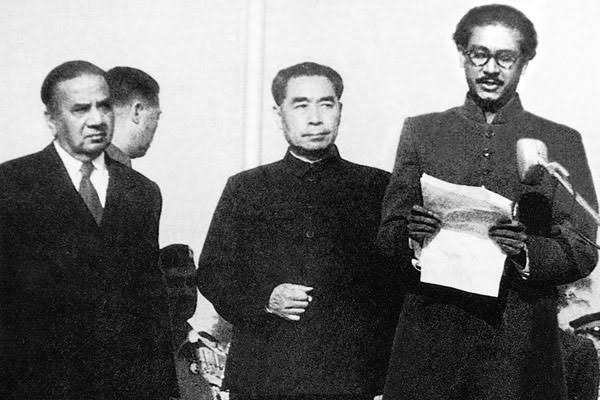
Despite Sheikh Mujib “forged friendships with Chairman Mao Zedong, Premier Zhou Enlai” when he visited China twice in 1952 and 1957, the leadership in early 70s declined to recognition to Bangladesh.

China refused to recognise Bangladesh as an independent state and spontaneously vetoed Bangladesh membership in the United Nations. The country desperately needed international food aid and economic support for the rehabilitation of the returnees from Indian refugee camps.

China deliberately vetoed the United Nations resolutions twice regarding the repatriation of Pakistani prisoners of war (POWs) and civilians held in India had not yet been implemented. Chinese move was obviously to keep Pakistan in good humor.

Well, Beijing recognised the illegitimate military junta in Bangladesh, after the assassination of independence hero Sheikh Mujibur Rahman in August 1975 in a military putsch.

Fast forward to the present. The Chinese ambassador in Dhaka has stated that China had sent a proposal to Bangladesh on 3rd February to provide Chinese vaccines ‘Sinopharm’ to contain coronavirus pandemic.

The diplomat regretted that Bangladesh took three months to approve this proposal from China. Bangladesh proposed to get Chinese vaccines on 30th April.

The following day, the Bangladesh Foreign Minister Dr AKM Momen in a strongly worded criticism slammed the Chinese Ambassador’s remark on coronavirus vaccines as “regrettable”.

Dr Momen on the remark that bilateral ties between the two countries will be “substantially damaged” if the country [Bangladesh] engages with the four-nation grouping of biggest naval powers in the region – the United States, India, Australia, and Japan – said, “We’re an independent and sovereign state. We decide our [own] foreign policy. But yes, any country can uphold its position.”

He did not hesitate to respond to a journalist’s query that he did not expect such behaviour from China.

The Chinese Ambassador bluntly said that Bangladesh would not gain benefit from joining the controversial Quad, and advised it to refrain from any sort of participation in the group.

The Quad, dubbed as “Asian NATO” is an informal strategic alliance comprising India, the United States, Australia, and Japan. Officially, the group was conceived as a forum to cooperate for safeguarding joint security and other interests in the Indo-Pacific region.

On the other hand, several coastal nations have complained of China’s rising hegemony in the South China Sea, while Indonesia, the Philippines, Taiwan, Japan, and several other nations have reported incidents of intrusions by Chinese vessels in their territory and harassing fishing vessels. Also complaining of Chinese hegemony in the South China Sea are Malaysia, Vietnam, South Korea and Thailand too.

The recent joint naval manoeuvre by the Indian Navy and Naval vessels of the US 7th Fleet in the Bay of Bengal and the Indian Ocean has given a strong message to China that the oil shipment and trade route through the Indian Ocean could be troublesome if Chinese People’s Liberation Army skirmishes along Indo-China border continues.

India and China have been at loggerheads in the world’s highest peak’s harshest standoff the Line of Actual Control (LAC) in Galwan Valley where 20 Indian soldiers lost their lives.

Recently the Chinese foreign ministry in Beijing has taken an increasingly strident tone against the United States, Australia, India and other countries.

The aggressive approach is known as “Wolf-Warrior Diplomacy,” and popular among the hawks in Beijing and has reinforced the transition of Chinese diplomacy from conservative, passive, and low-key to assertive, proactive, and high-profile to a new height.

In the coming days, the third-world countries and the West too will further see the bare fangs of Chinese “Wolf-Warrior Diplomacy”, which Chanakya, a great thinker and diplomat in ancient India will be ashamed of.

First published in International Affairs Review, 28 May 2021

Author is an an independent journalist, media rights defender, recipient of Ashoka Fellowship and Hellman-Hammett Award. He could be reached at <saleemsamad@hotmail.com>; Twitter @saleemsamad

Thursday, May 27, 2021

Arabs have failed the Palestinians

Smoke and flames rise from a tower building as it is destroyed by Israeli air strikes amid a flare-up of Israeli-Palestinian violence, in Gaza City May 12, 2021 Reuters

SALEEM SAMAD

The 11-day fierce fire-fight between the militants of Hamas and the Islamic Jihad with Israel caused at least 243 people, including more than 100 women and children, to be killed in Gaza.

The Israeli military says more than 4,300 homemade Qassam rockets --   a simple, steel artillery rocket developed and deployed by the military arm of Hamas -- were fired towards its territory by Palestinian militants.

Since the rockets were pressed into conflict with Israel in 2001, the improvised rocketry technology is not capable of being fired to target military sites, and is "indiscriminate when used against targets in population centres."

Nevertheless, the improvised rockets rained down deep into central Israel and crashed into former capital Tel Aviv. Israel’s state-of-the-art air defense system “Iron Dome” however managed to intercept 90% of the rockets from Gaza.

On the 12th day, Egypt brokered a ceasefire which was also backed by US President Joe Biden. The fragile ceasefire apparently seems to have halted the skirmish for a while. No surprise that both sides have claimed victory.

In a virtual conference held several days after the airstrikes caused havoc in Gaza, the 57-nation Organisation of Islamic Conference (OIC) was outraged, when hundreds of women and children were victims of collateral damage over the conflict in Gaza.

Only Saudi Arabia condemned Israel for “flagrant violations” in Gaza, calling on the global community to act urgently to put an end to Israel’s attacks on Gaza.

Surprisingly, most Arab countries except Kuwait, Iran, and Turkey did not rebuke Israel harshly for the recent conflict that started in East Jerusalem during the Muslim holy month of Ramadan, which spread to Gaza as a result of Israeli assaults on worshippers in the Al-Aqsa Mosque compound and coupled with the eviction of Palestinians from the Sheikh Jarrah neighbourhood.

The Muslim countries are divided in a thick and thin line of a partisan realignment of a global superpower. Despite being the “guardians of Islam” and “protector of Muslims,” Arab monarchies have demonstrated that they care only to counter Iran.

Joe Biden, however, reiterated that the Israel and Palestine crisis lies in a two-state solution, nothing more and nothing less to create a sovereign Palestine State.

The radicalized Islamist party Hamas had landslide wins in 2005 and 2006 elections in Gaza, which resulted in a crucial split of the Palestinian National Authority (PNA), established as a consequence of the 1993–1995 Oslo Accords.

The Palestine Authority, dominated by the Fatah party, was founded by Yasser Arafat and is governed from Ramallah in the West Bank. The PNA is recognized internationally as the sole representative of the State of Palestine but does not recognize the Hamas authority which rules Gaza.

The trouble began when Fatah lost the elections to Hamas in Gaza. Subsequent Palestinian rocket attacks on Israel and Israeli airstrikes on Gaza, and the joint Egyptian-Israeli blockade of Gaza, have exacerbated the conflict.

As part of its 2005 disengagement plan, Egypt retained control of the border, and border crossings were supervised by European monitors, while Israel retained exclusive control over Gaza's airspace and territorial waters, and continued to patrol and monitor the external land perimeter of Gaza.

According to Human Rights Watch and Amnesty International, Israel remains an occupying power under international law. The United Nations has stated that under resolutions of both the General Assembly and the Security Council, it regards Gaza to be part of the "Occupied Palestinian Territories."

The international community is outraged at indiscriminate attacks on civilians and civilian structures that do not differentiate between civilians and military targets -- and that is tantamount to a crime against humanity under international law.

First published in Dhaka Tribune, 27 May 2021

Saleem Samad is an independent journalist, media rights defender, recipient of Ashoka Fellow (USA) and Hellman-Hammett Award. Email saleemsamad@hotmail.com; Twitter @saleemsamad

Tuesday, May 18, 2021

Why the idea of a unified struggle with Pakistan’s exiled political leaders failed in 1971

SALEEM SAMAD

In December 1971, when the Mukti Bahini guerrillas and the Indian army captured large chunks of occupied Bangladesh, the government-in-exile in Kolkata and Indian Prime Minister Indira Gandhi were having sleepless nights.

At the fag-end of the Liberation War, a senior leader -- Abdus Samad Azad -- took charge of the ministry of foreign affairs from Khondaker Mostaq Ahmad.

In London on December 16, 1971, the Bangladesh foreign minister organized a top-secret meeting of exiled political leaders from Sindh, Balochistan, and Khyber Pakhtunkhwa (formerly North-West Frontier Province -- NWFP) in Pakistan. Azad was not sure what the outcome of the secret meeting would be. The Pakistani leaders were living in exile to escape the wrath of the military junta in the Rawalpindi military headquarters.

The victims were mostly politicians of ethnic sub-nationalities from the minority provinces in Pakistan, and progressive left intellectuals who dared to raise their voices in favour of handing over power to the Awami League, the unconditional release of Sheikh Mujibur Rahman, the safe return of refugees from India, and the withdrawal of troops from the eastern front.

Tajuddin Ahmed, prime minister of the provisional government, in conjunction with South Block in New Delhi envisaged opening a crucial dialogue with Pakistan’s exiled political leaders in London. Among the attendees was Khan Abdul Wali Khan (leader of the socialist National Awami Party of the NWFP, an iconic Pashtun leader, and an able son of “Frontier Gandhi” Khan Abdul Ghaffar Khan).

All of the progressive leaders of Pakistan were fortunately close allies of Sheikh Mujib and had lent him their political support, which raised alarm bells among military hawks in Rawalpindi.

The agenda of the meeting was sensitive. The leaders expressed their solidarity with the creation of independent Bangladesh and were worried about the safety of Sheikh Mujib. Azad did not hesitate to spell out the exiled government’s plan. He carefully laid down whether there was any possibility to forge a joint front for armed rebellion among the ethnic sub-national people in Pakistan to break away from Pakistan and become sovereign independent nation-states, as Bangladesh had showcased.

The Bangladesh leader in his submission said the Indian army had reached the gates of Lahore and it was an opportune moment to strike. He said confidently that Bangladesh would provide logistics from friendly countries to wage armed struggles and extend political, diplomatic, and military support for a unified movement.

The ethnic leaders at the Charing Cross meeting could not believe that Bangladesh leadership would offer such a radical proposal. They doubted whether Bangladesh could provide political and military support to the ethnic armed struggles already happening in Balochistan and NWFP.

The curious leaders asked Azad about India’s mindset to back the movements of the Sindhi, Baloch, and Pashtuns. Azad quickly assured them that India’s political support could be mustered, citing India’s help for Bangladesh’s Liberation Movement. He said the Awami League leadership was willing to talk to New Delhi to secure India’s support, on the condition that the leaders would have to commit to democracy, secularism, and pluralism, and reject Mohammad Ali Jinnah’s two-nation theory.

However, the exiled leaders Nawab Akbar Khan Bugti, Khan Abdul Wali Khan, and Khair Baksh Marri said the proposal was too little, too late. While the meeting was in progress, news broke in the British media that 93,000 Pakistan troops and civilian officers had unconditionally surrendered in Dhaka.

Several historians conclude that it was obvious the dialogue failed because the secret plan was made in haste with a poor vision and no timeline.

First published in the Dhaka Tribune 18 May 2021

Saleem Samad is an independent journalist, media rights defender, recipient of Ashoka Fellowship and Hellman-Hammett Award. He could be reached at saleemsamad@hotmail.com; Twitter @saleemsamad

Tuesday, May 11, 2021

Securing Bangabandhu’s return

Bangabandhu Sheikh  Mujibur Rahman with Indian diplomat Sashanka S Banerjee onboard special flight from London to Dhaka via New Delhi

SALEEM SAMAD

A few days after the Pakistan forces’ humiliating defeat in the Eastern War Theatre and the surrender of occupation troops at Dhaka on December 16, 1971, Bangladesh’s government-in-exile, as well as the Indian Prime Minister Indira Gandhi, were left worried about Bangabandhu Sheikh Mujibur Rahman languishing in Mianwali Jail in Pakistan.

Pakistan’s would-be president, Zulfiqar Ali Bhutto, who was in New York attending heated UN Security Council meetings, had to air dash to Rawalpindi after he was informed by General Yahya Khan that he had resigned from his office as president of Pakistan and military commander.

Bhutto had been appointed the chief martial law administrator of Pakistan.

Indira Gandhi received a top-secret message that the Rawalpindi flight carrying Bhutto was scheduled for a stopover at Heathrow Airport in London. The Indian PM hurriedly called a meeting of the war cabinet in New Delhi at her South Block office to discuss Bhutto’s journey home. She wanted a reliable point-person who would be present for Bhutto’s arrival at Heathrow, so she could get an intelligence feed.

India desperately wanted to learn what Bhutto was thinking -- whether he would release Rahman and let him return home, or carry out the Pakistan military court’s verdict of death.

The meeting was attended by Durga Prasad Dhar, head of policy planning in the Ministry of External Affairs; Ram Nath Kao, chief of RAW; PN Haksar, the prime minister’s principal secretary; and TN Kaul, the foreign secretary. 

A plan was drawn, with no guarantee of acquiring the vital intelligence of the fate of Sheikh Mujib. Incidentally, a highest ranked Pakistan bureaucrat, Muzaffar Hussain, former chief secretary of the government of East Pakistan and posted in Dhaka, had become a prisoner of war (POW) along with 93,000 military, other combatants, civil officers, and families.

Hussain was staying as a VIP guest at the official residence of DP Dhar. On the other hand, his wife, Laila Hussain, was visiting London when the war broke out in December and remained stranded. Both husband (in Delhi) and wife (in London) were communicating with each other through diplomatic channels. 

Fortunately, Sashanka S Banerjee, an Indian diplomat in the Indian mission in London, had befriended Laila Hussain. Indira knew that Laila and Bhutto had been good friends. Thus, the South Block decided to play a one-off diplomatic “summit” at the VIP lounge, the Alcock and Brown Suite, at Heathrow airport. Banerjee persuaded Laila to meet Bhutto at the airport lounge and ask him if he could help in getting her husband released from Delhi.

The two friends, Laila and Bhutto, met at Heathrow airport. The meet and greet turned out to be a historic diplomatic thriller. Bhutto responded to Laila’s emotional appeal for help in getting her husband released from Indian custody. He pulled her aside and whispered to Laila a very sensitive, top-secret message for the Indian prime minister, writes Banerjee in his memoir.

“Laila, I know what you want. I can imagine you are [carrying a request] from Mrs Indira Gandhi. Do please pass a message to her, that after I take charge of office back home, I will shortly thereafter release Mujibur Rahman, allowing him to return home. What I want in return, I will let Mrs Indira Gandhi know through another channel. You may now go.”

The Indian High Commission in London urgently shot out a priority message to the South Block, based on Laila’s encounter with Bhutto. Indira Gandhi was excited that Bhutto had sent out a positive message. 

Meanwhile, within hours, a diplomatic message came from Islamabad confirming the authenticity of Laila’s report.

Bangladesh leaders received a secret message from the South Block regarding the release of Sheikh Mujib -- the architect of Bangladesh’s independence would first land in London and then fly from there to Dhaka via Delhi. 

Bhutto dared to over-rule the death sentence handed out by a military court in Rawalpindi and released Mujib on January 8, 1972. On January 10, 1972, Mujib returned as a hero to a war-ravaged homeland -- but an independent Bangladesh.

First published in the Dhaka Tribune, 11 May 2021

Saleem Samad is an independent journalist, media rights defender, and recipient of Ashoka Fellowship and Hellman-Hammett Award. He could be reached at saleemsamad@hotmail.com; Twitter @saleemsamad

Tuesday, May 04, 2021

How Indira Gandhi’s principal secretary PN Haksar had aided the liberation effort in 1971

SALEEM SAMAD

The genocidal campaign “Operation Searchlight” raged in occupied Bangladesh. The marauding Pakistan Army began to feel the pinch in their boots when they battled the Mukti Bahini resistance in several regions bordering India.

On the other hand, the beleaguered Awami League leaders who took sanctuary in India spent restless nights planning the pros and cons of diplomatic protocols to announce the “government-in-exile” in Kolkata and its strategies to augment the military role of the Mukti Bahini in the Liberation War.

A career bureaucrat and diplomat, Parmeshwar Narayan Haksar -- principal secretary to Indian Prime Minister Indira Gandhi -- had already gotten the ball rolling on Bangladesh on March 2, 1971.

Prof Amartya Sen (who won Nobel Prize 27 years later) phoned PN Haksar and introduced his two friends Prof Rehman Sobhan and Dr Anisur Rahman, who were sheltered in his house. Veteran economist and academician Prof Rehman Sobhan and Dr Anisur Rahman were the first people who had escaped from Dhaka to meet Haksar in Delhi.

On the evening of April 2, Sobhan and Rahman were taken to Haksar’s residence. 

Haksar was fully briefed by the duo regarding the dream of independent Bangladesh. The logical approach to the Bangladesh struggle helped Haksar debrief Indira Gandhi.

In fact, from that evening, India’s secret role in the Bangladesh Liberation War began its journey. Haksar played a pivotal role throughout 1971, orchestrating and managing India’s response to the crisis in Bangladesh.

Sobhan himself has written that Haksar’s reactions suggested that the encounter he had with them “was [Haksar’s] first such exposure to these events of the genocidal crackdown on the Awami League, the nationalists, and the Hindus by the Pakistani army and the launch of Operation Searchlight.”

Haksar was also introduced to Tajuddin Ahmad, general secretary of Awami League, and Barrister Amirul Islam when they called on Indira Gandhi. 

On principle, the Indian prime minister agreed with the Bangladesh government-in-exile, to provide shelter for the millions of refugees who had poured into India, and also to provide military help to the Mukti Bahini.

A fortnight later, on April 17, Sobhan wrote that Tajuddin Ahmad was sworn in as the prime minister of an independent Bangladesh “at a mango grove near Kushtia…which is now known as Mujibnagar.” Tajuddin, this time as the prime minister of the exiled government, again had parleys with Indira on the night of May 6.

Haksar had urged Indira to be firm and say that India’s response to what was happening in Bangladesh should not become a subject of public debate as “such a debate would defeat the purpose of giving such comfort as we can to democratic forces in Pakistan as a whole.”

Delhi planned that the main characteristics of the war would be guerrilla tactics, with the objective of continuously keeping the Pakistan army off their balance and gradually bleeding them.

Finally, the Pakistan military surrendered in Dhaka on December 16, 1971 after a humiliating defeat in the eastern war theatre.

First published in the Dhaka Tribune on 4 May 2021

Saleem Samad is an independent journalist, media rights defender, recipient of Ashoka Fellowship and Hellman-Hammett Award. He could be reached at saleemsamad@hotmail.com; Twitter @saleemsamad
https://www.dhakatribune.com/opinion/op-ed/2021/05/04/op-ed-an-ally-for-bangladesh

Tuesday, April 27, 2021

Mujibnagar: An oath in secrecy

Syed Zakir Hossain/Dhaka Tribune
SALEEM SAMAD

At Kolkata Press Club on April 16, 1971, two nondescript Bangladesh officials kept journalists waiting for hours. Finally, the officials arrived in the evening and expressed an apology for being late.

Abdul Mannan, an MNA (later the first home minister of Bangladesh in 1972) remained silent, while Barrister Rahmat Ali, without waiting for an introduction, told the crowded journalists that they are requested, including the foreign press representatives, to return to the press club for an important announcement the following morning.

The following morning, Kolkata Press Club was overcrowded with local and foreign journalists accompanied by a battery of camerapersons and press photographers.

Ali announced: “Gentlemen, on behalf of the government of Bangladesh, I invite you to our country,” which jolted the journalists as the Liberation War history was unfolding.

The rally of cars carrying journalists did not know where they were going, whom they would meet, and what they would witness. Everybody was worried about what kind of dispatch they would send to their newsroom. When the vehicles stopped at a mango orchard in Meherpur, inside Bangladesh, the Kolkata journalists quickly dubbed the place as Mujibnagar.

Of course, India and the entire world was taken by surprise that Bangladesh formally announced the “Proclamation of Bangladesh Independence” and the formation of a government-in-exile to coordinate the Liberation War.

What surprised many, was that among the Kolkata media circle, none leaked the story of the secret endeavour of the Mujibnagar episode. The thoughtful journalists maintained secrecy to avoid the enemies being alerted from a single line published in an Indian newspaper.

Journalist Sukharanjan Sengupta saw a vehicle with a diplomatic number plate entering the porch on March 22. 

The curious journalist rushed towards the office of Chief Secretary Nirmal Sengupta and waited for the person to come out.

The person was nobody else but the deputy high commissioner posted in Dhaka during the crucial period. Time was ticking for Bangabandhu Sheikh Mujibur Rahman as New Delhi was impatiently waiting to see what emerges from the negotiation in Dhaka.

Fortunately, the journalist knew the diplomat and quickly asked whether the negotiation to resolve the political crisis will go in the favour of Sheikh Mujib or will there be a bloodbath.

The diplomat was in a rush. He frowned and said the second one and was then escorted to the Kolkata airport and to New Delhi to hold a confidential debriefing on the Bangladesh crisis with Indian Prime Minister Indira Gandhi.

On March 23, the Republic Day of Pakistan, the “Joy Bangla” flag was fluttered all over the country, except for the military cantonments and a few government offices in Dhaka.

On March 25, Bangabandhu was still negotiating with the advisors of Pakistan’s military leader General Yahya Khan to avoid a bloodbath in the streets. 

However, near midnight on March 25, the Pakistan army launched the genocidal campaign “Operation Searchlight,” leaving Bangladesh no choice but to go to war.

First published in the Dhaka Tribune, 27 April 2021

Saleem Samad is an independent journalist, media rights defender, and recipient of Ashoka Fellowship and Hellman-Hammett Award. He could be reached at saleemsamad@hotmail.com; Twitter @saleemsamad

Tuesday, April 20, 2021

Declare Mujibnagar Day on April 17 as Republic Day of Bangladesh

Photo: SYED ZAKIR HOSSAIN

SALEEM SAMAD

On the 50th birth anniversary of Bangladesh, the nation was perhaps expecting that the government would declare April 17 as the country’s Republic Day. This is the day when the cabinet of the government-in-exile took an oath of office and accepted the challenge to lead the War of Liberation to achieve independence.

The venue was discreetly decided at Baidyanathtala, Meherpur in eastern Bangladesh (less than a kilometre from the Indian border). The site was secured by the Indian Border Security Force (BSF) and mounted anti-aircraft artillery to thwart any air attacks by marauding Pakistan fighter jets.

A day earlier, the Ansar saw hundreds of BSF soldiers and vehicles pour in and secure the area. The following morning, April 17, the leaders of government-in-exile, Indian officials, scores of journalists, international photographers, and TV camera persons also arrived with senior BSF officers accompanied by hundreds of additional troops.

At 11 am the ceremony began with recitation from the Qur’an and playing of the national anthem. The oath-taking ceremony was conducted by Abdul Mannan, MNA, and the proclamation of independence was read out by Professor Mohammad Yusuf Ali.

The assignment of portfolios was assigned among the ministers on April 18. The incumbents of the government were: Sheikh Mujibur Rahman (interned in Pakistan jail), president of Bangladesh. Syed Nazrul Islam (Vice President and also Acting President), Tajuddin Ahmad (Prime Minister), Khondaker Mostaq Ahmad (Foreign Affairs and Law Minister), Muhammad Mansur Ali (Finance Minister), AHM Qamaruzzaman (Home, Relief and Rehabilitation Minister), and Muhammad Ataul Gani Osmani (Commander-in-Chief of the Bangladesh Forces or Mukti Bahini). The guard of honour was given to Syed Nazrul Islam, the acting president of Mujibnagar.

The government-in-exile had an elaborate structure of administrative departments, agencies, and activities. Even though elaborate agencies were established, the government’s main work remained coordinating the Liberation War and boosting popular support in occupied Bangladesh.

Soon the government-in-exile operated from 8 Theatre Road, Kolkata. Tajuddin Ahmad supervised the military operations of the Mukti Bahini, held coordinating meetings with officials of Indira Gandhi, the Eastern Command of the Indian Army, the foreign dignitaries, the international NGOs in aid of the 10 million war refugees, and of course, smoothing the inner-conflicts within the hierarchy.

The Shadhin Bangla Betar Kendra broadcast was a moral inspiration for the millions of people who were either languishing in refugee camps across the borders of Bangladesh or living in hellish conditions in occupied Bangladesh.

The production of documentary films, postage stamps, propaganda posters, regular press briefing in Kolkata, definitely made a dent in telling the world of the genocide in Bangladesh and the war crimes committed by the marauding Pakistan troops.

Tajuddin Ahmad was an intimate colleague and a trusted comrade of Bangabandhu Sheikh Mujibur Rahman and enjoyed the recognition and full support of the Indian leadership -- which was an important resource that lent authority to his position, writes acclaimed economist Rehman Sobhan in his book Untranquil Recollections.

Well, the government-in-exile earned credibility and gave an alternative dichotomy to General Yayha Khan’s military regime in Rawalpindi.

Nonetheless, most historians interpret that the able stewardship of the Mujibnagar government, which was a symbolic icon of the nationalist struggle, had essentially lifted the morale of the revolution.

First published in the Dhaka Tribune, 20 April 2021

Saleem Samad is an independent journalist, media rights defender, and recipient of Ashoka Fellowship and Hellman-Hammett Award. He could be reached at <saleemsamad@hotmail.com> Twitter @saleemsamad