Buy.com Monthly Coupon

Friday, April 07, 2023

Pakistan’s fingerprints in formation of Rohingya militant group ARSA are unmistakable

SALEEM SAMAD

Initially Bangladesh, Myanmar and India failed to accept Arakan Rohingya Salvation Army (ARSA) a jihadist outfit. The militant group was described as ‘Rohingya Muslim vigilantes’ with a limited ordinance, disorganised, therefore nothing to be worried about.
The name ARSA first surfaced in August 2017, when the outfit claimed responsibility for attacks on several border police and army posts of Myanmar at the international borders with Bangladesh.
The attacks sparked Tatmadaw’s (Myanmar military) brutal genocidal campaign against Rohingya Muslims. The troops torched hundreds of villages and went on a killing rampage.
The ethnic community was forced to flee from the volatile Rakhine State of Myanmar and later sheltered in Bangladesh. The country hosts nearly 1.2 million Rohingyas.
The panicked Rohingyas poured into Bangladesh, through porous international borders, fuelling a historic migration crisis in Asia.
India is now worried that the jihadist outfit’s presence at the border of Bangladesh-Myanmar-India. ARSA’s recent skirmish with Myanmar troops has raised their eyebrows, while Bangladesh is alarmed by the visible presence of ARSA in the territory.
The ARSA militants are mostly recruited from the Rohingya refugees. It was not to anybody’s surprise that the leadership are Pakistan-born Saudi émigrés. They raise funds mostly from Rohingya living in Pakistan, Saudi Arabia and the United Arab Emirates (UAE).
Meanwhile, news surfaced that an undisclosed partnership between Bangladesh and Myanmar military led to a joint operation to address the ARSA insurgency.
The documents from a December 23 meeting of the Central Committee for Counter-Terrorism of the Myanmar Home Affairs Ministry, published by a private ‘Khit Thit Media’ on last January 10 have been verified by security experts.
The document stated that “During 2022, there have been only 4 skirmishes between our [Myanmar] forces and ARSA. We were able to meet, discuss and coordinate with the Bangladesh Border Guard Force over ARSA.
“The result was that Bangladesh special forces launched a military operation in the refugee camp where ARSA took shelter, killing the ARSA’s 2nd in Command and 2 terrorists. From one intelligence exchange with Bangladesh, we learned that the ARSA leader Ataullah and 60 of his followers are facing legal actions in Bangladesh.”
The Naypyidaw (capital of Myanmar) labelled ARSA as an “extremist Bengali [Bangalee] terrorists, also Rohingya Muslim terrorists,” warning that its goal is to establish an Islamic state in the region [South-East Asia].
In a rare interview with an international media, Ataullah Abu Ammar Jununi, commonly known simply as Ataullah, the supremo of ARSA said that their objective would be “open war” and “continued [armed] resistance” until “citizenship rights were reinstated” of Rohingyas in Myanmar.
Despite the denial of Ataullah, who was born in Karachi and moved to Saudi Arabia, of having links to the Islamic State or ISIS in a video and said he turned his back on support from Pakistani-based jihadists, security agencies of Bangladesh and India are sceptic of his claim.
A security expert in Bangladesh explains that ARSA has ideological differences from other terror outfits and has reason to distance itself from the transnational jihadist network.
The global terror network’s footprint is absent in the region. The territory is too hot to handle, as some experts explained, especially when India remains a deterrent to the physical presence of jihadists and terror networks.
The exodus of more than one million Rohingyas from restive Rakhine State has also brought the ARSA operatives and sympathisers into Bangladesh.
The security agency in Bangladesh has trained their eyes and ears on their activities. The agency explains ARSA is also known as ‘Al Yakin’ in the refugee camps – the militants prey on the refugees.
ARSA operatives are responsible for widespread kidnaps, extortions, tortures and executions of suspects. The crimes are committed to collect funds for local operations in the world’s largest squalid Rohingya camps in Cox’s Bazar, in southern Bangladesh.
Cash-starved Al Yakin, the volunteer group of ARSA is mostly responsible for gang war in the refugee camps to establish dominance over other non-militant groups in the camps.
The recruiters from sleepers-cell disseminate a message that joining ARSA or ‘Al Yakin’ was a Farj (a religious obligation).
However, ARSA remains focused on recruitment and indoctrination, followed by establishing small units and engaging in rudimentary military training.
Often breaking news from Rohingya refugee camps of robbers, dacoits, and armed gangs killed in encounters by anti-crime forces – the slain victims are radicalised Rohingya militants.
Despite ARSA’s name still commands a mix of cautious respect and fear among some in the Rohingya camps. The members remain low profile to avoid confrontation with Bangladesh security forces.
For funding the militant’s network, the foot soldiers are also engaged in providing armed escorts to cross-border smugglers and drug traders.
The intels still believe ARSA have a low ordinance and the militants were unable to launch any large-scale armed clash with Myanmar troops after August 2017.
However, Myanmar security forces do not agree and said that last year in mid-September, “the Arakan Army launched attacks in cooperating with ARSA from a certain distance on the Taungpyo Latwal police outpost near BP-31 between Myanmar and Bangladesh using small and heavy arms and three shells fell into the Bangladesh side and three exploded.
“On the other hand, their hit-and-run tactics were significantly neutralised after Myanmar troop’s crackdown on Rohingya Muslims [ARSA],” said Myanmar’s official website Info Sheet.
Myanmar blames Pakistan’s dreaded spy agency ISI for its share in mentoring the jihadist outfit. Their theory that ARSA has been raised, funded, provides logistics and indoctrination was masterminded by ISI and is also believed by both Bangladesh and India.
Consequently, the encampment at No-Man’s-Land or Zero-Point was attacked once again on January 18, 2023, resulting in the camp’s destruction, and the forced displacement of all Rohingya refugees living there, writes Saifur Rahman, a Rohingya journalist who is living in exile in a third country.

ARSA’s militancy capability remains poor due to strict surveillance by security agencies of India and Bangladesh and sharing mechanism of intels – reducing ARSA into a toothless tiger.

First published in the India Narrative on 7April 2023

Saleem Samad is an award-winning independent journalist based in Bangladesh

Monday, April 03, 2023

Is USD hegemony in South Asia likely to dent as India-Bangladesh consider INR trade?

India and Bangladesh are considering dumping the dollar and trading in their own currencies

SALEEM SAMAD

Amid a dollar crunch following the Coronavirus pandemic and the Russia-Ukraine war, New Delhi and Dhaka are considering trading in the Indian Rupee.

The Russia-Ukraine conflict came as the sword of Damocles as the conflict in Eastern Europe has caused an unprecedented rise in fuel prices worldwide.

For the same reason, the US dollar – the most common international currency – is also rising. It has also been weaponized to some extent by the US to isolate Russian President Vladimir Putin over his war on Ukraine.

Owing to a rise in imports and the slow inflow of foreign remittances by expatriates, Bangladesh has been dented by dollar crisis affecting imports of fuel and export-oriented factories, dependent on imports of raw materials.

Bangladesh’s $416-billion economy is battling rising prices of energy and food as the Russia-Ukraine conflict widens its current account deficit, and dwindling foreign exchange forces sought $4.5 billion loan from the International Monetary Fund (IMF).

In Bangladesh, the cash US dollar rate climbed to an all-time high of Bangladesh Taka (BDT) 112 on 26 July last year and in February 2023 was BDT 108.35. Inflation Rate in Bangladesh averaged 0.53 per cent from 2011 until 2023, reaching an all time high of 3.47 per cent in August of 2022.

Bangladesh’s neighbour and major trade partner India is also being affected by the rising dollar. The Indian Rupee (INR) – declined to a record low of more than 80 to the dollar, adding to worries of imported inflation as well as an external deficit blowout, according to Bloomberg.

Well, Bangladesh is contemplating trading with India using the INR, instead of the US dollar, reports a private news agency United News of Bangladesh (UNB).

Quoting government officials, the agency said, the commerce ministry placed a written recommendation at Prime Minister Sheikh Hasina’s cabinet meeting for the possibility of using INR instead of the dollar.

Bangladesh wants to cut dependency on the dollar, commerce minister Tipu Munshi said recently, and it does not see a problem in dealing with INR.

Meanwhile, the Bangladesh Bank has explored the pros and cons of using Indian currency in trade and commerce.

A central bank’s top official who is privy to the bilateral decision told UNB that an agreement has to be reached between neighbouring countries after Dhaka and New Delhi signed an agreement on using Rupee.

India proposed Bangladesh introduce the Rupee as a medium of bilateral trade at the Bangladesh-India ministerial meeting on trade, held in New Delhi last December.

Then, on the sidelines of the meeting of G20 Finance Ministers and Central Bank Governors held in Bengaluru, India on 24-25 February, the Bangladesh Bank governor Abdur Rauf Talukder and Reserve Bank of India governor Shaktikanta Das discussed switching to ‘de-dollarised’ payment system.

“I am not sure how useful it might be for us, because of the trade deficit. We import goods worth around $10 billion from India but export goods worth around just $2 billion. Where will we find the excess rupee, questioned Dr Khondaker Golam Moazzem, research director, Centre for Policy Dialogue.

Accordingly, the trade deficit of Bangladesh with India has increased from 19 per cent to 33 per cent in the fiscal year 20-21.

Meanwhile, India is trading in Rupees with Russia, Mauritius, Iran and Sri Lanka and recently with Malaysia.

On the other hand, top lender State Bank of India has asked exporters to avoid settling deals with Bangladesh in the dollar and other major currencies as it looks to curb exposure to Dhaka’s falling reserves.

“The country is facing a shortage of foreign currency due to higher import bills and weaknesses of Bangladeshi taka against the dollar in recent times,” the SBI said in an August 24 letter sent to its branches and seen by the Reuters news agency.

India is one of the largest trading partners of Bangladesh. The existence of different tariffs, non-tariff and anti-dumping barriers in India, however, mean that our exports to India are comparatively low in comparison to our imports, says Salim Ahmed, a banker and analyst.

The Indian government has amended its Foreign Trade Policy to allow international trade invoicing, payment and settlement in the Indian rupee, activating the mechanism announced by the Reserve Bank of India to facilitate trade in the domestic currency.

Salim Ahmed explains, under this mechanism banks in Bangladesh will open a ‘Rupee Vostro’ account in India with any Indian bank to settle our trade transactions in INR. From an Indian perspective, it is a special INR Vostro account to them. Similarly, India will open an INR Vostro account in Bangladesh with any bank for settling their trade transactions with us.

First published in the India Initiative @india_narrative on 3 April 2023

Saleem Samad is an award-winning independent journalist and is based in Bangladesh

Wednesday, March 29, 2023

Why Conservative Muslims in Bangladesh believe Ahmadiyya are heretic?


SALEEM SAMAD

The recent spate of racial attacks on Ahmadiyya Muslims during their annual congregation at a sprawling complex in northern Bangladesh on a pretext that they are not ‘Muslims’ and demanded that the sect should be declared ‘non-Muslims’.

The perpetrators were radicalised Sunni Muslims, says political historian researcher and writer Mohiuddin Ahmad.

The Sunnis are majoritarian in Bangladesh, nearly 91 per cent. They have been indoctrinated by conservative Wahabi and Salafimanhaz at tens of thousands of Islamic theological seminaries (madrasas) dotted all over Bangladesh and authorities could not tame them to adopt secularism, the writer/researcher explained.

Ahmadiyya, a Muslim sect is a member of a minority religious community and are spread all over Bangladesh since 1913.

The Ahmadiyya are indeed conservative Sunni Muslims and are tolerant of other faiths, practitioners and beliefs. They regularly hold inter-faith dialogues with other religious leaders in their mosques, which prompted the radicalised Muslims to reject the place of worship as a mosque for Muslim prayers.

Last week, the Ahmadiyya Muslim Jama’at, Bangladesh, at a press conference in Dhaka expressed their satisfaction over the investigation of the civil and police administrations over the racial riots, and said their actions were deemed appropriate.

The sect’s disciples demands that the secular fabric for centuries and equal status of all religions, ethnic community and other minorities should be respected as guaranteed in the constitution. Roughly 100,000 Ahmadis live in Bangladesh today.

Ahmed Tabshir Chowdhury, spokesperson of the Ahmadiyya’s in Bangladesh told journalists that the civil administration and police swift action have saved hundreds of lives and properties in Panchagarh district, where the annual ‘Salana Jalsha’ was scheduled to be held.

The three-day annual congregation was abruptly cancelled when Islamists clashed with police after the Friday Jumma prayer on March 3. Hundreds of Islamists armed with sticks, metal bars and some with containers of flammable substances [police claimed it was gun-powder] in a bid to occupy the site of the congregation.

Earlier, the Ahmadiyya management had to postpone or cancel their annual congregation several times in the faceoff with angry Islamists over 32 years.

In an hour, the violence turned into the worst sectarian riot in living memory, which killed two persons, one was an Ahmadiyya. Nearly 85 persons were seriously wounded by the rioters. The protesters torched 185 homes, and 30 business establishments were looted.

Hefazat-e-Islam, an ardent advocate of strict Sharia swiftly said the “non-Muslim” [Ahmadiyya] should not have been given permission to hold the ‘Jalsha’ and instead blamed the “Qadiyani” [slang for Ahmadiyya] for the unrest.

The allocation of BDT one crore (IRS 7.6 million or USD 95,000) for rebuilding the damaged dwellings and shops by Prime Minister Sheikh Hasina sends a strong message to the perpetrators and others.

The district administration and police swiftly arrested more than a hundred rioters after identifying them from CCTV footage and other video footage. Others are on the run.

The onslaught of the Islamists in the last three decades on the Ahmadiyya properties and desecration of mosques in Brahmanbaria, Dhaka, Gazipur, Jashore, Khulna, Kushtia, Natore, Rajshahi, Satkhira, Sherpur and elsewhere, according to news published in media.

Since its establishment in Bangladesh at the beginning of the last century, the members of the Ahmadiyya Community have faced persecution from conservative Muslims. The perpetrators never faced the music of justice under previous governments.

The Islamist and radicalised Sunni Muslims demanded of the government to delist Ahmadiyya from Islam. The call was purportedly raised by Jamaat-e-Islami founder Abul Ala Maududi in 1953, leading to bloody atrocities which killed more than 2,000 Ahmadis in Lahore, Pakistan.

The [Ahmadiyya] fate was further sealed by Pakistan’s military dictator General Zia-ul-Haq, when he issued the anti-Ahmadiyya law on 26 April 1984, which prohibits Ahmadis from preaching or professing their beliefs.

Not to anybody’s surprise, Pakistan’s abandoned orphans [the Mullahs] born in Bangladesh are demanding similar repressive laws to ban and punish the ‘heretic’ Ahmadiyyas.

Islamist party Jamaat-e-Islami during Khaleda Zia’s regime in the mid-90s proposed a blasphemy law to punish the Ahmadiyya and secularists. Incidentally, the proposed bill was a photocopy of the blasphemy law of Pakistan.

The radicalised Islamic groups including the Islami Andolon Bangladesh, Majlis-e-Tahaffuz-e-Khatme Nabuwwat, and of course Hefazat-e-Islam believe the Ahmadiyya are heretic and demands that the sect should be banned and declared ‘non-Muslim’ like Pakistan in September 1974.

According to a thought-provoking article in the Dhaka Tribune, the Constitution of Bangladesh, which recognises Islam as the state religion, the state shall not discriminate against any citizen on grounds only of religion, race, caste, sex or place of birth.

Moreover, Article 41 states that (a) every citizen has the right to profess, practise or propagate any religion; (b) every religious community or denomination has the right to establish, maintain and manage its religious institutions.

Hypothetically speaking, Ahmad explained that declaring Ahmadiyya a heretic will cost Bangladesh dearly. The principles of the state constitution need to be overhauled and delete the clauses where secularism has been guaranteed.

More than a year ago, Prime Minister Sheikh Hasina at a press conference in defence of religious freedom and tolerance said if Muslims believe in the ‘Last Day of Judgment’ laid in the Holy Quran, then a Muslim cannot point fingers toward someone to judge who is a good Muslim or a bad Muslim.

Quran, the holy book of the Muslims says a day will come when the whole universe will be destroyed and time will end. The dead will be resurrected for judgment by the All Mighty. This day is the Day of Judgment where people will be rewarded by the Supreme Creator, according to their beliefs and deeds.

The video clip of her statement was broadcast from all TV channels in Bangladesh and is available on YouTube, where she rebukes the Islamist and radicalised Muslims, who have sworn to eliminate a certain community or religious practitioners (she did not name any religious group), should be banished from Islam.

The brutal birth of Bangladesh in 1971 which shattered the controversial ‘two-nation theory’ paved the way to establish a nation based on democracy, secularism, pluralism, equality and social justice. That legacy needs to be preserved and persevered in the future as well.

First published in the India Initiative, New Delhi, India on 29 March 2023 

Saleem Samad is an award-winning independent journalist based in Bangladesh

Saturday, March 25, 2023

China has to ensure return of Rohingya to Myanmar


SALEEM SAMAD

The lights are dim at the end of the tunnel in case of repatriation of Rohingya refugees living in squalid camps in the coastal district of Cox’s Bazar in Bangladesh.

The country hosts nearly 1.2 million Muslim Rohingya people who have fled ethno religious strife in neighbouring Myanmar during a military genocidal campaign, which killed at least 9,000 people in 2017.

The Tatmadaw (Myanmar military) backed campaign that the United Nations labelled a “textbook example of ethnic cleansing” saw hundreds of thousands of Rohingya driven across the border into Bangladesh in September 2017.

More than a million refugees are crammed in tens of thousands of make-shift huts made of bamboo, thin plastic sheets and corrugated tin roofs and the living conditions in the nauseating camps are dangerous. Often, fires blaze through the camps leaving thousands without shelter.

Last week, a 17-member delegation from Myanmar’s immigration and population ministries crossed into Bangladesh in mid-March and interviewed 480 Rohingya in Cox’s Bazar as part of a plan for possible repatriation to their country.

The Myanmar delegation, led by Aung Myo, the social welfare minister for Rakhine State, was selecting members for a pilot ‘family-based repatriation’ project.

The Myanmar delegation’s visit to the camps is believed to be brokered by China and facilitated by the UNHCR.

The Refugee Relief And Repatriation Commissioner (RRRC) in Cox’s Bazar, Mohammed Mizanur Rahman, said the Myanmar junta officials cleared 711 Rohingyas out of 1,140 recommended by Bangladesh. The newborn and newly married couples have been excluded from verification.

When journalists asked when the repatriation is expected to start, Rahman said that the “Myanmar delegation did not have the power to commit to a possible repatriation date.”

Before the visit of the delegation, the Myanmar junta for the first time since the 2017 crackdown, allowed diplomats from Bangladesh, India, China, and five other countries to tour the restive Rakhine State.

It was only then, the officials expressed the military junta’s plan to begin Rohingya repatriation under the pilot project.

Earlier, Bangladesh formally sought cooperation from China to repatriate Rohingya refugees to Myanmar during a visit by Foreign Minister Wang Yi and also China’s State Councillor promised to resolve a political solution to the Rohingya crisis.

China had used its influence in Myanmar to broker a November 2017 agreement to repatriate Rohingyas.

China’s ambassador to Bangladesh Yao Wen hoped that the first batch of displaced Rohingya would be repatriated to Myanmar soon while China continued its role as mediator, the official news agency Bangladesh Sangbad Sangstha reported.

On 17 March 2023, Bangladesh Foreign Minister Dr AK Abdul Momen also urged the Organisation of Islamic Cooperation (OIC) member states to take collective responsibility to ensure a safe and dignified return of the most persecuted Rohingyas to their homeland, Myanmar.

Indeed, OIC backed Gambia to file a genocide case with the International Court of Justice (ICJ). Only Turkey has a visible presence at the Rohingya camps in Cox’s Bazar.

India also launched “Operation Insaniyat” to provide relief assistance in response to the humanitarian crisis faced by a large influx of Rohingya refugees into Bangladesh from Myanmar.

Bangladesh and Myanmar began the negotiation for repatriation, but since 2018 none has returned so far and recent verification of a few hundred potential returnees for a pilot repatriation project remains unclear when they would be going home.

Despite attempts to send them back, the refugees refused, fearing insecurity in Myanmar, which was exacerbated by the military takeover last year.

Amid the situation, the United Nations High Commissioner for Refugees (UNHCR) in a statement on March 19 said they are observing developments of the Myanmar delegation’s visit to Bangladesh to verify a selected number of refugees on a bilateral pilot project on their possible returns.

The UN Refugee organisation reiterated that conditions in Myanmar’s Rakhine State are currently “not conducive to the sustainable return of Rohingya refugees”.

Bangladesh has consistently reaffirmed its commitment to “voluntary and sustainable repatriation” since the onset of the current crisis which echoes UNCHR policy that every refugee has a right to return to their home country based, make an informed choice and no refugee should be forced to repatriate.

China always wanted to impress upon their “feel good” diplomacy, but despite best intentions, it seems the repatriation has entered into a fresh deadlock as both Bangladesh and UNCHR, responsible for the safe return of the displaced Rohingyas are concerned about their safety and security in the Rakhine State.

The Rohingya issue must be addressed by China, a country [Myanmar] over which it has significant influence. Only China can make conclusive negotiations on the safe return of the Rohingyas, writes security analyst Samina Akhter in Modern Diplomacy.

Bangladesh and China have close political and military relations in addition to the fact that China is Bangladesh’s top trading and development partner.

Last week, Bangladesh has inaugurated a naval base in Cox’s Bazar with two conventional diesel-electric powered refurbished Chinese submarines bought for $205 million in 2016 to enhance Bangladesh’s naval capacity, after the demarcation of its maritime boundary with India and Myanmar.

It is equally true, that Myanmar’s military junta, which took power in a coup two years ago, has demonstrated no intention to take back any refugees.

Most importantly, the Rohingya refugee groups based in Bangladesh said for sustainable and dignified repatriation will only be possible when the Myanmar regime recognises the Rohingya as an ethnic community; provide legal citizenship which was stripped in 1982; school education; healthcare services; freedom of movement and livelihood.

Rohingya’s human rights groups believe the face-saving exercise to repatriate refugees happened after the Chinese exerted pressure on the Myanmar military junta to demonstrate a “feel good policy” otherwise face the compliance declared by the International Court of Justice (ICJ). The genocide case is resuming at ICJ on 24 April.

“Taking back a few refugees, even if it is less than one percent of the population, shall allow Myanmar to come up with a counterargument under the very false pretence they are sincere about the return of refugees,” the Arakan Rohingya National Alliance (ARNA) said in a statement.

First published in the India Initiative, New Delhi, India on 25 March 2023

Saleem Samad is an award-winning independent journalist based in Bangladesh
Wednesday, March 22, 2023

Why India and Bangladesh need to resolve the Teesta water-sharing issue ahead of elections

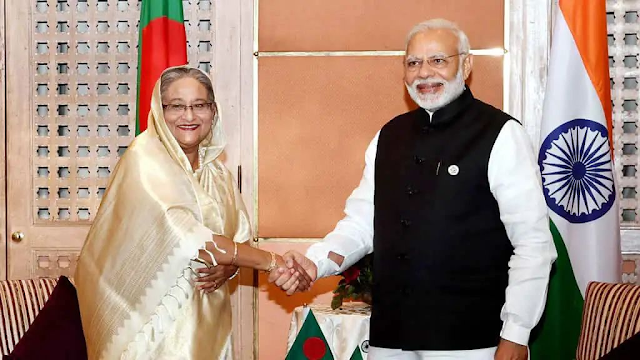
Teesta river originates from the foothills of Himalayas and enters Bangladesh

SALEEM SAMAD

Both Bangladesh and India are embarrassed over the immense delay towards a sustainable solution to sharing of the transboundary Teesta river, which remains a bone of contention between the two closest neighbours.

This week Bangladesh has raised fresh concern with New Delhi, after an Indian newspaper The Telegraph reported that West Bengal State Government has plans for three hydropower projects in Darjeeling hills in the foothills of the Himalayas, risking further discomfiture for Dhaka, which has been waiting for more than a decade to sign a treaty for sharing Teesta’s waters.

The news prompted Bangladesh to send a ‘note verbale’ (diplomatic note) to the Indian Ministry of External Affairs in New Delhi’s South Block, seeking information about West Bengal’s plan to withdraw water from the upper riparian international river for irrigation and hydropower projects, confirmed Bangladesh Foreign Secretary Masud Bin Momen.

On the other hand, the State Minister for Water Resources Zaheed Farooque said the Joint River Commission (JRC) is also contemplating sending a letter to India seeking details about the West Bengal government’s plan for the construction of hydropower plants on the same river in Darjeeling.

Teesta, once a mighty river flowing from Himalaya glaciers that crisscrosses some 115 kilometres inside Bangladesh, now runs like a stream in Bangladesh in the lean period and overflows during the monsoon which causes frequent floods in the region.

What worries Prime Minister Sheikh Hasina’s government, is that India has not officially communicated regarding a fresh plan to divert waters from upstream, as it shares at least 54 transboundary rivers as a lower riparian country with India.

Bangladesh Foreign Ministry Spokesperson Seheli Sabrin said the Teesta river issue may also be raised at the UN-2023 Water Conference, to be held at the UN headquarters in New York on March 22-24.

The daily published from Kolkata on March 13, also writes that the transfer of 1,000 acres of land to the irrigation ministry of West Bengal to excavate two new canals for withdrawing water from Teesta and Jaldhaka for irrigation to serve around one lakh farmers in Jalpaiguri and Cooch Behar.

Two of the three planned Darjeeling projects are likely to significantly reduce the flow of water in the Teesta that is available for irrigation, particularly during the December-April lean period when the demand for irrigation water goes up in Bangladesh, the spokesperson added.

Water resources expert Prof Ainun Nishat said that the matter of diverting water from Teesta has to be handled politically. It cannot be resolved on technical grounds in absence of an appropriate legal instrument, he told an influential daily News Age published from Dhaka.

India-Bangladesh talks on sharing waters of common rivers have stalled  for over 13 years, holding back the signing of interim agreements on the Teesta and Feni rivers and making negotiations on the six others uncertain.

The much-awaited 38th ministerial-level meeting of the Indo-Bangladesh Joint Rivers Commission concluded in New Delhi in August 2022 without any progress on Teesta water-sharing, which is crucial for Sheikh Hasina’s political well-being.

The junior minister for water resources remarked that the Indo-Bangladesh JRC meeting in Dhaka for resolving the much-awaited Teesta water-sharing meeting in March or April has not received any confirmation from Delhi.

The meeting is important before the visit of Prime Minister Sheikh Hasina to India in September.

There is an environmental angle as well as there are fears that northern Bangladesh will be drier after the withdrawal of water upstream, leading to a severe impact on the region’s nature and environment, which are already under tremendous stress from the impacts of changing climate.

In September 2011, an agreement was almost reached and India was willing to share 37.5 per cent of Teesta waters while retaining 42.5 per cent during the dry season between December and March.

The agreement was scuttled by West Bengal chief minister Mamata Banerjee who refused to accompany Manmohan Singh, the then Prime Minister of India to Dhaka.

The West Bengal leader’s stubborn refusal on a plea that the deal between India and Bangladesh, will jeopardise the much-needed water for farmers in the Indian state of West Bengal. A political resolution to water-sharing has entered into a deadlock.

It is therefore obvious that Teesta will remain the elephant in the room when leaders of India and Bangladesh talk on water sharing.

Hasina will be facing national elections expected early next year and there will be tremendous pressure on her to get the Teesta deal through. The opposition and critics will use the failure to achieve the deal as a political weapon against her.

Bangladesh is one of India’s closest friends in South Asia and Hasina is anxious to get the river deal done.

Prime Minister Narendra Modi has been unable to deliver the Teesta deal, despite his tremendous popularity at home. In fact, he persuaded Banerjee to give a green signal to the deal, apprehending her dwindling popularity in West Bengal’s north.

Despite the odds, Modi is serious to get the treaty inked before Hasina’s elections are just around the corner.

First published in India Narrative, New Delhi, India on 22 March 2023

Saleem Samad, is an award-winning independent journalist based in Bangladesh

Sunday, March 19, 2023

India-Bangladesh Pipeline for Enhancing Energy Security

SALEEM SAMAD

At a crucial juncture of an energy crisis, the much-awaited oil pipeline has been formally inaugurated jointly through video conferencing by Bangladesh Prime Minister Sheikh Hasina and her Indian counterpart Narendra Modi on Saturday.

At the inaugural ceremony, Sheikh Hasina and Narendra Modi both said that the Bangladesh-India Friendship Pipeline will “enhance cooperation in energy security” between the two countries.

The Indian Prime Minister said, “I am confident that this pipeline will further speed up the development of Bangladesh and be an excellent example of the increasing connectivity between….both the countries.”

Terming the India-Bangladesh Friendship Pipeline as ground-breaking in Bangladesh’s energy history, Sheikh Hasina said, “When many countries….are on the verge of [a] fuel crisis due to the Russia-Ukraine war at that time this pipeline will play a vital role in ensuring fuel security of our people.”

The first cross-border international oil pipeline is yet another landmark in the development partnership with neighbouring India.

According to officials of Bangladesh Petroleum Corporation (BPC), India would export high-speed diesel (HSD) through the 131.57 km India-Bangladesh Friendship Pipeline (IBFPL) project, built at a cost of around IRS 3.77 billion drawn from the Indian line of credit (LoC). Indian loan includes IRS 2.85 billion to construct a pipeline inside Bangladesh territory.

The Bangladesh-India Friendship Pipeline will put in place a sustainable, reliable, cost-effective and environment-friendly mode of transporting HSD from India to Bangladesh, an official of the Indian Ministry of External Affairs observed.

The project will enable high-speed diesel to be exported from India’s Siliguri Marketing Terminal in West Bengal State to Bangladesh’s Parbatipur in Dinajpur.

High-speed diesel will be flowing from the Numaligarh Refinery Limited distribution terminal for testing of the pipeline from Mar 8, according to ABM Azad, chairman of BPC, the state fuel importer and distributor.

The pipeline stretches 125 km inside Bangladesh territory and 5 km inside India. The two prime ministers joined the ground-breaking ceremony for the IBFPL in September 2018 through video conferencing.

The construction of the pipeline project began in March 2020 and had a deadline for completion by June 2022. Due to the COVID-19 pandemic, the trial and test of the oil supply through the pipeline were delayed.

The HSD transmission will augment fossil energy-starved northern Bangladesh.  The pipeline will ensure uninterrupted, fast and affordable means to 16 districts in the region, which needs nearly one million tonnes of fuel annually.

Bangladesh used to import diesel from India through railway carriages, which was time-consuming and hassle to unload, store and distribution manually. The pipeline will significantly reduce its transport costs for Bangladesh, officials said.

According to the Dhaka-Delhi 15-year agreement, India will export 200,000 tonnes of oil annually in the first three years, 300,000 tonnes per annum in the next three years, 500,000 tonnes annually in the next four years and 1 million tonnes annually in the first phase. The second term would be extended based on the consensus of the countries.

Last year, Bangladesh imported six million tonnes of petrol, octane, and diesel. Diesel alone accounted for 75% of fuel oils – 80% of which is met through direct imports, according to a report published last year.

Bangladesh pays $11 in premium per barrel of fuel purchased from the international market, while the premium will be $5.5 per barrel in the pipeline project. “It means we will be able to save around $6 per barrel in premium,” the BPC official said.

In the wake of a fuel crisis, the friendship oil pipeline project is expected to boost long-term business growth and bilateral ties between the two countries, an energy expert said.

First Published in the India Narrative @india_narrative on 19 March 2023

Saleem Samad is a Dhaka based journalist, who writes for India Narrative , specialising in international Affairs

Thursday, March 09, 2023

Why Taliban's Are Afraid Of Purple?

SALEEM SAMAD

The radicalised Taliban after recapturing Afghanistan in August 2021, the regime has promulgated a series of misogynist decrees which targeted women only.

Women are barred from higher education, jobs and business. The Islamic Emirate of Afghanistan issued nearly 20 decrees against women during the last one and a half years inviting global outcry. The

International Women’s Day on 8 March is observed worldwide, but Afghanistan is the world’s most repressive country for women and girls, deprived of their basic rights, said the United Nations.

Despite the dark clouds over Afghanistan, there is two good news on an international day.

First, Afghan broadcaster Tolo News aired an all-female panel in its studio with an audience of women to mark International Women’s Day, a rare broadcast since the Taliban took over the vibrant country, reports BBC.

Second, despite the strict enforcement of protests, the women held a protest in Kabul on International Women’s Day, calling for women’s access to education and work. The protestors called for the removal of blanket restrictions on women in Afghanistan.

Since 1908 International Women’s Day’s thematic colour purple stands for dignity and justice, green for hope, and white for purity. Purple is the colour of women’s empowerment and gender equality, which the Taliban hates to listen to.

Tolo News to mark the auspicious day held a discussion session. The panel of three women and one female moderator with surgical masks covering their faces discussed the topic of the position of women in Islam. Taliban is not prepared to hear a sermon on Islam from a woman.

International media rights defender Reporters Without Borders (RSF) is aghast that the Taliban has continued to erase women journalists from the media landscape in Afghanistan.

In less than two years. Half of the 526 media outlets that existed until the summer of 2021 have had to close and, of the 2,300 women journalists since the Taliban takeover in August 2021, fewer than 200 are still working. Almost all of the women journalists (90%) have had to leave their jobs and some have fled the country, although exactly how many have managed to flee is not known.

Those still working must accept conditions that are becoming more and more draconian if not impossible. The Taliban Ministry for the Promotion of Virtue and Repression of Vice has also imposed a strict dress code. When women journalists are on camera, they must be covered from head to toe and only their eyes may be seen.

The female protestors issued a statement saying the current challenges against women should not be forgotten.

“It is March 8 but women in Afghanistan have no right to celebrate this day. We are the women who are imprisoned in the country. The restrictions are worsened day-by-day,” said Jolia Parsa, a member of Junbish Itlaf Khodjosh Zanan.

The protesters appealed to the international community to pay attention to the situation of women in Afghanistan.

“Today, the gates of gyms, schools, universities and parks have been closed for women,” said a member of Junbish Itlaf Khodjosh Zanan.

The UN Secretary-General António Guterres laments that women and girls “are erased from public life” in Afghanistan.

On the other hand, hopes are dashed as universities reopen after a winter vacation, but it’s another painful reminder to young women of how their world is shrinking.

Due to growing restrictions as well as the country’s severe economic crisis, the International Labour Organisation (ILO) said female employment had fallen 25 per cent last year since mid-2021. It added that more women were turning to self-employed work such as tailoring at home.

The United Nations Mission to Afghanistan called on the Taliban to reverse restrictions on the rights of girls and women, calling them “distressing.”

The Taliban have said the authorities have set up a committee to examine perceived issues to work towards re-opening girls’ schools. But there is no light at the end of the tunnel.

The Islamic Emirate has repeatedly said that they are committed to the rights of women and girls in Afghanistan and that their rights are preserved within strict Islamic Sharia laws.

First published in The News Times, Dhaka, Bangladesh on 9 March 2023

Saleem Samad, is an award-winning independent journalist, media rights defender, recipient of Ashoka Fellowship and Hellman-Hammett Award. He could be reached at <saleemsamad@hotmail.com>; Twitter @saleemsamad

Sunday, March 05, 2023

Ahmadiyya Muslims, Religious Freedom and Bangladesh Constitution

SALEEM SAMAD

When the Muslims in Bangladesh attack the Adivasis or ethnic communities, we remain silent. When the Muslims attack the Hindus, Christians and Buddhists, we remain silent. When they attack the Ahmadiyya Muslims, we again remain silent.

If you ask any persons from among the majoritarian Sunni Muslims, they spontaneously argue that Ahmadiyyas are not Muslims. If you ask again whether the person is a good or bad Muslim? There is silence for a few seconds and after a heave of sigh, that person would say, how do I know, only Allah determines.

The Holy Quran says a day will come when the whole universe will be destroyed and time will end. The dead will be resurrected for judgment by the All Mighty. This day is the Day of Judgment where people will be rewarded by the Supreme Creator according to their beliefs and deeds.

More than a year ago, Prime Minister Sheikh Hasina at a press conference in defence of religious freedom and tolerance said if Muslims believe in the Last Day of Judgment then a Muslim shouldn’t point their finger towards someone who is a good Muslim or a bad Muslim.

The video clip of the statement was broadcast from all TV channels in Bangladesh and is available on YouTube, where she rebukes the Islamist and radicalised Muslims, who have sworn to eliminate a certain community or religious practitioners (not naming any Muslim sect), should be banished from Islam.

The radicalised Muslims and Islamists have attacked, vandalised and desecrated hundreds of places of worship, shops and homes of Hindus, Christians, Buddhists and of course the Adivasis soon after the birth of Bangladesh.

Adivasi leaders often lament the grabbing of lands and forcible occupation of their properties by influential local persons who are affiliated with the ruling parties – whichever party remains in power.

None of the perpetrators listened to the music of justice. They enjoyed impunity and they remain free from justice, which is frustrating for human rights organisations.

Ahmadiyya, a Muslim sect is members of a minority community and are spread all over Bangladesh since the beginning of the twentieth century. 

The Ahmadiyya are conservative Sunni Muslims and are tolerant of other faiths and practitioners. They regularly hold inter-faith dialogues in their mosques, which prompted the radicalised Muslims to reject that their place of worship is a mosque.

The Islamist and conservative Sunni Muslims demand that the government should banish Ahmadiyya from Islam. The call was purportedly raised by Jamaat-e-Islami founder Abul Ala Maududi in 1953, leading to the bloody atrocities which killed more than 2,000 Ahmadis in Lahore, Pakistan.

Jamaat-e-Islami during Khaleda Zia’s regime in the mid-90s proposed a blasphemy law to punish the Ahmadiyya and secularists. Incidentally, the proposed bill was a photocopy of the blasphemy law of Pakistan.

The [Ahmadiyya] fate was further sealed by Pakistan’s military dictator General Zia-ul-Haq, when he issued the anti-Ahmadiyya law on 26 April 1984, which prohibited Ahmadis from preaching or professing their beliefs.

Not to anybody's surprise, Pakistan’s abandoned orphans [the Mullahs] born in Bangladesh are demanding similar repressive laws to ban and punish the ‘heretic’ Ahmadiyyas.

The radicalised Islamic groups including the Islami Andolon Bangladesh, Majlis-e-Tahaffuz-e-Khatme Nabuwwat, and of course Hefazat-e-Islam believe the Ahmadiyya are heretic and demands that the sect should be banned and declared ‘non-Muslim’ like Pakistan in September 1974.

A few years ago, the Islamist protesters in Panchagarh invited Hefazat-e-Islam leader Allama Shah Ahmad Shafi on a chartered helicopter from his base in Hathazari, Chattagram and warned the government, the civil and police administrations not to cooperate with the Ahmadiyya Muslim in holing the ‘Salana Jalsha’ (annual congregation) at their Ahmadnagar complex.

During the last three decades, the Islamists attacked and vandalised the members of Ahmadiyya properties and mosques in Brahmanbaria, Dhaka, Gazipur, Jashore, Khulna, Kushtia, Natore, Rajshahi, Satkhira, Sherpur and elsewhere, according to news published in media.

Ahmadiyya management had to postpone and cancel their annual congregation several times due to opposition of the minority Islamists in the last 32 years, minus the mainstream majoritarian Muslims who believe in Sufism and are tolerant.

The recurrence of the cancellation of Jalsha, no doubt were instigated by the Islamist groups and not surprising the district and police administration bowed down to the vile threats of the Islamist.

The recent flare-up of the racial riot in Panchagarh after Friday's Jumma prayer (3 March) became violent after police attempted to disperse the militant protesters, which turned berserk.

Local journalists said after eight hours the paramilitary Borders Guards Bangladesh (BGB) and elite police force RAB were deployed. The delay caused to deaths of 2 persons including an Ahmadi.

More than 100 homes of the Ahmadiyya community were torched, vandalised and looted, claimed Ahmed Tabshir Chowdhury, an Ahmadiyya leader who was at the complex during the riot.

Hefazat-e-Islam promptly said the non-Muslim [meaning Ahmadiyya] should not have been given permission to hold the Jalsha and instead blamed the Qadiyani [slang for Ahmadiyya] for the unrest.

The following day agitation was further fuelled by rumours by a group of young people, local journalists claim that they are from a madrassa.

The Ahmadiyya families in Panchagarh have fled their homes for safety and are living in fear.

According to a thought-provoking article published in the Dhaka Tribune writes, the Constitution of Bangladesh, which recognises Islam as the state religion, also ensures the rights of all other religions, irrespective of race, caste, sex or place of birth.

According to Article 28 (1) of the Constitution, the State shall not discriminate against any citizen on grounds only of religion, race, caste, sex or place of birth.

Moreover, Article 41 states that (a) every citizen has the right to profess, practise or propagate any religion; (b) every religious community or denomination has the right to establish, maintain and manage its religious institutions.

As per Article 44 (1), a citizen can move to the High Court if his/her religious freedom is violated.

Despite bifurcating after a brutal war of independence in 1971 to establish a nation based on democracy, secularism, pluralism, equality and social justice, the ghost of the Islamic state of Pakistan seems to have rested on the shoulders of Bangladesh Mullahs.

Sunni Muslims commonly know that Ahmadiyya does not believe in the last Prophet of Islam. Secondly, the Quran of Ahmadiyya has been distorted. Thirdly, their prayers are not following Muslim practitioners. Finally, the interpretation of Islam follows the propaganda of the Jews and Christians.

The Ahmadiyyas are funded by Zionists and instigated against the Muslims and their Headquarters is located in Israel. The list of conspiracy theories lengthens.

The Ahmadiyya Muslim’s headquarters in London has the largest collection of translated copies of the Quran in more than 70 languages, also in Hebrew and Chinese [both Mandarin and Cantonese].

Despite the negative campaign and conspiracy theories agog in social media, the Ahmadiyyas are growing, spreading and shining all over the world. An estimated 10 million Ahmadis are living around the world, in more than 200 countries.

In Cuba, where religious practices were a social taboo, the Ahmadiyyas have their footprint and boast the establishment of their first mosque in Havana – in near future in China and North Korea.

First published in The News Times, Dhaka, Bangladesh on 5 March 2023

Saleem Samad, is an award-winning independent journalist, media rights defender, recipient of Ashoka Fellowship and Hellman-Hammett Award. He could be reached at <saleemsamad@hotmail.com>; Twitter @saleemsamad

Friday, March 03, 2023

Hawara Rampage Has A Hallmark Of Sabra And Shatila Massacres


SALEEM SAMAD

The night of the riots in Hawara by Jewish settlers in the occupied West Bank last week has a trail of destruction sown by Israelis in the village by masked men to avenge the murder of the Jewish brothers by unidentified radicalised Palestinians – who are on the run after the elite Israel police are on a countrywide manhunt.

Hundreds of Jewish settlers descended on the northern West Bank town, killing 37-year-old Sameh Aqtash and wounding 98 other Palestinians after two Israeli brothers were gunned down by a Palestinian affiliated with the Nablus-based Lion’s Den militant group on 26 February.

The day after on 27 February, hundreds of settlers set fire to homes and cars and threw stones, it was obvious to anyone on the road leading into the West Bank Palestinian town that the rioters were still in control, the Haaretz newspaper describes the situation.

Scores of young Jewish vigilantes, many of them masked, gathered there in the morning checking vehicles in search of Palestinians. The Israeli soldiers kept a distance, but the vigilante was doing as they pleased, laments an Israeli newspaper.

The reports of a large Israeli army presence in the town existed only on paper. Many rebuked the armed forces for their incompetence.

Top Israel General Yehuda Fuchs, said the settler extremists are sowing terror. The vigilante settlers who rampaged through a Palestinian town in the West Bank had carried out a “pogrom” that caught the military off-guard, he remarked.

The general who is Head of the IDF (Israel Defence Force) Central Command and oversees the West Bank told Hebrew-language media that he was worried about clashes between soldiers and settlers and accused the Jewish extremists of “spreading terror.”

Meanwhile, the Palestinians living in the occupied West Bank didn’t dare wander around their village, which looked like a ghost town. The shops were shuttered, the streets strewn with rocks, and the smell of smoke was still in the air.

The army accused the rioters while civil society and human rights organisations blame intelligence failure.

On the other hand, Lt. Gen. Herzl Halevi, Israel’s army chief denounces the attack by hundreds of Jewish settlers and laments that the army should have prevented the rampage by Jewish settlers in Hawara.

Israel’s army chief remarked that Israelis should halt the “internecine struggle” that has plagued the country since Benjamin Netanyahu’s hard-right government took over two months ago.

Many attribute the chaos in Hawara as a hallmark of the massacre nearly forty years ago at Sabra and Shatila Palestine refugee camps by Israeli-backed right-wing Phalange militia killed between 2,000 and 3,500 Palestinian refugees and Lebanese civilians between September 16 and 18, 1982.

However, the IDF commanders immediately scoffed off the allegation of Israel’s involvement in the bloody atrocities in the two refugee camps in Lebanon.

Shatila camp southwest of Lebanon’s capital city Beirut housed refugees who were victims of the 1948 Nakba, or “catastrophe” in Arabic, fleeing the violent ethnic cleansing of Palestine by Zionist militias as Israel was formed.

The Hawara riot has invited global condemnation of Israel’s handling of the situation. Hady Amr, the U.S. special representative for Palestinian affairs, visited the scene of occurrence and condemned “the unacceptable wide-scale, indiscriminate violence by settlers” and wants “to see full accountability and legal prosecution of those responsible for these heinous attacks and compensation for those who lost property or were otherwise affected,” echoing calls by State Department spokesperson Ned Price.

European Union calls for protection of civilians, de-escalation amid rising West Bank violence and urges all perpetrators must be brought to justice.

The European Union in a statement expressed its concern over recent deadly violence in the West Bank, calling for the protection of civilians and immediate de-escalator steps.

The EU statement also commended Jordan, Egypt, and the US for convening Sunday’s summit in Aqaba, Jordan which brought Israeli and Palestine Authority officials together in an attempt to tamp down on the violence ahead of the month of Ramadan.

The Israel media claims several ministers are demanding more aggressive actions, despite the looming holy Muslim month of Ramadan, which in recent years has become a time of heightened tensions and violence.

Tensions between Israel and the Palestinians have been high for the past year, with the IDF conducting near-nightly raids in the West Bank amid a series of deadly Palestinian terror attacks, writes Times of Israel.

First appeared in the The News Times, Dhaka, Bangladesh on 3 March 2023

Saleem Samad, is an award-winning independent journalist, media rights defender, recipient of Ashoka Fellowship and Hellman-Hammett Award. He could be reached at <saleemsamad@hotmail.com>; Twitter @saleemsamad

Sunday, February 26, 2023

China’s Neo-Economic Imperialism Shackles Defaulting Small Nations


SALEEM SAMAD 

Communist China for decades used to air propaganda on its state radio that the United States, Japan, Britain, and European countries are economic imperialists, warmongers and back autocratic regimes in third-world countries.

Political economists and several think tanks describe China has become an economic giant and definitely a new superpower.

There are reasons to be concerned about the dramatic rise of China as a military power in the Asia-Pacific region.

A British popular tabloid newspaper The Sun claims that China is “colonizing” smaller countries by lending them massive amounts of money, which they can never repay.

Developing countries from Pakistan to Djibouti, the Maldives to Fiji, all owe huge amounts to China and have fallen into a debt-trap.

Alarm bells are ringing for Pakistan’s public debt is piling up, while a new narrative taking shape in the West that the controversial Belt and Road Initiative (BRI) is creating a debt trap for developing economies, many are quick to link Pakistan’s ballooning debt to loans incurred under the China-Pakistan Economic Corridor (CPEC).

The BRI flagship $62bn project in Pakistan links with the persecuted Uyghur Muslims in East Turkistan (now Xinjiang Province) of China and is being built through disputed territory in Gilgit-Baltistan, Pakistan-administered Kashmir, and restive Balochistan.

The ambitious project fails to address the participation of the fiercely independent Baloch people. Time will explain whether the full utilisation of Gwadar Port built by the Chinese will be feasible.

Now Pakistan will have to repay $100 billion to China from 2024 of the total investment of $18.5 billion, which China has invested on account of bank loans in 19 early harvest projects, under CPEC.

Very recently, Rhodium Group, a US-based research organization, reviewed 40 cases of China’s external debt renegotiations.

It was found that defaulters are being pressured into surrendering control of assets or allowing military bases on their land.

Sri Lanka is the best example of being riddled with debt. Owing more than $1 billion in debts to China seized control of Hambantota port for use by companies owned by the Chinese government on a 99-year lease.

The Sun article alleges that the defaulters have been pressured into surrendering assets and territory or allowing military bases on their land, thus increasing its military footprint in the region. There is only one other reported case of asset seizure from Tajikistan in 2011.

Meanwhile, the Doraleh Container Terminal in Djibouti has fallen into Chinese hands, particularly because it sits next to China’s only overseas military base. Djibouti is home to the US military’s main base in Africa.

A report from The Center for Global Development, a Washington DC-based nonpartisan, nonprofit think-tank offers some insight into the spreading China debt.

Researches exemplify how infrastructure project loans to Mongolia, Montenegro, and Laos have resulted in millions or even billions in debts, which often account for huge percentages of the countries GDPs.

Well, most of the projects are linked to the BRI and undertake work on roads and ports with part-funding from China, a bold project to create trade routes through huge swathes of Eurasia, with China at the centre.

China’s economic empire is visible in the Pacific region, prompting fears the country intends to leverage the debt to expand its military footprint into the South Pacific.

Australia expressed alarm at this move, which would effectively increase Chinese military presence on a key gateway to Australia’s east coast.

Sydney’s Lowy Institute think-tank, which has closely monitored China’s activities in the Pacific, estimates Beijing has poured nearly $ 1.74 billion into Pacific countries since 2006.

Among the projects this money funded was the largest wharf in the South Pacific – considered capable of accommodating aircraft carriers.

China approached Vanuatu about setting up a military base. The country owes $238.32 million to China.

Tonga also carries some big debts and has already admitted to struggling with repayments.

Other big debtors include Papua New Guinea, which owes roughly $621.30 million in development and aid debt, Fiji, which owes $606.23 million, and Samoa, with a debt of  $225.77 million.

Critics, however, dismiss China’s lending practices explaining the Chinese were “sincere and unselfish” in mega-projects in countries that are unable to repay loans.

The change of heart from a third-world leadership to “economic imperialism” cause fear among the poor and developing countries.

First published in The News Times, Dhaka, Bangladesh, February 26, 2023

Saleem Samad is an independent journalist and a media rights defender. A recipient of the Ashoka Fellow (USA) and Hellman-Hammett Award. Twitter @saleemsamad; Email: saleemsamad@hotmail.com

Sunday, February 12, 2023

Is Freedom Of Expression Worsening In Bangladesh?

SALEEM SAMAD

Freedom of expression in Bangladesh has been a constant feature of our nation’s recent political history.

In the recent past, the global media and organisations at the national front, as well as in the international arena are agog on the issue of freedom of expression.

The international bodies including United Nations, foreign embassies, and human rights groups did not hesitate to be outspoken critics of the state of freedom of expression and also the status of press freedom in Bangladesh.

Well, a section of pro-government intellectuals and news organisations promptly blasted the national and international organisations for damaging the image of the country.

The ruling Awami League and the government agencies rebuked the organisations raising the issue of freedom of expression as a conspiracy against the country, which the authorities describe that freedom and democracy are running parallel and media is enjoying wide freedom.

Frankly speaking, they do not have enough information, nor do they understand the parameters of freedom of expression to counter the global outrage over the draconian laws which is shrinking the space for freedom of expression.

When the election is around the corner in January 2024, the government is poised to promulgate yet another law Telecommunication Regulatory Commission Regulation For Digital, Social Media, and OTT Platforms.

Similarly, the government months before the 2018 parliament elections passed the repressive Digital Security Act.

The cyber security law incorporates blasphemy, defamation and secrecy act which contradicts democracy, secularism, and pluralism.

The notorious Digital Security Act (DSA) criminalises the right to freedom of expression, dissent and critiquing the authority in any digital format. The worst victims were journalists, opposition politicians and netizens (social media users).

Politicians and journalists ranked the highest and were neck-to-neck in terms of those accused – at least 287 politicians and 280 journalists.

The draconian law recorded 1,109 cases filed under the DSA, of which around 60 per cent were over Facebook activities. A total of 2,889 individuals were accused, according to a study by the Centre for Governance Studies (CGS).

This study and other activities of CGS invited the state security agencies to haunt Zillur Rahman, executive director of CGS and a volley of criticism by intellectuals and ruling party politicians.

Meanwhile, the members of the global alliance Media Freedom Coalition (MFC) recently participated by envoys of Canada, Denmark, Germany, Netherlands, Norway, Sweden, Switzerland, the United Kingdom, and the United States.

Envoys from member countries of the MFC met early this month in the capital Dhaka to launch the MFC’s Diplomatic Network Initiative for their support of press freedom.

The diplomats discussed the current media landscape, including the censoring of online news portals and recent cases of harassment and intimidation of journalists.

The MFC was established in July 2019 at the Global Conference for Media Freedom and now comprises over 50 member states from six continents that have signed the Global Pledge on Media Freedom.

Last week, the United States Ambassador Peter Haas came down heavily at a discussion on “Online Freedom and Business Investment in Bangladesh” which jolted the upper echelons of the Awami League.

He frankly stated the United States government is concerned about the regulations for digital, social media, and over-the-top platforms the Bangladesh Telecommunications Regulatory Commission and the Ministry of Information have introduced, as well as the draft Data Protection Act.

What worries is that the “Data Protection Act, if passed with strict data localisation requirements, may force some US companies currently operating in Bangladesh to leave the market.”

The online platform regulations “will similarly dissuade companies from investing in their businesses here, if they face criminal liability for user content.”

The law threatens over 2,000 startup companies to be put out of business, and services that Bangladeshis use millions of times every day could become inaccessible.

The worst of worst came, the statement of Irene Khan, Special Rapporteur on the promotion and protection of the right to freedom of opinion and expression was released on 6 February on Telecommunication Regulatory Commission (draft) regulation for digital, social media, and OTT platforms.

Khan categorically said the proposed Data Protection Act is contradictory to Bangladesh’s obligations to the International Covenant on Civil and Political Rights (ICCPR).

Many of the categories of prohibited content in the draft Regulation are vaguely defined. Such broad and vague definitions as “racially or ethnically objectionable”, “offensive, false, or threatening and insulting or humiliating” or “hurts religious values or sentiment” are well beyond the restrictions permitted by international law.

Such clauses will encourage the removal of content by intermediaries as well as self-censorship among users, thereby having a direct chilling effect on freedom of expression, she observed in her report.

She urged the Bangladesh authorities to provide feedback on how the Digital, Social Media, and OTT Platforms Regulation is consistent with the obligations under international human rights law, especially the requirements of the Covenant.

Will the authority respond to the observation of Special Rapporteur Irene Khan? Bangladesh does not have the culture to respond to queries from international bodies.

First published in The News Times, Dhaka, Bangladesh, February 12, 2023

Saleem Samad, is an award winning independent journalist, media rights defender, recipient of Ashoka Fellowship and Hellman-Hammett Award. He could be reached at <saleemsamad@hotmail.com>; Twitter @saleemsamad