Bangladesh has
dysfunctional politics and a stunted private sector. Yet it has been
surprisingly good at improving the lives of its poor
DHAKA AND SHIBALOY, MANIKGANJ DISTRICT
ON THE outskirts of the village of Shibaloy,
just past the brick factory, the car slows to let a cow lumber out of its way.
It is a good sign. Twenty years ago there was no brick factory, or any other
industry, in this village 60 kilometres west of Dhaka;
there were few cows, and no cars. The road was a raised path too narrow for
anything except bicycles.
Now, Shibaloy has just opened its first primary school; it
is installing piped water and the young men of the village gather to show off
their motorcycles at the tea house. “I have been a microcredit customer for 17
years,” says Romeja, the matriarch of an extended family. “When I started, my
house was broken; I slept on the streets. Now I have three cows, an acre of
land, solar panels on the roof and 75,000 taka ($920) in fixed-rate deposits.”
Bangladesh was the original development “basket case”, the
demeaning term used in Henry Kissinger’s state department for countries that
would always depend on aid. Its people are crammed onto a flood plain swept by
cyclones and without big mineral and other natural resources. It suffered
famines in 1943 and 1974 and military coups in 1975, 1982 and 2007. When it
split from Pakistan
in 1971 many observers doubted that it could survive as an independent state.
In some ways, those who
doubted Bangladesh’s
potential were right. Economic growth since the 1970s has been poor; the
country’s politics have been unremittingly wretched. Yet over the past 20
years, Bangladesh
has made some of the biggest gains in the basic condition of people’s lives ever
seen anywhere. Between 1990 and 2010 life expectancy rose by 10 years, from 59
to 69 (see chart 1). Bangladeshis now have a life expectancy four years longer
than Indians, despite the Indians being, on average, twice as rich. Even more
remarkably, the improvement in life expectancy has been as great among the poor
as the rich.
Bangladesh
has also made huge gains in education and health. More than 90% of girls
enrolled in primary school in 2005, slightly more than boys. That was twice the
female enrolment rate in 2000. Infant mortality has more than halved, from 97
deaths per thousand live births in 1990 to 37 per thousand in 2010 (see table).
Over the same period child mortality fell by two-thirds and maternal mortality
fell by three-quarters. It now stands at 194 deaths per 100,000 births. In 1990
women could expect to live a year less than men; now they can expect to live
two years more.
The most dramatic period of improvement in human health in
history is often taken to be that of late-19th-century Japan, during
the remarkable modernisation of the Meiji transition. Bangladesh’s
record on child and maternal mortality has been comparable in scale.
These improvements are not a simple result of increases in
people’s income. Bangladesh
remains a poor country, with a GDP per head of $1,900 at purchasing-power
parity.
For the first decades of its independent history Bangladesh’s
economy grew by a paltry 2% a year. Since 1990 its GDP has been rising at a
more respectable 5% a year, in real terms. That has helped reduce the
percentage of people below the poverty line from 49% in 2000 to 32% in 2010.
Still, Bangladeshi growth has been slower than India’s, which for most of the past
20 years grew at around 8% a year. Nevertheless the gains in its development
have been greater. The belief that growth brings development with it—the “Washington consensus”—is
often criticised on the basis that some countries have had good growth but
little poverty reduction. Bangladesh
embodies the inverse of that: it has had disproportionate poverty reduction for
its amount of growth.
How has it done it?
Four main factors explain
this surprising success. First, family planning has empowered women. If you
leave aside city states, Bangladesh
is the world’s most densely populated country. At independence, its leaders
decided that they had to restrain further population growth (China’s one-child policy and India’s forced
sterilisation both date from roughly the same time). Fortunately, Bangladesh’s
new government lacked the power to be coercive. Instead, birth control was made
free and government workers and volunteers fanned out across the country to
distribute pills and advice. In 1975, 8% of women of child-bearing age were
using contraception (or had partners who were); in 2010 the number was over 60%
(see chart 2).
In 1975 the total fertility rate (the average number of
children a woman can expect to have during her lifetime) was 6.3. In 1993 it
was 3.4. After stalling, it resumed its fall in 2000. After one of the steepest
declines in history the fertility rate is now just 2.3, slightly above the
“replacement level” at which the population stabilises in the long term. When Bangladesh and Pakistan split in 1971, they each
had a population of 65m or so. Bangladesh’s
is now around 150m; Pakistan’s
is almost 180m.
Because of this Bangladesh is about to reap a
“demographic dividend”; the number of people entering adulthood will handsomely
exceed the number of children being born, increasing the share of the total
population that works.
In giving women better health and more autonomy, family
planning was one of a number of factors that improved their lot, and by so
doing did much to reduce poverty. The spread of primary education was one of
the others (the government has been better than many at helping women this
way); the proportion of girls who get schooled has increased much more than the
proportion of boys. And both the boom in the textile industry and the arrival
of microcredit have, over the past 20 years, put money into women’s pockets—from
which it is more likely to be spent on health, education and better food.
Second, Bangladesh
managed to restrain the fall in rural household incomes that usually increases
extreme poverty in developing countries. Between 1971 and 2010 the rice harvest
more than trebled, though the area under cultivation increased by less than
10%. This year the country once supposedly doomed to dependence on food aid
could be a small exporter of rice. One-sixth of the population remains
undernourished, which is a blight; but it is an improvement on 20 years ago,
when more than a third of the population was underweight or stunted.
Yield alone is not the whole story. The new crops of the
Green Revolution allowed rice growers to move to two harvests a year. The rice
of the Ganges delta used to be monsoon, or aman,
rice; it was planted before the annual rains and harvested after. Nowboro rice,
planted and harvested in winter, is the main crop. For people just above the
poverty line, the sort of event most likely to plunge them into extreme poverty
is a sudden external shock, such as an illness or a harvest failure. By
expanding the winter crop, boro rice reduces the risk of a harvest failing
in a way that shocks a household into abject poverty. Between 2007 and 2012 Bangladesh went
through three global food-price spikes and two cyclones. Almost everyone
expected a spike in poverty to follow. It did not.
The villages have also found resources from beyond
agriculture—and, indeed, beyond Bangladesh.
Around 6m Bangladeshis work abroad, mostly in the Middle East, and they remit a
larger share of the national income than any other big country gets from
migrants. In the year ending in June 2012 they sent back $13 billion, about 14%
of annual income—more than all the government’s social-protection programmes
put together. The majority of migrant workers send their remittances back to
family members in the village they came from. Because emigrants are more likely
to come from better off families, those families benefit most. But knock-on effects
on rural wages benefit landless labourers. The World Bank calculates that
between 2000 and 2010, real agricultural wages rose 59%, compared with 42% for
all sectors. Most countries have seen a reduction in rural living standards,
and a resultant increase in extreme poverty. Bangladesh has not.
Remittances and family planning have not attacked extreme
poverty directly. That is where the government comes in.
Bangladesh
comes 120th (out of 183) on the “corruption perceptions index” kept by
Transparency International, a think-tank in Berlin. It has had episodes of military rule
interrupting periods of democracy in which the “battling begums” (daughter and
widow of two early presidents) engaged in a sort of Judy and Judy show of
vicious political infighting.
Yet despite the political circus, the country’s elite has
maintained a consensus in favour of social programmes. Bangladesh
spends a little more than most low-income countries on helping the poor. About
12% of public spending (1.8% of GDP) goes on social safety-nets to protect the
poorest: food for work, cash transfers and direct feeding programmes, which
most poor countries do not have. As well as spending more on the poor, the
state also focuses more than many on the role of women.
That said, the amounts that go on education (2.2% of GDP)
and health (3.5%) in Bangladesh
are below the average for low-income countries. And even that spending might
well have been wasted but for one further influence: the extraordinary role
played by non-governmental organisations (NGOs) in the country. Without the
state’s schools, clinics and cash-transfer schemes, says Rehman Sobhan, the
head of the Centre for Policy Dialogue, a think-tank, other interventions would
not work. It is the things which NGOs do, though, that make Bangladesh’s
way of fighting poverty unique.
BRAC (which originally stood for Bangladesh Rehabilitation
Assistance Committee, but now is the only name the organisation needs) invented
the idea of microcredit, that is, tiny loans to the destitute. Then another
NGO, Grameen Bank, made them work by targeting them on women and holding weekly
meetings of borrowers who would identify and support anyone who was falling
behind on repayments. Their growth since has been explosive. Grameen has 8.4m
borrowers and outstanding loans of over $1 billion; BRAC has 5m borrowers and
loans of $725m. The poor account for roughly a fifth of the total loan
portfolio of the country, an unusually high proportion.
Since their establishment, microcredits have spread around
the world. Their benefits have been both exaggerated and attacked. The backlash
has shown that microcredits have not, as some claimed, led to a surge of
entrepreneurial activity. In some cases they have left borrowers worse off than
before. Their impact in the land of their birth, though, has been mostly
positive. Mohammad Razzaque of Dhaka
University looked at two
groups of people with similar incomes and household assets, one of which
contained regular borrowers from a variety of microfinance institutions and the
other of which did not, to see whether microcredit helped. Among the first
group the poverty rate fell ten percentage points, from 78% in 1998 to 68% in
2004. Among the second, poverty still fell, but only half as much, from 75% to
70%.
The magic ingredient
The real magic of Bangladesh, though, was not
microfinance but BRAC—and NGOs more generally. The government of Bangladesh has
been unusually friendly to NGOs, perhaps because, to begin with, it realised it
needed all the help it could get.
BRAC began life distributing emergency aid in a corner of
eastern Bangladesh
after the war of independence. It is now the largest NGO in the world by the
number of employees and the number of people it has helped (three-quarters of
all Bangladeshis have benefited in one way or another). Unlike Grameen, which
is mainly a microfinance and savings operation, BRAC does practically
everything. In the 1980s it sent out volunteers to every household in the
country showing mothers how to mix salt, sugar and water in the right proportions
to rehydrate a child suffering from diarrhoea. This probably did more to lower
child mortality in the country than anything else. BRAC and the government
jointly ran a huge programme to inoculate every Bangladeshi against
tuberculosis. BRAC’s primary schools are a safety net for children who drop out
of state schools. BRAC even has the world’s largest legal-aid programme: there
are more BRAC legal centres than police stations in Bangladesh.
The scale is a response to one of the biggest challenges of
development: that solving one problem leads to others. This happens in economic
development as well as the social kind. In the 1950s South Korea’s Samsung had a big
woollen mill. It found that to expand, it had to make its own textile
machinery; then, to export, it built its own ships; and so on. Samsung now has
around 80 companies and is the world’s largest information-technology firm.
BRAC is a sort of chaebol (South Korean conglomerate)for social
development. It began with microcredit, but found its poor clients could not
sell the milk and eggs produced by the animals they had bought. So BRAC got
into food processing. When it found the most destitute were too poor for
micro-loans, it set up a programme which gave them animals. Now it runs
dairies, a packaging business, a hybrid-seed producer, textile plants and its
own shops—as well as schools for dropouts, clinics and sanitation plants.
The innovative NGO now has 100,000 health volunteers with
mobile phones (mobile-phone coverage is widespread in Bangladesh).
When a volunteer finds a woman is pregnant, she texts the mother-to-be with
advice on prenatal and, later, postnatal care. This is helping BRAC build up a
database of maternal and child-health patterns in remote villages.
BRAC goes out of its way to involve everyone. When it set up
a programme for the ultra-poor in Shibaloy, the whole village gathered to
decide who should be eligible. They drew a map of the households in the dirt so
everyone could see who was involved and ensure that nobody was missed (the same
process, in a different village, is pictured below). BRAC argues that such
things encourage a sense of ownership of the programmes and reduces waste and
corruption.
A balance-sheet
Bangladesh
still has formidable problems. Its nutritional standards are low and stalled
for a few years in the early 2000s. While the government has managed to
increase school enrolment, the quality of education is abysmal and the drop-out
rate exceptionally high (only 60% of pupils complete primary school, much less than
the regional average). Only a quarter of eleven-year-olds have reached the
required standards of literacy and numeracy.
Most of the big improvements have taken place in rural
areas, but Bangladesh
is urbanising fast, which will bring a different suite of problems. Dhaka is one of the ten largest cities in the world, but
has the infrastructure of a one-buffalo town.
And as if all that were not enough, the government seems
intent on killing one of the geese that lays the golden eggs. Incensed that the
founder of Grameen Bank, Muhammad Yunus, should have had the temerity to start
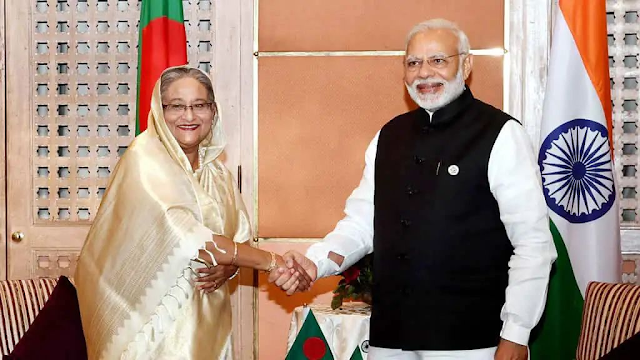
a political party, the prime minister, Sheikh Hasina, has hounded him from his
position as the bank’s managing director and is seeking to impose her own
choice of boss on the bank, overriding the interests of the owner-borrowers.
This is sending a chilling signal to other NGOs.
But Bangladesh’s
record is, on balance, a good one. It shows that the benefits of making women
central to development are huge. It suggests that migration is not just the
result of a failure to provide jobs at home but can be an engine of economic
growth. Indian’s rural-development minister, Jairam Ramesh, said recently that
“Bangladesh’s
experience shows…that we don’t have to wait for…high economic growth to trigger
social transformations. Robust grass-roots institutions can achieve much that
money can’t buy.”
Bangladesh
is still poor and crowded. With the lowest labour costs in the world (textile
workers make about $35 a month) it should be growing faster than China, not more slowly than India. It is
badly governed, stifled by red tape and faces severe environmental problems.
But in terms of the success of its grass-roots development, it has lessons for
the world.
First
published in the Economist, November 3rd 2012