Buy.com Monthly Coupon
Showing posts with label Bangabandhu. Show all posts

Sunday, March 17, 2024

Canada continues refusal to deport Mujib’s assassin

SALEEM SAMAD

AS The nation celebrates the 104th birth anniversary of the architect of Bangladesh's independence Bangabandhu Sheikh Mujibur Rahman, Bangladesh laments that Canada, among the country’s foreign friends, is unfortunately dilly-dallying to extradite the assassin of Bangabandhu, who is the architect of Bangladesh's independence.

Months back, a fresh diplomatic rift ensued between Canada and India over Hardeep Singh Nijjar, a Canadian-Indian and leader of an outlawed Khalistan killed by unknown assailants at a Sikh temple in Surrey in the province of British Columbia in mid-June has dominated news headlines.

Four months after the assassination of the Khalistan nationalist leader, Canadian Prime Minister Justin Trudeau suddenly stood up the House of Commons at Parliament Hill and told lawmakers in Ottawa that his government possessed “credible” allegations which pointed fingers toward Indian intelligence potential link to the assassination.

Canada allows hate speech by radical Sikhs in the name of freedom of speech and expression, which is not only a double standard but a hypocritical government.

Canada’s allies are still quiet! Trudeau expects condemnation from the West while asking India to cooperate on the murder of confessed extremists for an independent Khalistan.

The anti-Indian terror campaign for a separate territory for the Sikhs has been aided and abetted by the dreaded Pakistan spy agency Inter-Service Intelligence (ISI).

Well, his government has yet to share evidence blaming India behind Nirjhar’s death, who was chief of the Khalistan Tiger Force (KTF) and is unlikely to get ‘cooperation’ from New Delhi.

Ottawa has refused to extradite a couple of “most-wanted” Sikhs for crimes committed in India and elsewhere.

An Indian born Ashok Swain @ashoswai, Professor at Uppsala University, Sweden tweets: “Modi has made Canada, India's new Pakistan!”

Pierre Trudeau (father of Justin Trudeau) turned down India’s request to hand over a Sikh militant named Talwinder Singh Parmar, the head of the terrorist organisation.

The ‘person of interest’ has been blamed for placing a bomb on an Air India flight in 1985. The bomb exploded midair, killing 329 people, 268 of them Canadian citizens.

Millions of immigrants who adopted Canada as their new home, do not know that Canada is a haven for Nazi war criminals and other wanted criminals living with impunity.

The politicians and former officials of their home countries have been laundering money accumulated from loot, corruption and illegal cartels with a “no question asked policy” of Canada for new arrivals.

Nearly a thousand suspects indicted for war crimes, according to the Commission of Inquiry on War Criminals by Justice Jules Deschênes (1985-1986) are believed to be living in Canada.

The Royal Commission was able to establish that identified Nazi war criminals, for crimes committed in Germany and marauding Nazi occupation forces during World War II were given permanent residency. The Nazi war criminals brought huge wealth looted from Europe and especially from Jews.

The book ‘Unauthorised Entry: The Truth about Nazi War Criminals in Canada, 1946-1956’ by Howard Margolian published in 2000 brings fresh waves among Canadians about what the war crimes advocacy groups, the media, and even a royal commission have suggested that Canada has given refuge to such criminals.

On the recommendation of the Commission, Canada enacted the Crimes Against Humanity and War Crimes Act, 2000. Under the new legislation, one Rwandan immigrant was found guilty of committing genocide and sentenced to life in prison in May 2009.

The Canadian Crimes Against Humanity and War Crimes Programme investigated 200 war crimes suspects is currently residing in Canada.

Notwithstanding India’s repeated requests over the years to extradite the “most wanted” extremists, who have harmed India, Canada decided not to comply, or give any explanation.

On the other hand, Bangladesh made repeated requests in more than 20 years to deport the ‘most wanted’ army officer S.H.M.B. Nur Chowdhury, held responsible for the assassination of Bangabandhu Sheikh Mujibur Rahman, the independence hero of Bangladesh in a military putsch on 15 August 1975. The 73-year-old fugitive has been living in Canada since 1996.

“That’s why he is safe in Canada,” writes Charlie Gillis, a Canadian journalist, “The assassin among us.”

Nur told a state broadcaster Canadian Broadcasting Corporation (CBC) denying the allegation of taking part in the murder of Bangabandhu and said as a junior military officer he obeyed orders of his superiors.

Sheikh Mujib’s daughter, Prime Minister of Bangladesh Sheikh Hasina pleaded with her counterpart Justin Trudeau at several meetings on the sideline at global events to deport her father's assassin. Her appeal fell on deaf ears though.

A new Canadian High Commissioner to Bangladesh Heather Cruden in September 2011 in an explosive statement said that “Canada will not expel any suspected criminal to face a possible execution abroad.”

“Our government has a clear policy that we cannot extradite people to a country where there is [a] death sentence,” she told reporters in Dhaka.

The diplomat has rekindled a long-running dispute between Canada and Bangladesh, during which Bangladeshi officials have at times accused Canada of giving refuge to the most wanted fugitive for 27 years.

Canadian Ministry of Justice and Attorney General, Ministry of Citizenship and Immigration and Ministry of Foreign Affairs sings the same tune. A policy statement says something like this: “Bangladesh judiciary is not independent and deportation or extradition of a certain person will jeopardise their safety and security would be compromised by a politically motivated justice system.”

“There are possibilities of being harmed when the person is forced to return to his country of origin,” the Canadian government explains.

Canada provided a typical argumentative debate on the request for the deportation of Chowdhury, who was indicted in absentia for the murder of Sheikh Mujib and has been sentenced to the death penalty by a special tribunal in Dhaka in 1998 and declared him a fugitive. His name appears in the red list of Interpol.

Canadian media have intermittently kept the issue alive. This may have impacted the rejection of Chowdhury’s asylum case and the demand for extradition by the Bangladeshi government.

All his hope to live in Canada has been dashed after all the gates of the legal system have been exhausted. Chowdhury’s asylum case has been denied repeatedly.

Media reported that the fugitive rarely ventures outside his apartment except to buy groceries. He once faced angry Bangladesh nationals who condemned him for killing Mujib and demanding punishment. He lives in seclusion in Etobicoke, Toronto.

In a brazen move, Ottawa wanted to negotiate with Washington DC to send rogue military officer AKM Mohiuddin Ahmed, to a third country (preferably Canada), who swears that he didn't play a role in the assassination of Sheikh Mujib.

Ahmed's asylum case in Los Angeles, USA has been rejected multiple times in appeal courts. US authorities decided to deport him, which was indeed a surprise for Bangladesh.

The fugitive was deported to Bangladesh and the verdict was executed by hanging for the crime he had committed decades ago.

On 29 May 2007, Irwin Cotler, Minister of Justice addressing the Speaker of Parliament urged Ms Diane Finley, Minister of Citizenship and Immigration that a “former Bangladesh diplomat with a Canadian connection is facing imminent deportation from the U.S. to Bangladesh where he will be executed after a political trial was held in absentia,” as documented in the Parliament Hill online archive.

“Given this humanitarian issue and that Mr Mohiuddin Ahmed has immediate family in Canada, would the minister be prepared to review this case, to provide Mr Ahmed with the protection this case would warrant and help secure the suspension of his deportation until this case can be reviewed?”

However, Finley assured the members at Parliament Hill that Canada has “one of the most welcoming and fair immigration systems in the world.”

Commonly, most people know that hundreds of international victims of torture have found safety in Canada including dissidents, opposition, journalists, writers and academicians.

Nevertheless, this statement has been contradicted by Human Rights Watch (HRW) and Amnesty International. A damning joint report blames Canada to have incarcerated thousands of people (between the ages of 15 and 83), including those with disabilities, on immigration-related grounds every year in often abusive conditions.

“Canada’s abusive immigration detention system is in stark contrast to the rich diversity and the values of equality and justice that Canada is known for globally,” said Ketty Nivyabandi, secretary general of Amnesty International Canada.

Of course, Canada had forced several immigrants to their country of origin, who fled the country after they were brutalised and tortured by security agencies.

In the case of Maher Arar, a Syrian-born Canadian citizen was a victim of rendition and tortured in Syria after the United States turned him over as an Al-Qaeda suspect in 2002.

Arar, a telecommunication engineer was boarding a flight back home to Canada from Tunisia at JFK Airport in New York. He was detained for 12 days in New York and was secretly transferred to Syria.

US authorities alleged he was a member of the international terror network Al Qaeda and said they acted on data supplied by Canadian police.

Amnesty says in Syria, he was held in degrading and inhumane conditions, interrogated, and tortured for a year.

After media and rights groups’ outcry, Canada was forced to bring him back and had to pay a compensation of $10.5 million.

Similar incidents occurred with dissident Noura Al-Jizawi, a Syrian-born immigrant in Canada who was flagged as a security risk when she applied for a Permanent Resident (PR) card. Also, an Egyptian-born Joseph Attar, a Canadian citizen returned home serving 15 years imprisonment in Egypt on spying charges. 

In February 2007, Ottawa formally apologised for the role officials may have played in the torture and abuse of three Canadians Abdullah Almalki, Ahmad Abou-Elmaati and Muayyed Nureddin in Syria in the aftermath of the 9/11 attacks. A commission of inquiry found that Canadian officials were indirectly responsible for what happened to the three men.

Possibly for now, Nur Chowdhury’s prayer to Allah has kept him away from being guillotined for his crime. The diplomatic engagement to bring the rogue military officer back to Dhaka to face the music of justice remains frustrating for the coming years will be in deep freeze.

First published in The Daily Messenger, Dhaka, Bangladesh, 17 March 2024

Saleem Samad is the Deputy Editor of The Daily Messenger. Email: saleemsamad@hotmail.com; Twitter (X) @saleemsamad

Sunday, May 28, 2023

Imran Khan’s ‘Vandana’ For Bangabandhu Sheikh Mujib


SALEEM SAMAD

For more than a decade there was a simmering debate spearheaded by the netizens, academicians, journalists, researchers, social justice activists and civil society in Pakistan on war crimes, genocide and rape as a weapon of war by marauding Pakistan military during the brutal birth of Bangladesh in 1971.
Long before the cricketer-turned-politician Imran Khan became Prime Minister of the Islamic Republic of Pakistan at a talk show in Urdu anchored by celebrated anti-establishment journalist Hamid Mir, admitted that “some” atrocities had been committed in Bangladesh in 1971.
He also said that it was time to reconcile with Bangladesh what happened in 1971, and Pakistan should seek an apology for the war crimes.
Obviously, this news appeared in major dailies and argued on private TV channels during prime time talk-shows in Bangladesh.
Bangladesh’s relationship with Pakistan during Nawaz Sharif was all-time low after Sheikh Hasina in 2010 when she decided to put the war crimes suspects to face the music of justice.
Islamabad scolded Bangladesh envoy in Pakistan each time when the war crimes tribunal in Dhaka handed down maximum punishment for the Islamist leaders of Jamaat-e-Islami (JeI).
The key henchmen of the Pakistan military were indicted for crimes against humanity, especially kidnapping, torture and deaths of hundreds of intellectuals by a dreaded death squad, Al-Badr recruited by JeI.
Hasina was angry with Islamabad’s statement condemning the so-called “sham” trial targeting Muslim leaders.
Well, Turkey joined Pakistan in the vilification campaign against the trial of the accused for war crimes and crimes against humanity.
She decided to withdraw the diplomats from Islamabad and shut down the Bangladesh mission in Pakistan. Her government for several years refused to give accreditation to Pakistan’s nominated High Commissioner to Dhaka.
However, the Indian Prime Minister Narendra Modi, and Saudi Arabia and the United States in a similar diplomatic tone advised Hasina to not a harsh diplomatic decision.
Hasina backed out, understanding that the move would jeopardize South Asian regional cooperation and the war against terror campaign.
Her government continued to deny visas to Pakistan nationals from the Bangladesh missions in Islamabad and Karachi.
Well, during Khan’s tenure as head of government, he did not take any effort to thaw relations with Bangladesh, not to speak of seeking an apology for war crimes.
Hours after the much-dramatized arrest of former Prime Minister Imran Khan allegedly for corruption, the country rocked with violent street protests on May 9.
Angry protesters of the opposition Pakistan Tehreek-e-Insaf (PTI) seem to have a grudge against the military establishment.
Many are beginning to wonder if the military hawks can remain the hegemon that guides the nation, while the COAS General Asim Munir warns Khan and his cohorts from fresh attacks on military facilities.
Exasperated by the violent protests, Pakistan’s Prime Minister Shehbaz Sharif at a civil-military huddle a few days ago decided to observe May 9 as a ‘black day’ and remarked that “Such scenes were not witnessed since the fall of Dhaka during 1971.”
Sharif was referring to the surrender of Pakistan’s 96,000 troops and civilians in Dhaka under the joint command of the Indian army and Bangladesh Mukti Bahini on December 16, 1971 – labelled as the “darkest day” in the history of Pakistan.
Veteran political historian Mohiuddin Ahmad says if Pakistan believes that December 16 is the “darkest day” then they should also consider seeking a public apology for war crimes committed during the liberation war of Bangladesh.
Thousands of netizens in Pakistan and PTI cohorts poured onto social media and began to compare the 70-year-old Imran Khan ‘Vandana’ with Bangabandhu [Friend of Bangladesh] Sheikh Mujibur Rahman, an architect of independent Bangladesh.
Once a blue-eyed boy of the Pakistan military establishment, Khan blamed the top military hawks in Rawalpindi GHQ for orchestrating against him to eliminate him from politics in axis with the United States, and dubbed himself as ‘Mujibur 2.0’.
The Bangladesh media and social media did not feel comfortable comparing Imran Khan with founding father Sheikh Mujib. The media with scornful eyes rebuked the Pakistani netizens for comparing a man mountain with a Lilliput.
Dr Imtiaz Ahmed, a professor at Dhaka University is a leading political scientist who reacted to Khan’s comparison with the Father of Nation. He has demeaned Sheikh Mujib, who is adored by millions of people. Bangabandhu has never been smeared by allegations of corruption and hobnobbing with the military establishment to scale the ladder to power.

An Indian micro-blogger @Pavan_JaiHind reverberates with other netizens: History is repeating itself. Victims are [the] same, Pakistani people. [The] perpetrator is [the] same, Pakistan Army. Crimes are [the] same, Rape & Murders. [The] only leader of 1971 Sheikh Mujibur Rahman is replaced by Imran Khan in 2023.

Mehedi Hasan Shuvo @MHShuvo12053 on May 9 satires from Bangladesh: Remember these two things: 1. Every country has its own military; 2. Pakistan’s military has its own country.

The netizen in another tweet: Sheikh Mujibur Rahman whom you [have] known as a traitor, now see what your [Pakistan] army does to your own men.

“Everyone knows Mujibur Rahman and his party won the general elections in 1970. Instead of handing over power, a clever politician set Awami League and the army on a collision course,” said Khan.

A Pakistani micro-blogger Sohail @mosohail03 on May 10 tweets: Sheikh Mujibur Rahman told the military, “You can kill me, but you can’t suppress the people of Bangladesh. Sheikh Mujibur Rahman, the whole nation apologizes to you.”

In 1971, when Pakistan’s army battalion arrested Sheikh Mujibur Rahman, the “Father of the Nation” of Bangladesh, he was treated very badly. At that time, the Pakistan Army Chief (dictator) Yahya Khan was backed by a political puppet named Zulfikar Ali Bhutto #ImranKhanArrest

@OsintTV on May 11 tweets from Pakistan: History repeating itself…It was Sheikh Mujibur Rahman then now Imran Khani. Pakistan Army is [the] same.

“A shrewd politician (Zulfikar Ali Bhutto), in his greed for power, set the armed forces against the then largest party (Bangladesh’s Awami League), which had won elections, causing the dismemberment of the country,” lamented PTI chief during a road march in Gujranwala in last November, reports Dawn.
Khan was ousted as prime minister in April 2022 in a parliamentary no-confidence vote, reminded that Pakistan had split into two after Awami League with a legitimate political mandate was denied its right to rule. “Those who are behind all this don’t know what happened in East Pakistan.”
Despite all the deadly political drama, Imran is Pakistan’s most popular leader according to opinion polls.
The comparison of Imran Khan with Bangabandhu and the May 9 violent protests with the 1971 liberation, demonstrates appalling knowledge of the political history of the 1970 post-elections, the bloody liberation war in 1971 and culminating in the humiliating defeat of occupation troops of Pakistan.

First published in The News Times, 28 May 2023

Saleem Samad is an award-winning independent journalist, media rights defender, recipient of Ashoka Fellowship and Hellman-Hammett Award. He could be reached at <saleemsamad@hotmail.com>; Twitter @saleemsamad


Tuesday, August 24, 2021

Tikka Khan Wanted To Hang Mujib In Dhaka

Sheikh Mujib was flown to Pakistan after the brutal crackdown on 25 March 1971
SALEEM SAMAD

Hours after the genocidal campaign ‘Operation Searchlight’ was launched at zero-hours on March 26, 1971, Bangladesh independence architect Bangabandhu Sheikh Mujibur Rahman was detained and whisked away by Major ZA Khan of the commando battalion, who was stationed in Cumilla.

The first crackdown was ordered by General Yayha Khan to discipline the “autonomy seeking” people of Bangladesh.

Thus between January and early February 1971 codenamed ‘Operation Blitz’ was designed by Maj. Gen. Khadim Hussain Raja, commander of Eastern Command. The detail of the plan has been written in his book “A Stranger in My Country: East Pakistan, 1969-1971.

Regarding the book, he agreed with the publisher Oxford University Press that it would be published a year after his death in the year 2012.

The ‘Operation Blitz’ envisaged suspension of all political activities in the country [East Pakistan] and return to military rule. This meant that the armed forces of Pakistan would be permitted to move against “defiant political leaders” and to take them into “protective custody”.

On February 26, Lt Gen Sahabzada Yaqub Khan convened a Martial Law conference and informed that President [Yayha Khan] was going to announce the postponement of the National Assembly on March 1, 1971.

The ‘Operation Blitz’ was expected on March 1. The troops were deployed on February 27 to Khulna, Faridpur, Barishal, Bogura, Pabna, Mymensingh, and Tangail.

Battalions of the Pakistan military were already located in Darsana, Benapole, Ghoraghat, and Brahmanharia, besides army garrisons in Jashore, Chittagong, Cumilla, Rangpur, Sylhet and elsewhere.

Lt Gen Sahabzada Yaqub Khan, Chief of General Staff, Eastern Command and Admiral Syed Mohammad Ahsan, the Governor of East Pakistan scuttled Operation Blitz.

Yayha was visibly upset with Gen Yaqub and Admiral Ahsan’s for their failure to execute ‘Operation Blitz’. Both were later shunted out on the eve of the brutal crackdown ‘Operation Searchlight’ – both had to make an unceremonious exit from their career.

General Raja was also punished, after he fell from the grace of Lt. Gen Tikka Khan, Lt. Gen Niazi and Gen Rao Farman Ali for the delay in executing the crackdown. He returned to Rawalpindi GHQ in April 1971 and was not given any official position.

Meanwhile, the Awami League – the winning majority party in both wings of Pakistan has tightened its grip on the administration in East Pakistan. All over the country, the Bangladesh independence flag fluttered, while the de facto administration of the East Pakistan government reported to Sheikh Mujib’s headquarters.

Gen Raja lamented, that even the Inspector General of Police stopped attending briefings at Martial Law headquarters. Instead, he was reporting to Sheikh Mujib’s residence at Dhanmondi. Shafi-ul-Azam, the Chief Secretary to the Governor had expressed his inability to carry any instructions of the military junta.

Both Admiral Ahsan and Gen Yaqub confided to General Raja that they rarely got the President’s ear. Upon his arrival in Dhaka and stay at President’s House at Bailey Road (opposite Ramna Park), Yayha hardly spoke to them.

Both the senior-most officers were denied access to the President. Yayha ordered his staff officers in Rawalpindi to ignore messages and telephone calls of both Yaqub and Ahsan.

Yaqub in protest resigned on March 5, after Yayha refused to visit Dhaka on March 15 to hold dialogue with Mujib on his Six-Point political agenda.

Yahya in a speech on March 6 had given further provocation and squarely blamed Sheikh Mujib for the crisis. On March 7 in his fiery historic speech called upon the people for a non-violent, non-cooperation movement against the hegemony of the Pakistan military junta.

The fly-in of troops had begun from March 1, ignoring instructions of the Eastern Command in Dhaka that no further troops were needed to be deployed from Pakistan.

Yaqub and Ahsan understood that the gesture for a reconciliation of the President was absent. Gradually senior military generals were replacing the ‘doves’ with the ‘hawks’ in East Pakistan.

Lt. Gen. Tikka Khan (the ‘Butcher of Balochistan’) arrived quietly in Dhaka on 7 March 1971, as Governor of East Pakistan replacing Admiral Ahsan.

The next day, Tikka Khan found out that Chief Justice B.A. Siddiqui had declined to administer the Governor’s oath of office to him.

Hours before the infamous crackdown, Sheikh Mujib was kept in safe custody at a girls’ school (presently Shahid Anwar Girls School and College) in Dhaka Cantonment. Later he was shifted to the Guest Room of the Command House. After a few days, he was secretly moved to West Pakistan, Raja wrote in his book.

Raja’s advice was that Sheikh Mujib should be quickly flown out to Karachi in secrecy the same evening, but was ignored by Tikka Khan. He disagreed and said that he would publicly hang Mujib in Dhaka.

“Needless to say, my worst fears came true in the months to come. The rebels formed the core of the Mukti Bahini under Colonel M.A.G. Osmani,” he concluded.

First published in The News Times, 24 August 2021

Saleem Samad, is an independent journalist, media rights defender, recipient of Ashoka Fellowship and Hellman-Hammett Award. He can be reached at saleemsamad@hotmail.com; Twitter @saleemsamad 


Tuesday, June 08, 2021

The elections that broke Pakistan

Independence hero Sheikh Mujibur Rahman and Pakistan military junta President, Genera Yayha Khan (right)

SALEEM SAMAD

The inclusive elections were the first since Pakistan was carved out in 1947

A separate state for Indian Muslims to live happily ever after in Pakistan came to a dead end after Muhammad Ali Jinnah’s brainchild -- the controversial “two-nation theory” -- collapsed after 24 years, when East Pakistan bifurcated and became Bangladesh.

Apparently, the free, fair, and credible general elections held in 1970 stirred a political hype in the eastern province of Pakistan and led to the gradual realization of their identity as a nation-state. 51 years ago, the general elections of the national and provincial assemblies were held on December 7, 1970 -- to elect members of the National Assembly. The inclusive elections were the first since Pakistan was carved out in 1947.

The top-secret intelligence message transmitted from Dhaka to the Rawalpindi GHQ of the hawks of the Pakistan Army predicted that the Awami League would get one-third of seats, while factions of the Muslim League, the Pakistan Democratic Party (PDP), and other Islamist parties would hold two-third majority. The Rawalpindi hawks were confident that a political coalition could be easily matched to corner Sheikh Mujibur Rahman’s party, the Awami League.

Probably due to the physical distance of 1,000 miles between the two wings of Pakistan, with the huge India in the middle, the “mango people” (aam janata) had no clue about the rulers of Pakistan and the ruling bourgeoisie class.

A fierce contest began between two socialist democratic parties, the eastern political party Awami League, and the Pakistan People’s Party (PPP) in the western region, over who would govern Pakistan. The time for the electoral test arrived in 300 constituencies, of which 162 were in East Pakistan and 138 were in West Pakistan.

The Awami League became the single majority in the eastern wing, while the PPP managed to make a dent in the two provinces of Sindh and Punjab, but were rejected in Balochistan and the North West Frontier Province (NWFP) provinces. In reality, the PPP faced stiff competition from the conservative factions of the Muslim League, the largest of which was the Muslim League (Qayyum), the pro-Marxist National Awami Party (Wali), as well as Islamist parties like Jamaat-e-Islami (JI), Jamiat Ulema-e-Islam (JUI), and Jamiat Ulema-e-Pakistan (JUP).

The result was a victory for the Awami League, which won an absolute majority of 160 seats, all of which were in East Pakistan.

This victory was a big test for the flamboyant politician Zulfikar Ali Bhutto, leading the Pakistan People’s Party (PPP), who won only 81 seats out of 138 seats in the western region. Nevertheless, the two leading parties failed to add feathers in their caps and become a national political party in 1970.

In the five provincial elections held 10 days later, the Awami League swept in East Pakistan, while the PPP were the winning party in Punjab and Sindh. The Marxist National Awami Party emerged victorious in the then NWFP (now Khyber Pakhtunkhwa) and restive Balochistan.

During the political impasse on March 1, 1971, the Rawalpindi hawks unilaterally cancelled the first National Assembly scheduled in Dhaka to blackmail Sheikh Mujib to come into their terms for the handover of power.

Unfortunately, the military dictator Yayha Khan’s parley with Bangabandhu Sheikh Mujibur Rahman in mid-March reached a stalemate, as the latter refused to withdraw Martial Law, clamped in March 1969.

Mujib argued that Martial Law must be withdrawn before the parliament session commenced.

48 hours after the dialogue collapsed, the “Operation Searchlight” genocidal campaign was launched.

First published in the Dhaka Tribune, 8 June 2021

Saleem Samad is an independent journalist, media rights defender, recipient of Ashoka Fellowship and Hellman-Hammett Award. He could be reached at saleemsamad@hotmail.com; Twitter @saleemsamad

Tuesday, May 11, 2021

Securing Bangabandhu’s return

Bangabandhu Sheikh  Mujibur Rahman with Indian diplomat Sashanka S Banerjee onboard special flight from London to Dhaka via New Delhi

SALEEM SAMAD

A few days after the Pakistan forces’ humiliating defeat in the Eastern War Theatre and the surrender of occupation troops at Dhaka on December 16, 1971, Bangladesh’s government-in-exile, as well as the Indian Prime Minister Indira Gandhi, were left worried about Bangabandhu Sheikh Mujibur Rahman languishing in Mianwali Jail in Pakistan.

Pakistan’s would-be president, Zulfiqar Ali Bhutto, who was in New York attending heated UN Security Council meetings, had to air dash to Rawalpindi after he was informed by General Yahya Khan that he had resigned from his office as president of Pakistan and military commander.

Bhutto had been appointed the chief martial law administrator of Pakistan.

Indira Gandhi received a top-secret message that the Rawalpindi flight carrying Bhutto was scheduled for a stopover at Heathrow Airport in London. The Indian PM hurriedly called a meeting of the war cabinet in New Delhi at her South Block office to discuss Bhutto’s journey home. She wanted a reliable point-person who would be present for Bhutto’s arrival at Heathrow, so she could get an intelligence feed.

India desperately wanted to learn what Bhutto was thinking -- whether he would release Rahman and let him return home, or carry out the Pakistan military court’s verdict of death.

The meeting was attended by Durga Prasad Dhar, head of policy planning in the Ministry of External Affairs; Ram Nath Kao, chief of RAW; PN Haksar, the prime minister’s principal secretary; and TN Kaul, the foreign secretary. 

A plan was drawn, with no guarantee of acquiring the vital intelligence of the fate of Sheikh Mujib. Incidentally, a highest ranked Pakistan bureaucrat, Muzaffar Hussain, former chief secretary of the government of East Pakistan and posted in Dhaka, had become a prisoner of war (POW) along with 93,000 military, other combatants, civil officers, and families.

Hussain was staying as a VIP guest at the official residence of DP Dhar. On the other hand, his wife, Laila Hussain, was visiting London when the war broke out in December and remained stranded. Both husband (in Delhi) and wife (in London) were communicating with each other through diplomatic channels. 

Fortunately, Sashanka S Banerjee, an Indian diplomat in the Indian mission in London, had befriended Laila Hussain. Indira knew that Laila and Bhutto had been good friends. Thus, the South Block decided to play a one-off diplomatic “summit” at the VIP lounge, the Alcock and Brown Suite, at Heathrow airport. Banerjee persuaded Laila to meet Bhutto at the airport lounge and ask him if he could help in getting her husband released from Delhi.

The two friends, Laila and Bhutto, met at Heathrow airport. The meet and greet turned out to be a historic diplomatic thriller. Bhutto responded to Laila’s emotional appeal for help in getting her husband released from Indian custody. He pulled her aside and whispered to Laila a very sensitive, top-secret message for the Indian prime minister, writes Banerjee in his memoir.

“Laila, I know what you want. I can imagine you are [carrying a request] from Mrs Indira Gandhi. Do please pass a message to her, that after I take charge of office back home, I will shortly thereafter release Mujibur Rahman, allowing him to return home. What I want in return, I will let Mrs Indira Gandhi know through another channel. You may now go.”

The Indian High Commission in London urgently shot out a priority message to the South Block, based on Laila’s encounter with Bhutto. Indira Gandhi was excited that Bhutto had sent out a positive message. 

Meanwhile, within hours, a diplomatic message came from Islamabad confirming the authenticity of Laila’s report.

Bangladesh leaders received a secret message from the South Block regarding the release of Sheikh Mujib -- the architect of Bangladesh’s independence would first land in London and then fly from there to Dhaka via Delhi. 

Bhutto dared to over-rule the death sentence handed out by a military court in Rawalpindi and released Mujib on January 8, 1972. On January 10, 1972, Mujib returned as a hero to a war-ravaged homeland -- but an independent Bangladesh.

First published in the Dhaka Tribune, 11 May 2021

Saleem Samad is an independent journalist, media rights defender, and recipient of Ashoka Fellowship and Hellman-Hammett Award. He could be reached at saleemsamad@hotmail.com; Twitter @saleemsamad

Tuesday, April 27, 2021

Mujibnagar: An oath in secrecy

Syed Zakir Hossain/Dhaka Tribune
SALEEM SAMAD

At Kolkata Press Club on April 16, 1971, two nondescript Bangladesh officials kept journalists waiting for hours. Finally, the officials arrived in the evening and expressed an apology for being late.

Abdul Mannan, an MNA (later the first home minister of Bangladesh in 1972) remained silent, while Barrister Rahmat Ali, without waiting for an introduction, told the crowded journalists that they are requested, including the foreign press representatives, to return to the press club for an important announcement the following morning.

The following morning, Kolkata Press Club was overcrowded with local and foreign journalists accompanied by a battery of camerapersons and press photographers.

Ali announced: “Gentlemen, on behalf of the government of Bangladesh, I invite you to our country,” which jolted the journalists as the Liberation War history was unfolding.

The rally of cars carrying journalists did not know where they were going, whom they would meet, and what they would witness. Everybody was worried about what kind of dispatch they would send to their newsroom. When the vehicles stopped at a mango orchard in Meherpur, inside Bangladesh, the Kolkata journalists quickly dubbed the place as Mujibnagar.

Of course, India and the entire world was taken by surprise that Bangladesh formally announced the “Proclamation of Bangladesh Independence” and the formation of a government-in-exile to coordinate the Liberation War.

What surprised many, was that among the Kolkata media circle, none leaked the story of the secret endeavour of the Mujibnagar episode. The thoughtful journalists maintained secrecy to avoid the enemies being alerted from a single line published in an Indian newspaper.

Journalist Sukharanjan Sengupta saw a vehicle with a diplomatic number plate entering the porch on March 22. 

The curious journalist rushed towards the office of Chief Secretary Nirmal Sengupta and waited for the person to come out.

The person was nobody else but the deputy high commissioner posted in Dhaka during the crucial period. Time was ticking for Bangabandhu Sheikh Mujibur Rahman as New Delhi was impatiently waiting to see what emerges from the negotiation in Dhaka.

Fortunately, the journalist knew the diplomat and quickly asked whether the negotiation to resolve the political crisis will go in the favour of Sheikh Mujib or will there be a bloodbath.

The diplomat was in a rush. He frowned and said the second one and was then escorted to the Kolkata airport and to New Delhi to hold a confidential debriefing on the Bangladesh crisis with Indian Prime Minister Indira Gandhi.

On March 23, the Republic Day of Pakistan, the “Joy Bangla” flag was fluttered all over the country, except for the military cantonments and a few government offices in Dhaka.

On March 25, Bangabandhu was still negotiating with the advisors of Pakistan’s military leader General Yahya Khan to avoid a bloodbath in the streets. 

However, near midnight on March 25, the Pakistan army launched the genocidal campaign “Operation Searchlight,” leaving Bangladesh no choice but to go to war.

First published in the Dhaka Tribune, 27 April 2021

Saleem Samad is an independent journalist, media rights defender, and recipient of Ashoka Fellowship and Hellman-Hammett Award. He could be reached at saleemsamad@hotmail.com; Twitter @saleemsamad

Tuesday, April 20, 2021

Declare Mujibnagar Day on April 17 as Republic Day of Bangladesh

Photo: SYED ZAKIR HOSSAIN

SALEEM SAMAD

On the 50th birth anniversary of Bangladesh, the nation was perhaps expecting that the government would declare April 17 as the country’s Republic Day. This is the day when the cabinet of the government-in-exile took an oath of office and accepted the challenge to lead the War of Liberation to achieve independence.

The venue was discreetly decided at Baidyanathtala, Meherpur in eastern Bangladesh (less than a kilometre from the Indian border). The site was secured by the Indian Border Security Force (BSF) and mounted anti-aircraft artillery to thwart any air attacks by marauding Pakistan fighter jets.

A day earlier, the Ansar saw hundreds of BSF soldiers and vehicles pour in and secure the area. The following morning, April 17, the leaders of government-in-exile, Indian officials, scores of journalists, international photographers, and TV camera persons also arrived with senior BSF officers accompanied by hundreds of additional troops.

At 11 am the ceremony began with recitation from the Qur’an and playing of the national anthem. The oath-taking ceremony was conducted by Abdul Mannan, MNA, and the proclamation of independence was read out by Professor Mohammad Yusuf Ali.

The assignment of portfolios was assigned among the ministers on April 18. The incumbents of the government were: Sheikh Mujibur Rahman (interned in Pakistan jail), president of Bangladesh. Syed Nazrul Islam (Vice President and also Acting President), Tajuddin Ahmad (Prime Minister), Khondaker Mostaq Ahmad (Foreign Affairs and Law Minister), Muhammad Mansur Ali (Finance Minister), AHM Qamaruzzaman (Home, Relief and Rehabilitation Minister), and Muhammad Ataul Gani Osmani (Commander-in-Chief of the Bangladesh Forces or Mukti Bahini). The guard of honour was given to Syed Nazrul Islam, the acting president of Mujibnagar.

The government-in-exile had an elaborate structure of administrative departments, agencies, and activities. Even though elaborate agencies were established, the government’s main work remained coordinating the Liberation War and boosting popular support in occupied Bangladesh.

Soon the government-in-exile operated from 8 Theatre Road, Kolkata. Tajuddin Ahmad supervised the military operations of the Mukti Bahini, held coordinating meetings with officials of Indira Gandhi, the Eastern Command of the Indian Army, the foreign dignitaries, the international NGOs in aid of the 10 million war refugees, and of course, smoothing the inner-conflicts within the hierarchy.

The Shadhin Bangla Betar Kendra broadcast was a moral inspiration for the millions of people who were either languishing in refugee camps across the borders of Bangladesh or living in hellish conditions in occupied Bangladesh.

The production of documentary films, postage stamps, propaganda posters, regular press briefing in Kolkata, definitely made a dent in telling the world of the genocide in Bangladesh and the war crimes committed by the marauding Pakistan troops.

Tajuddin Ahmad was an intimate colleague and a trusted comrade of Bangabandhu Sheikh Mujibur Rahman and enjoyed the recognition and full support of the Indian leadership -- which was an important resource that lent authority to his position, writes acclaimed economist Rehman Sobhan in his book Untranquil Recollections.

Well, the government-in-exile earned credibility and gave an alternative dichotomy to General Yayha Khan’s military regime in Rawalpindi.

Nonetheless, most historians interpret that the able stewardship of the Mujibnagar government, which was a symbolic icon of the nationalist struggle, had essentially lifted the morale of the revolution.

First published in the Dhaka Tribune, 20 April 2021

Saleem Samad is an independent journalist, media rights defender, and recipient of Ashoka Fellowship and Hellman-Hammett Award. He could be reached at <saleemsamad@hotmail.com> Twitter @saleemsamad

Wednesday, March 17, 2021

Bangabandhu in Mianwali Jail

Bangabandhu was arrested and then was taken to West Pakistan shortly 
before the start of Operation Search Light on 25 March, 1971. File Photo

SALEEM SAMAD

Mohanlal Bhaskar alias Mohammed Aslam's undercover identity was blown by a double agent. He was caught and imprisoned in Pakistan from 1967 to 1974.

He and dozens of fellow Indian spies were swapped with Pakistani spies soon after the ice-breaking Simla Accord signed by Pakistani Prime Minister Zulfikar Ali Bhutto and Indian Prime Minister Indira Gandhi in July 1972.

Bhaskar's mission was to gather intelligence on Pakistan's nuclear programme. He witnessed the India-Pakistan war in December 1971 from his cell in Mianwali jail as history unfolded when Bangabandhu Sheikh Mujibur Rahman was brought there and had his grave dug, at least four times, and then quickly refilled.

Possibly the book, 'An Indian Spy in Pakistan', written by Mohanlal Bhaskar in Hindi and translated by Jai Ratan, is the only eyewitness narrative on Bangladesh's independence leader Bangabandhu Sheikh Mujibur Rahman which unfolded in Mianwali Jail.

He exhaustively writes two separate chapters. One on 'Turmoil in Bangladesh' and another on 'Sheikh Mujib in Mianwali Jail'.

"According to the news that had reached us, Sheikh Mujib was supposed to be in the Lyallpur Jail. The winter had just started. A helicopter landed one night in our jail compound. We couldn't see who had got down from it, for our cells were locked at that time. In the morning we [learned] that Sheikh Mujibur Rahman had been brought to Mianwali […] the Lyallpur Jail."

It is presumed Mujib was brought to Mianwali Jail in early September 1971, according to Bhaskar. Sadly, the Indian spy, for reasons unknown, did not mention any date behind the events he has mentioned.

As soon as Sheikh Mujib's arrival was confirmed by prisoners, some soldiers of the East Bengal Regiment planned to dig a tunnel in the jail to smuggle him away from there, according to Bhaskar.

The attempt proved abortive as Mujib was lodged in the female ward of Mianwali Jail. The female inmates had hurriedly been shifted to another barracks.

The Indian prisoners were also shifted to barrack number 10 and the female ward was right behind their barracks.

Unfortunately, neither the Bangalee soldiers nor the Indian spies could have a glimpse of the stalwart politician. He was kept under heavy military guard.

Well, a Bangalee cook had been deployed to cook Mujib's preferred menu – fish and rice.

The following morning, when news of the Sheikh's arrival spread in the jail the Pathan prisoners climbed up the roof of the jail barracks and shouted expletives at the Sheikh. 

Armed guards quickly climbed onto the roof of the female ward and fired six rounds in the air, which terrified the Pathans. 

The Jail Superintendent on a routine round of the barracks informed the prisoners that Mujibur Rahman had been brought to Mianwali Jail to be hanged.

This news triggered sadness among the Indian and Bengal Regiment prisoners but caused a ripple of happiness among Pakistani prisoners and they cried 'Ya Ali!'.

Bhaskar recalls that, unfortunately, he could not meet the "great hero, known as the Lion of Bengal who had awakened the hungry and oppressed people of East Bengal...".

Whenever the Indian prisoners went to collect food rations, they met Mujib's cook but could not have a word with him as he was escorted by military guards.His cook was very devoted to him.

The ration clerk would ask the cook, "How's he faring?" The defiant cook would reply that Sheikh Shaheb was in fine health and with a sound mind and would keep fighting for the rights of the Bangalees till his last breath.

One day, the deputy superintendent called the eight Indian prisoners languishing in condemned cells.

He notes: "We were marched out and halted in front of the female ward where Sheikh Mujib was imprisoned. We were not told what was required of us nor did we care to find out. We were happy in the thought that we may yet be able to have a fleeting glimpse of the Sheikh. But to our chagrin, even the wooden gate leading to his barred cell had been closed."

The senior jail officer ordered them to dig an eight feet long, four feet wide and four feet deep trench and specified the exact spot where the trench was to be dug.

"We immediately guessed that Sheikh Mujib was scheduled to be hanged that night and we were digging a grave to bury his dead body. Short of asking a question which we were reluctant to do, we had no way of confirming our suspicion," he writes.

The grave was ready by nine and the prisoners returned to their cells. They waited with bated breath for the ominous news of Mujib's execution. "Our ears were all along attuned to the "house of death' but nothing happened throughout the night; everything was so quiet and still."

Bhaskar realised that the decision to hang Bangabandhu had been deferred. In the morning when the cells were unlocked, they heard some people saying that Sheikh Mujib was still alive.

There were also rumours that poison had been injected into his body, putting him to eternal sleep, after which he had been buried in the grave dug the previous evening.

In the morning when the Indian prisoners went to the ration godown for collecting their quota, they saw Sheikh Mujib's cook waiting there to get milk, tea and sugar for his morning tea.

It was indeed a relief for them, for "it meant that he was still alive."

They heard a rumour that on the night scheduled for the Sheikh's execution Zulfikar Ali Bhutto had sought an audience with President Yahya Khan and had advised him not to execute him. 

He [Bhutto] impressed upon the President that if he [Mujib] was executed the Bangalees in East Pakistan (now Bangladesh) would not sit idle. The Pakistani forces stationed in East Pakistan right from the highest officer down to a soldier would become the target of the wrath of the Bangalee guerrillas. Yahya Khan on second thought decided to halt Mujib's execution.

The next day, the prisoners were again called out and asked to fill in the trench dug the previous day. "But our happiness was short-lived."

Fifteen days later, they were again called out and asked to dig a similar trench. Again, Sheikh Mujib was not hanged. This process was repeated three times and every time his hanging was deferred.

For the fourth time, Sheikh Mujib was saved from walking to the gallows. In this manner, Sheikh Mujib stayed for four months in the Mianwali Jail.

Finally, Zulfikar Ali Bhutto in early January released Bangabandhu, who was to return in triumph to Bangladesh.

Even now, the days of Sheikh Mujib in Mianwali Jail remains a nightmare. Time and again they [the Pakistan authorities] would prepare the noose for his neck and dig a grave. But he did not die at the hands of his enemies.

Regrettably, he died at the hands of his "own people whom he called his children." Nobody could believe that the same people for whom he had made such huge sacrifices and suffered imprisonment and political harassment would assassinate him," laments Bhaskar.

First published in The Business Standard, 17 March 2021

Saleem Samad is an independent journalist, media rights defender, recipient of Ashoka Fellowship and Hellman-Hammett Award. He can be reached at <saleemsamad@hotmail.com>; Twitter @saleemsamad

Saturday, August 15, 2020

The legacy of Sheikh Kamal

Sheikh Kamal, blue pole-star in the sports arena!

SALEEM SAMAD

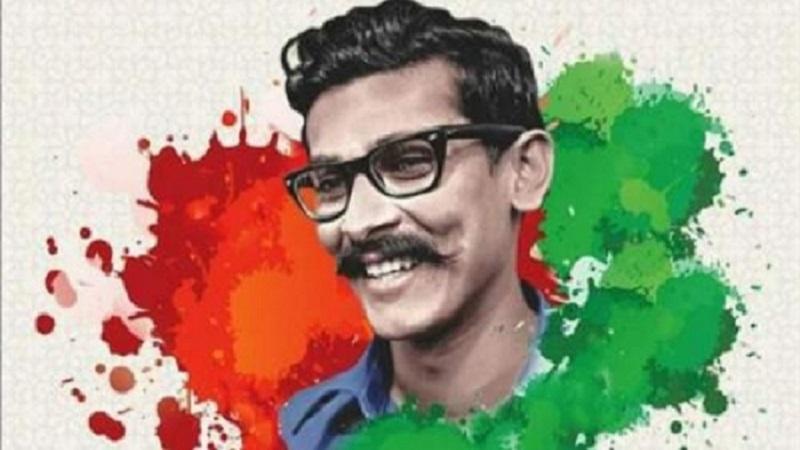
At PAF Shaheen School (now BAF Shaheen College), Dhaka, in 1967, everybody took a glimpse of a tall, well-built student with a light moustache, unkempt hair, wearing thick, black-framed spectacles in khaki trousers and a blue school uniform shirt.

Every time I saw the senior student, he was practicing cricket, a game not played by many Bangalees in the 1960s.

He was none but Sheikh Kamal, the eldest son of Bangabandhu Sheikh Mujibur Rahman, who was in prison accused of treason by the military dictator General Ayub Khan for conspiring to bifurcate the eastern province of Pakistan into an independent state, Bangladesh. In fact, the dream came into reality in less than five years.

Kamal was an avid promoter of Bangla-speaking students to join regular sports, especially cricket. Shaheen School fared very well in inter-school competitions in basketball, football, cricket, and other sporting events for his active involvement.

The sports in Shaheen School were dominated by Urdu-speaking students, whose parents and guardians had migrated from India after the 1947 partition, or their parents were serving in the Pakistan Air Force, PIA, and civil bureaucracy.

Kamal used to visit junior classes to recruit students who had a flair for music, dance, and drama.

Many others -- liberation war historian Afsan Chowdhury, acclaimed photographer Dr Shahidul Alam (Drik), Mohammad Ismail (of Rahimafrooz), heritage archive specialist Waqar Khan, Captain Sheikh Naseer Ahmed who was briefly managing director of Bangladesh Biman, Flight Engineer Faizul Islam, Tarique Islam (bagged the gold medal in the All Pakistan School Science Fair) -- did not join any games and sport.

Instead, they were more engaged in school addas during tiffin break, reading books, and watching English movies in Naz, Modhumita, and Balaka cinema halls.

He appeared for the SSC exam in 1967 and left the school. He continued his studies in Dhaka College and then joined Dhaka University, also organizing the East Pakistan Chhatra League.

The de facto student leader of the Bangla-speaking school students organized cultural programs in state-run Pakistan Television (now BTV) through his rightful connections.

PTV Dhaka Centre used to broadcast dance, music, and drama which was participated in by Shaheen School. Titumir’s “Basherkella” drama, directed by Sheikh Kamal, was also broadcast on BTV in 1967.

The school under his encouragement got the best singer and dance choreographers. Singer Munni Begum and Alamgir Haq, who shot into fame in Pakistan, were born in Bangladesh and studied in Shaheen School. Similarly, Afroze Jilany made her debut in the dance program in PTV and is now a choreographer in the United States.

Fortunately, Sheikh Kamal’s pro-active initiative had yielded a positive result. Nearly a dozen footballers and cricketers who studied in Shaheen School joined the national team. Amongst them was Kazi Salauddin, who is presently president of the Bangladesh Football Federation.

Most exciting were Tanveer Mazhar Islam Tanna (SSC 1967) and Jahangir Shah Badshah (SSC 1969) who played cricket in the national team after the independence of Bangladesh.

Days after the birth of Bangladesh, Sheikh Kamal with other friends and footballer Salauddin founded Abahani Krira Chakra in 1972.

Well, the sports enthusiast Kamal played football, cricket, basketball, and hockey. He also excelled in athletics. He was a brilliant organizer indeed. He was good “addabaz” and sang songs.

Before he was recruited in War Course to become a Mukti Bahini officer, he was a member of the Shadhin Bangla Football Team, which held football matches across India to raise funds for the 10 million refugees during the Liberation War in 1971.

At least 16 students joined the Mukti Bahini from the 1967 to 1972 batches. Sarkar Kamal Sayed, a Liberation War veteran, led Shaheen School in 1969 to grab the basketball championship in the Inter-School Sports Competition. He earned the Sword of Honour in the 2nd BMA (December 1975) in Bhatiari, Chittagong.

Ishtiaq Aziz Ulfat also joined the “Crack Platoon,” the guerrillas which made a shiver run through the spines of marauding Pakistan troops in Dhaka during the war. Similarly, Salim Akbar (1971 batch) received the gallantry award Bir Protik for his contribution.

Unfortunately, after 10 days of his 26th birthday and a month after his marriage with Sultana Kamal Khuki, they were brutally murdered by rogue military officers of the armoured corps when they assaulted the private residence of Bangabandhu Sheikh Mujibur Rahman on August 15.

Bangabandhu’s family members were murdered in cold blood on a fateful morning.

May they rest in peace!

First published in The Dhaka Tribune, 15 August 2020

Saleem Samad is an independent journalist, media rights defender, recipient of Ashoka Fellowship and Hellman-Hammett Award. He can be reached at saleemsamad@hotmail.com and on Twitter @saleemsamad

Thursday, August 06, 2020

Can Bangladesh shun political Islam?


SALEEM SAMAD

For millions of people in an impoverished Bangladesh, it seems to have ushered a political blessing. The nation which fought a bloody war of independence in 1971 against Pakistan to establish secularism and democracy was obliterated by subsequent military juntas and pro-Islamic governments.

The first constitution has enshrined secularism, democracy, socialism, and nationalism as the key political philosophy of the independence of Bangladesh, which reflects the spirit of the independence war when the eastern province severed from Pakistan in 1971.

After the assassination of the architect of Bangladesh independence Sheikh Mujibur Rahman in a military putsch in 1975, the military-backed government of General Ziaur Rahman, a former Mukti Bahini commander, with a swagger stick doctored the constitution’s guiding principle and scribbled “Bismillah’ir Rahman’ir Rahim (Faith in Allah)” in 1979 to establish legitimacy of his military government.

After Mujib’s daughter Sheikh Hasina, leader of the Awami League swept to power in 2008 pledged to restoration of secularism and the trial of war criminals.

The Supreme Court in its landmark verdict forbids political parties that advocate political Islam. The apex court also asked to reinstate the four key principles in the constitution.

In separate voluminous judgements in July and August of 2010, the apex court pulled down the Fifth Amendment of 1979 and Seventh Amendment of 1986, including provisions that allowed religious-based politics, which was legitimized by tyrannical rules from 15 August 1975 to 9 April 1979 and 24 March 1982, and 10 November 1986 respectively.

The court in a ruling said the Seventh Amendment retroactively legitimized the very acts that successfully engineered the coups by former Chief of Army Staff Lt. Gen. Husain Muhammad Ershad unseated an elected government of President Justice Abdus Sattar in March 1982.

General Ershad in a bid to woo moral support of majoritarian Sunni Muslims had rewritten the constitution which determines “Islam as state religion” of a once secular nation.

The higher court judges noted, “The proclamation of martial law and its regulations and orders and all actions under this law shall remain illegal until Qayamat (the Last Day of Judgment). “The martial law was beyond the mandate of the constitution and will be invalid for eternity,” and said, “a usurper is a usurper.” It is deemed that the judgement squarely blamed both the military leaders have acted as a usurper to grab the state power.

The apex court’s verdict on the Fifth Amendment said, “The perpetrators of such illegalities should also be suitably punished and condemned so that in future no adventurist, no usurper, would dare to defy the people, their constitution, their government, established by them with their consent.”

The court dubs the “extra-constitutional adventurers” as predators of democracy who ushered military regimes.

General Zia was assassinated in a military coup d’état in 1982 and General Ershad was ousted in 1990, after a bloody pro-democracy revolution. He served a prison sentence for corruption but is a key ally coalition of the ruling party and died last year of old age complications.

Excited by hearing the superior court verdict Shahriar Kabir, a secularist, researcher and staunch advocate for the trial of the war criminals said the people’s mandate in the last general election for the restoration of secularism and trial of perpetrators responsible for the crime against humanity in 1971.

“Religious based politics was prohibited after brutal birth of Bangladesh. We have seen youths belonging to Jamaat-e-Islami (JeI) were engaged as henchmen of marauding Pakistan military. They raised Al-Badr, a death squad to kidnap and murder hundreds of intellectuals who could not escape for their safety and security,” he explained.

All the JeI leaders of the secret militia group Al-Badr were handed down maximum punishment for war crimes and crimes against humanity by the International Crimes Tribunal.

The journalist and film-maker Kabir said General Zia, after the assassination of Sheikh Mujib in a bid to gain political support, withdrew the ban on religious politics and allowed Islamic parties to regain grounds.

The Bangladesh Nationalist Party founded by assassinated General Rahman, presently led by his widow, Begum Khaleda Zia appealed the apex court’s first ruling on the Fifth Amendment last January and lost her in a crucial legal battle which was detrimental to her party.

Notwithstanding, Bangladesh is a Sunni Muslim-majority nation, most people practice a moderate version of Sunni Islam. In the long run, the country’s politicians want the country to transform into a secular democracy rather than “Islam as State Religion”.

Pending a verdict from the Appellate Division of the Supreme Court, the Bangladesh Election Commission has struck off the name of Jamaat-e-Islami (JeI) as a political party. Officially the Islamist party was unable to participate in the 2014 and 2018 general election. Unfortunately, the Islamist party failed to satisfy the Election Commission that it is a Bangladesh origin party, upholds the Bangladesh constitution, and expresses solidarity with the independence of Bangladesh.

JeI handbook and various published documents, the party did not accept the state constitution and demanded to override it with Quran and Sharia Law upon 164 million secular and moderate Muslim majority nation. Unfortunately, the party failed to muster moral support of the majority.

Besides, the party didn’t recognise Bangladesh independence. JeI was politically, morally, and physically supported by the marauding Pakistan military.

Regarding banning of Islamic parties, Sheikh Hasina told the Jatiya Sangsad (parliament) said the Islamic parties will not be banned, while “Bismillah’ir Rahman’ir Rahim” and state religion Islam will remain in the constitution.

Social justice activist Kabir is visibly disturbed regarding the delay in banning of religious-based political parties, especially JeI which opposed the independence of Bangladesh.

He said the prime minister’s statement in parliament has confused the nation and contradicts the verdict of the superior court. The Islamic parties would continue to function and overtly campaign against the war crimes trial.

First published in The South Asian Digest on 6 August 2020

Author is an independent journalist, media rights defender in Bangladesh. Recipient of Ashoka Fellowship and Hellman-Hammett Award

Tuesday, March 24, 2020

Indira Gandhi visited Bangladesh after the Indian troops pulled out

Photo: Rajib Dhar/Dhaka Tribune
SALEEM SAMAD
The road to recognition for Bangladesh as an independent nation
Just a day after he was released from Pakistani prison, among the first few phone calls to Bangabandhu Sheikh Mujibur Rahman was one of course from Indian Prime Minister Indira Gandhi on January 8, 1972 from a hotel in London.
Indira told him that she had changed her mind, and after discussion with British Prime Minister Edward Heath, a special flight was arranged to bring Sheikh Mujib to India with a stopover at Delhi on his return to newly independent Bangladesh.
Indira feared that an Indian civil or military aircraft could be intervened by enemies during over-flight over hostile territories and feared the plane could be shot down. Heath agreed with Indira’s concern about Mujib’s safety and security.
While meeting with British Prime Minister Edward Heath at 10 Downing Street, he told Mujib that the UK would give diplomatic recognition to a newly born Bangladesh only after Indian troops were withdrawn by March 31, 1972. However, Britain recognized Bangladesh on February 4.
Boarding a British Air Force aircraft, Sheikh Mujib was accompanied by an Indian diplomat Sashanka Shekhar Banerjee, stationed in London, who was selected by Indira.
Sashanka had secretly met Mujib along with Tofazzal Hossain Manik Miah, editor of Dainik Ittefaq, a couple of times in Dhaka, while he was second secretary of the Indian High Commission (1962-66).
The day was December 25, 1962. On a Christmas holiday, Sheikh Mujib appealed to India for her support to the cause of Bangladesh’s independence struggle.
Sashanka in his book India, Mujibur Rahman, Bangladesh Liberation & Pakistan claims to have received a letter in December 1962 from Sheikh Mujibur Rahman addressed to Indian Prime Minister Jawaharlal Nehru asking for Indian assistance in bringing about East Pakistan’s independence from Pakistan.
Again, the Bangla-speaking diplomat was contacted when he was posted as First Secretary in London (1969-72) over the telephone from Delhi by Bangabandhu’s two trusted emissaries Nuruddin Ahmed, then treasurer of Awami League, and former bureaucrat Ruhul Quddus (co-accused in infamous Agartala Conspiracy Case) in mid-March of 1971. Initially, he refused to speak on the phone, until Ruhul Quddus mentioned the codename “Parashmoni” (given by Mujib).
Bangabandhu through his emissaries in a secret mission to India, conveyed to the Indian prime minister that genocide and killing of mass people was looming in Bangladesh. 
To resist the military blitz of the marauding Pakistan Army, would the Indian government come forward in aid of the people of Bangladesh by providing them with military hardware and training?
In a rare episode of history on March 15, 1971, Indira Gandhi sends Mujib a secret message which reads: “We wish doctors will take care of your health and that of your Awami League family of East Pakistan.” It was well understood by Mujib what Indira wanted to say.
They were also requested to convey to Mujib that India would extend financial and logistical support for helping organize the Bangladesh government in exile in Kolkata.
During the long battle for independence, the Indian Army would also join the war alongside the Mukti Bahini, the Indian officials told the emissaries on behalf of Indira Gandhi.
While on board the British aircraft heading to Delhi, Mujib requested Sashanka to send a cable to Indira before he reached Delhi. He conveyed the wishes of Edward Heath to Indira regarding the withdrawal of Indian troops.
Bangabandhu wanted to discuss the troop’s withdrawal issue with Indira during their official talks in Delhi.
The independence hero was given a tumultuous welcome at Delhi, the Indian President VV Giri and Indira Gandhi were present at the airport.
After the official parley, a joint communiqué stated that the two countries had agreed to shorten the deadline of the troop’s pullout from June 30 to March 31. This was the first diplomatic success by Mujib.
When Mujib was preparing to return to Dhaka, Indira asked the Indian Army Chief Sam Manekshaw to finalize logistics for a troop pullout from Bangladesh.
Mujib’s request to shift the prisoner of war (POW) of surrendered Pakistan armed forces to India was also agreed.
To express gratitude to the people of West Bengal in India for providing shelter to ten million war refugees and offering hospitality to the Bangladesh exile government, Mujib paid a visit to Kolkata on February 6.
After a public meeting in Kolkata, Mujib officially invited Indira for a state visit to Bangladesh. She accepted the invitation, but on condition that the date would be after a total troop pullout. The first head of government who visited Bangladesh was Indian PM Indira Gandhi, who arrived in Dhaka on March 17.
The troop pullout issue was in the back of Mujib’s mind. He was anxious to send a message to the world leaders that Bangladesh was an independent country, and not how some Muslim countries described the country, as “occupied by India.”
When Indira visited Bangladesh, the young country was recognized by Australia, New Zealand, Japan, Canada, and most European countries including the UK, Finland, Denmark, Sweden, Norway, the Netherlands, Belgium, Ireland, Italy, and France. ?

First published in the Dhaka Tribune on 24 March 2020

Saleem Samad is an independent journalist, media rights defender, recipient of Ashoka Fellow (USA), and Hellman-Hammett Award. Twitter @saleemsamad. Reach him at saleemsamad@hotmail.com