Buy.com Monthly Coupon
Showing posts with label Bangladesh Police. Show all posts

Sunday, July 31, 2022

When The Police Became Music ‘Vigilantes’

SALEEM SAMAD

I did not know when the police were given responsibility for ensuring singers sing to the proper tune of the song, especially ‘Rabindra Sangeet’ (Tagore Songs).

Tomorrow, they will haul singers singing ‘Nazrul Geeti’ or band (or pop) music for not strictly following the music grammar.

Remember, the police arrested folk singers and send them to prison for singing folk songs, which they said had hurt the feeling of the Muslims.

During the coronavirus pandemic in 2020, two Baul (mystic) singers—Rita Dewan and Shariat Sarker were arrested separately under the repressive Digital Security Act, for allegedly “hurting the religious sentiments of Muslims.”

Social media is flooded with protests and satire posts by academics, journalists, social justice advocates, human rights defenders and of course the netizens.

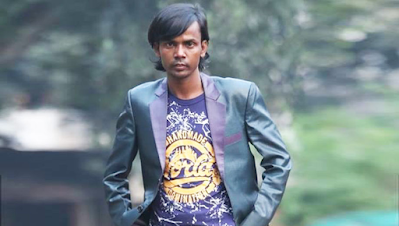
Police recently harassed a nondescript Youtuber and video-blogger Hero Alom, who was born and lives in Bograand was summoned to the office of the Detective Police.

He was not charged after he signed an apology on a piece of paper stating that he will never sing Tagore Songs in distorted tune and proper pronunciation. It is understood that some aggrieved persons had complained against Alom to the police. Is it a crime to sing inappropriately?

How do the law enforcement officers understand Hero Alom’ssongs on the YouTube channel were distorted? Are they certified by a musical institute or themselves graduates from a music college or an institute – likeChhayanaut, Bangladesh Academy of Fine Arts (BAFA), Government Music College or any recognised music institutions in the country?

If they are not certified music experts, have they consulted with a music connoisseur or teacher of RabindraSangeet? Unfortunately, they have not!

The nation has not forgotten that songs and poetry penned by Rabindranath Tagore were banned from broadcast by the Dhaka station of Radio Pakistan in 1967 during the military junta of General Ayub Khan.

Tagore is considered taboo in Pakistan since the partition in 1947. Finally, all works of Tagore were officially banned in government media (Radio Pakistan, PTV, government-owned newspapers) by the orders of powerful information and broadcasting ministerKhwajaShahabuddin and vetted by East Pakistan governor Monem Khan in 1967.

One reason is that he is an Indian. Secondly, he was dubbed as a Hindu – which fortunately he was not. His family practised Brahmmo – believing in One God, singing the Upanishad’s ‘ekeshwar’ and distanced themselves from idolatry. His father, Debendranath Tagore, adopted the Brahmofaith and does away with the rituals of Sanatan Dharma (faith).

Rabindranath Tagore is a poet of Bengal, India, and the world. Songs of Nobel laureate Rabindranath are national anthems in India, Bangladesh and Sri Lanka and of course,in the minds and hearts of the Bangalee diaspora (from both sides of Bengal) living abroad.

The Islamists in Bangladesh for decades have been demanding of the government to trash the national anthem written by Tagore, who is dubbed a Hindu and an Indian.

Scores of Mullahs in Waz-Mehfil(Islamic rallies) uploaded videos on YouTubethreatening to forcibly change the national anthem, which they explain compromises the culture, language and spirit of majoritarian Sunni Muslims.

Well, the Islamist has not only called to get rid of the national anthem but also dared to speak nonsense against the national flag, and state constitution. They debunkedPahelaBaishak (Bangla New Year), Ekushey February (International Mother’s Language Day) and the rich cultural heritage of Bengal.

They taunt at independence war which created Bangladesh, after a humiliating surrender of marauding Pakistan military at Dhaka on 16th December 1971. They challenge the figures of 3 million victims of genocide and said Muslim soldiers cannot kill Muslims.

In the Waz, they speak foul regarding women’s education, women’s empowerment and women in leadership.

Islamist hate-speech does attack Hindus, Christians, Buddhists and Adivasis. They warn them that the land they are born among the majoritarian Muslims. Even, they provoke the government to ban Ahmadiyya – whom they say are not Muslims.

This does not end here!

The Islamists coerced the authorities to change the school textbooks in Bangladesh. The authority deleted several pieces of literature and poetry written by Hindu litterateurs. Even the sketches in the textbooks have been replaced by girls and women in headcovers and men wearing ‘Tupi’ (cap). The boys in half-pants or shorts have been replaced with pyjama and panjabi.

Well, to conclude the police and civil administration have turned a blind eye to the Waz-Mefils spitting hate-speech against the state authority, the spirit of the liberation war, and the religious and ethnic minorities.

Not to be surprised, none of the Islamic evangelists has been prosecuted under the controversial Digital Security Act, nor faced music of justice.

Is it not true that the draconian cyber law is only used against critics of the government, opposition, journalists, netizens, cultural activists and human rights defenders and not the Islamist hate-speech mongers?

First published in The News Times, 30 July 2022

Saleem Samad, is an independent journalist, media rights defender, recipient of Ashoka Fellowship and Hellman-Hammett Award. He can be reached at: saleemsamad@hotmail.com; Twitter @saleemsamad


Tuesday, September 21, 2021

Remands will soon be found in the museum

SALEEM SAMAD

The outspoken human rights lawyer Zahirul Islam Khan Panna assertively said that “the practice of remand will soon be found in a bolted iron cage in the museum.”

Remand, as Dr Masum Billah, a teacher of law at the Jagannath University, has said, is not found in the Code of Criminal Procedure (CrPC), the Bible for judiciary and police crime management. The practice of obtaining remands for suspects or the accused from judicial magistrate courts is unconstitutional.

The police exercise section 167 of the CrPC, which ushers the victim into legal harassment and also intimidates victims with ill motives, flexing their political power. 

Advocate Panna did not hesitate to add that remands are mostly used for extortion from families after they hear about the police brutality the alleged accused face in police stations. From January to August of 2021, legal rights organization Ain O Salish Kendra (ASK) reported 44 deaths in judicial custody. The report points fingers at the perpetrators from the police force, elite anti-crime Rapid Action Battalion (RAB), and Border Guards Bangladesh (BGB).

Unsurprisingly, the RAB has been blamed for 17 custodial deaths caused by torture. Next is the police for the deaths of 11 suspects, followed by the BGB (9 deaths). Most of these victims died in custody during interrogation, which has been practised since the British colonial era. 

Most senior officers of law enforcement agencies have participated in training courses in different countries on crime management, techniques of interrogation, investigation, and knowledge of forensic science vis-à-vis the Universal Declaration of Human Rights, 1948.

During the ongoing War on Terror campaign, also known as the Global War on Terrorism spearheaded by the United States in the aftermath of 9/11, hundreds of officers from the Bangladesh Police, security intelligence from the armed forces, and national intelligence attended courses on how to handle a suspect red-flagged as a terrorist. 

In addition, hundreds of police officers were deployed in peacekeeping under UN missions abroad training them in human rights. 

While in remand in November 2002, my torturer was in a UN peacekeeping mission in Kosovo and the interrogator from the DGFI attended a counterterrorism course in America under the WoT program.

Many human rights researchers claim that the century-old torture in custody has significantly decreased, while rights groups say that the curve of death in custody has not straightened. 

Prime Minister Sheikh Hasina has continued to urge the members of the Bangladesh Police to build themselves as a “pro-people force” -- a call that could not be more appropriate for ensuring human rights and strengthening democracy. Human rights abuses are endemic and most citizens who come in contact with the police complain of corruption and torture. 

In its assessment report, the International Crisis Group stated that a successful police reform can only be sustained if it is linked to a judiciary that enforces the rule of law and effectively protects individual rights and assures citizen security. 

It warned that if the police continue to be used for political ends, it will affect democracy, law and order, crime and corruption, national security, and the economic growth in Bangladesh.

The much ado about the Police Reform Program (PRP), which was funded by the United Nations, European Union, and British DFID, is back to square one. Ironically, the pro-Islamist alliance Bangladesh Nationalist Party (BNP) and Jamaat-e-Islami-led government scuttled the PRP. The military-backed caretaker regime resuscitated the program in 2008.

With police reforms, Bangladesh could have been a more secure and stable country, where the human rights of citizens, particularly the vulnerable and marginalized, were promoted and protected to accelerate progress on the Sustainable Development Goals (SDGs), economic growth, and social justice.

The police bundled up their learning experience from the police reforms initiative and instead resorted to torture in judicial custody in name of extracting “vital” information needed for their investigations. 

First published in the Dhaka Tribune, 21 September 2021

Saleem Samad is an independent journalist, a media rights defender, and a recipient of Ashoka Fellowship and Hellman-Hammett Award. He can be reached at saleemsamad@hotmail.com; Twitter @saleemsamad

Tuesday, September 14, 2021

Remand is torture, extortion in police custody


SALEEM SAMAD

“Remand” is a common word used in crime stories in newspapers and television news, mentioned when a suspect is detained and a remand is sought from a magistrate court for further interrogation.

Each time a remand is sought, the suspect experiences torture and humiliation in police custody. Any suspect in police custody is supposed to be safe and secured. In Bangladesh, it’s dangerous for an accused person to be in police custody.

Unfortunately, this legacy has been inherited by the police from the autocratic regime of Pakistan, and Pakistan inherited it from the British colonialists, who tortured revolutionaries and activists of the Swadeshi Movement.

In November 2002, I was accused of sedition, along with other foreign journalists of Channel 4 TV. In the wee hours of Friday in the month of Ramadan, I was hauled up from my friend’s apartment in Uttara. After Jumma prayers, I was driven to the Dhaka District Judicial Magistrate court in the old town.

Four armed plainclothes policemen in an unmarked van with shotguns protruding from the windows. A decoy vehicle accompanied us to cheat the paparazzi photographers and TV cameras. Two lorries with scores of police in riot gear escorted the “person of interest.”

The Friday traffic was thin and reached the court premise quickly. I wanted to get down but was asked to stay put while the detective police officers with walkie-talkies smoked and chewed pan (betel leaves). After several minutes, an officer snarled at the policemen to board the vehicles and head towards the Detective Branch (DB) HQ at Minto Road.

The unknown magistrate granted remand for five days without my appearance at the court. That was the reality of a democratically elected regime of Begum Khaleda Zia (2001-2006), which swept back to power after the October 1, 2001 elections.

Her regime refused to tolerate any critics, dissidents, and opposition. Delinquents were severely reprimanded. The reign of terror by police and intelligence agencies was to instil fear among nonconformist citizens.

Arbitrary arrests, torture, death in custody, legal harassments, enforced disappearances and extra-judicial killings were rampant. This situation further deteriorated when her administration launched “Operation Clean Heart'' in the winter of 2001-2002. World leaders and international organizations expressed grave concern over the violation of the fundamental rights of the citizens.

On return from the magistrate court, Kohinoor Miah, the deputy police commissioner of DB who had close ties with Hawa Bhaban, took me to a powerhouse outside the prime minister’s office run by Khaleda’s rogue eldest son Tarique Rahman and thrashed me with a baton wrapped with electric wires and hit my knee cap (which does not swell). After iftar, he again assaulted me and threw me on the floor and held his service revolver on my forehead and screamed that he should shoot me for defaming the country.

During five days of remand, three military officers of DGFI tortured me during interrogation and wanted me to confess a fairytale conspiracy that they had written on their storyboard. I was determined not to confess, nor did I sign any print-outs downloaded from the internet. Thus the scale of suffering increased. I was also denied food, drinking water, a toothbrush, and soap to clean after defecation.

Suddenly the torture stopped on the fourth day of the remand. A detained underworld don living in the same prisoner’s cell said that the torturer did not want to show fresh marks of torture to the magistrate.

Recently, the High Court made an exception to remand popular movie star Pori Moni three times. The judge observed that conceding multiple remand conflicts with the Supreme Court guidelines on arrests, detention and interrogation of suspects. Justice Mustafa Zaman Islam and Justice KM Zahid Sarwar Kajol said the repeated permission for remanding Pori Moni challenged the independence of the judiciary.

Veteran human rights lawyer Zahirul Islam Khan Panna told the court on a petition seeking directives that the guideline for remand is only followed by the Bangladesh International Crimes Tribunal (ICT) during the arrests, detention, and interrogation of war crime suspects.

First published the Dhaka Tribune, 14 September 2021

Saleem Samad is an independent journalist, media rights defender, recipient of Ashoka Fellowship and Hellman-Hammett Award. He could be reached at saleemsamad@hotmail.com; Twitter @saleemsamad


Monday, November 11, 2013

The haunted Hindus of Santhia


SALEEM SAMAD in Santhia, Pabna

As she loiters past damaged houses in Sahaparha village, 5-year old ‘Orgho’ fumes over her smashed water mug, plastic chair and, most loudly, about the damaged television in her house.

She blames the Nov 2 mayhem on Kali Puja day on 'dustu chelera’ (naughty boys).

Her mother is cautious, as she recollects how she hid in a smelly toilet for three hours to escape an armed mob of fanatic Muslims.

A part of her house was smashed to smithereens.

The State Minister for Home Shamsul Hoque Tuku had gathered at Karamjat madrasa ground to thwart Opposition protests, barely 10 kilometres from Bongram bazaar at Santhia.

That was just before the Muslim mob, fuming over a reported Facebook posting denigrating Prophet Muhammad, went on an orgy of violence in Santhia.

Sahaparha was one of the worst affected because the Facebook posting was blamed on Rajib Saha, a resident of the village.

The conspirators deliberately chose Saturday, a weekly haat-bazaar day.

On the day hundreds of photocopies of an alleged Facebook posting were distributed, indicating that Rajib Saha had insulted the Prophet.

The distribution left Muslims of all parties inflamed.

What followed was hours of violence in which at least 40 Hindu homes were ravaged.

The young women are yet to return to villages, as fear grips the Hindus in the area.

They are worried because those suspected of perpetrating the mayhem have not been arrested.

Worse, the Hindus now suspect that many who made up the violent mob enjoy protection of senior Awami League politicians including local MP and State Minister for Home Shamsul Hoque Tuku.

This is what has shocked them most - how could those attacking them enjoy Awami League protection!

Tuku has also been blamed for letting the police on Awami League dissidents close to senior leader Prof Abu Sayeed, one-time close confidante of Bangabandhu Sheikh Mujibur Rahman.

But what about the alleged Facebook posting!

Like many similar so-called Facebook postings that inflamed Muslims and led to anti-minority violence elsewhere in the country like Ramu, this one allegedly by Rajib Saha also appeared a complete fake.

Journalists in Pabna argued that the photocopy of the Facebook ostensibly posted by Rajib was 'photoshopped' from a fake account “Innocent Rajib”.

Much like the alleged Facebook posting at Ramu in Cox's Bazar in September last year, in which hundreds of Buddhist homes were vandalised and scores of pagodas desecrated.

The miscreants in both Ramu and Santhia seem to have lost no time to loot valuables and cash in the second wave of violence following the initial fury.

Superintendent of Police (SP) of Pabna Mirajuddin Ahmed promised that the perpetrators would be brought to justice.

But he was quick to add that the attackers had not been identified. Except for those who spoke to Rajib's father Babul Saha in the morning.

Have the conspirators been arrested? ‘No,’ said Babul Saha who filed the case with police.

Ataikula Police Station OC Rezaul Karim claims they have arrested several of the suspects. Three cases have been lodged including one by police for obstruction to perform duty.

Police officials told visiting civil society groups, rights activists and journalists that those named by Babul Saha have been arrested.

But Saha said he had only heard of the arrests and was not able to confirm them.

Deputy Commissioner of Pabna Ashraf Uddin explained it was a 'police matter' and progressing “very well”.

But he said the civil administration had nothing much to do, except for initiating a confidence-building process after the violence.

The victims of Bonogram, Sahaparha and Goshparha have rejected the district administration’s offer of relief of 30 sacks of rice (each weighing 28 kg).

Rajib's uncle Kartick Saha says they need protection, not rice which they can afford to buy.

Like the Buddhists in Ramu, the Hindus in Santhia want the government to compensate them for the damaged temples to facilitate reconstruction.

A RAB platoon and two platoons of armed police have been deployed in Santhia. Police presence, says the SP, will deter a repeat of Nov 2.

He added a permanent police camp will be established there.

Local journalists say minister Tuku received news of violence in 10 minutes. But he did not do enough to protect the Hindus.

A small police contingent arrived within 30 minutes after desperate phone calls from Babul Saha.

But the larger force of police and RAB came only after three hours of intense violence, the elders complain.

Most Hindu elders do not remember when they had faced violence like they did on Nov 2.

Some recollect violence during 1971 by marauding Pakistan army and their local collaborators.

As most Hindus here had fled to India for safety, they did not have any direct experience of violence -- not until November 2.

Like other planned attacks on religious minorities elsewhere in Bangladesh, the perpetrators targeted the house of worship to break the morale of the minorities.

It is a pattern that has often been repeated - at Taindong (Khagrhachharhi), Ramu and Ukhia (Cox’s Bazar), Sathkira, Begumganj, Gaibanda, Lalmonirhat, and other places.

But the biggest worry - leaders of all political parties belonging to the majority community, despite their political differences, seem to take the same line of connivance or indifference when minorities are attacked.

First published in bdnews24.com, 11 November 2013

Saleem Samad, a senior journalist, is a freelance contributor to bdnews24.com